
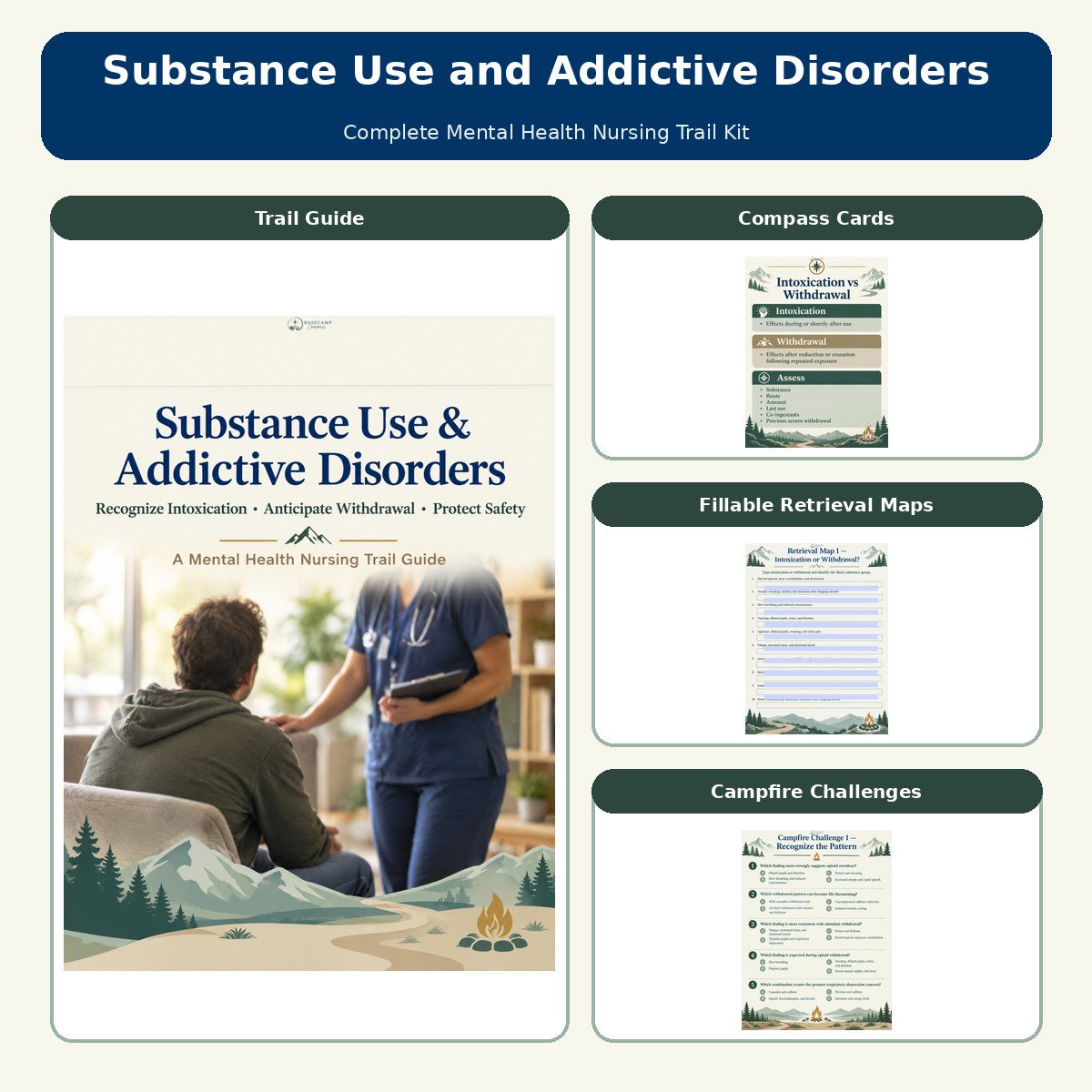
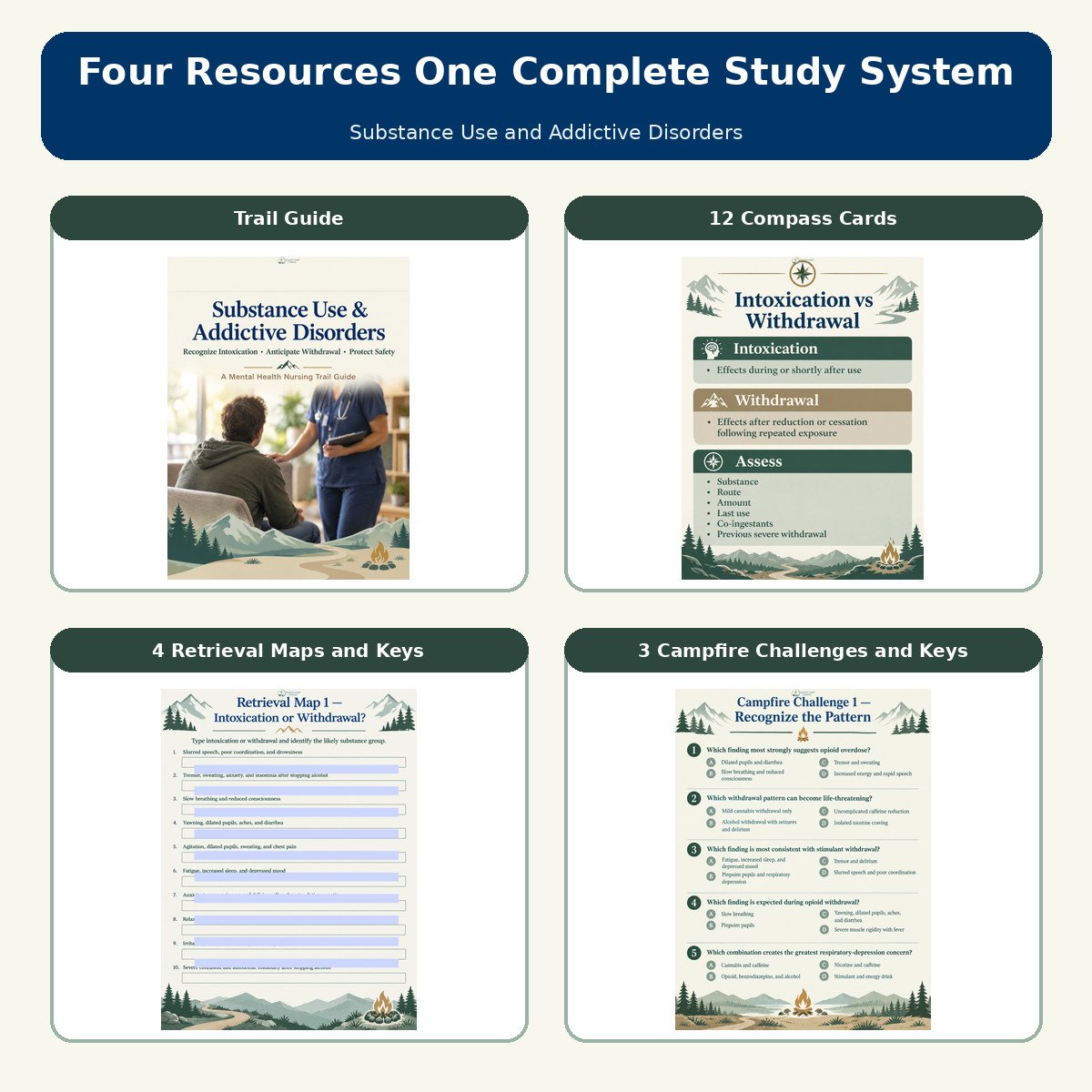
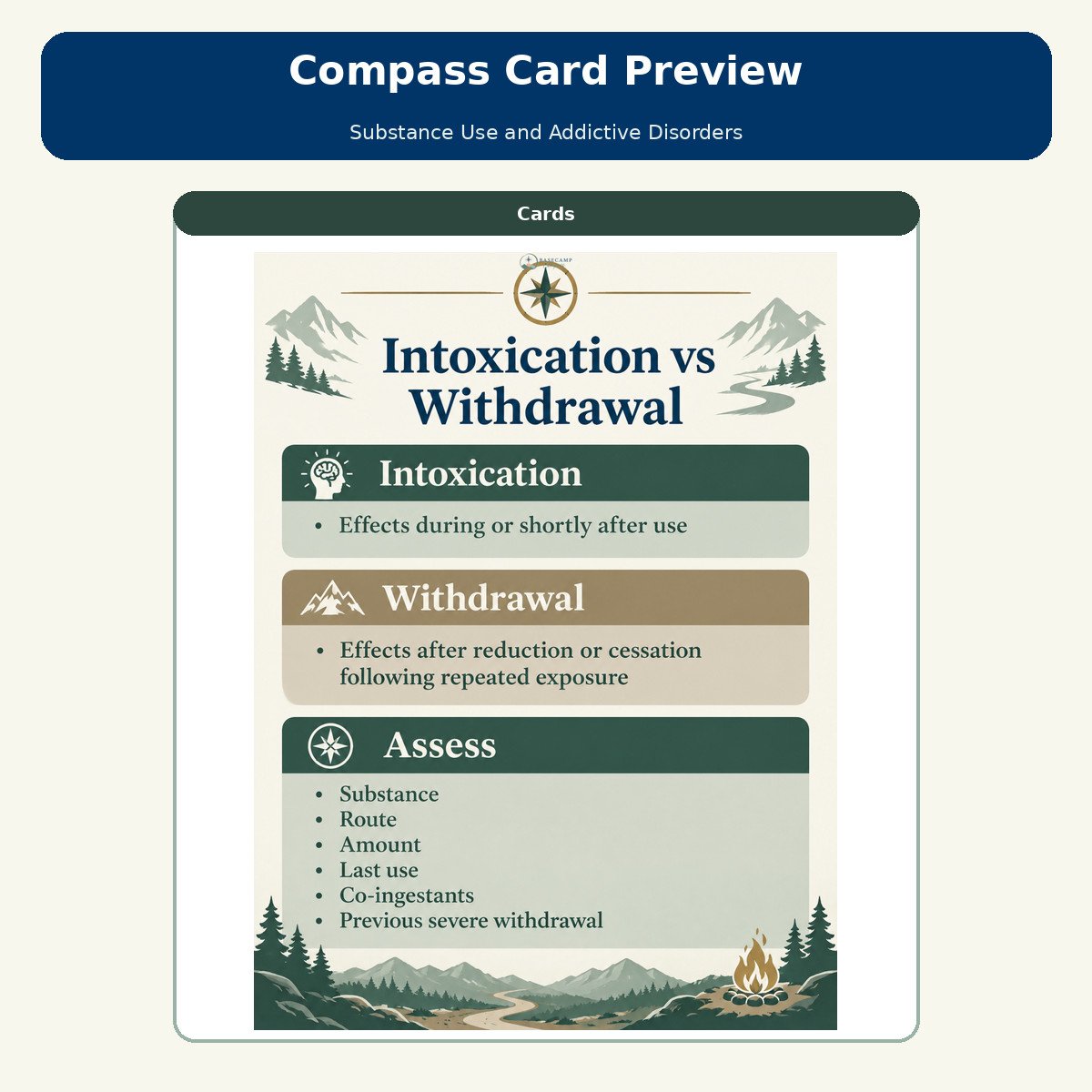
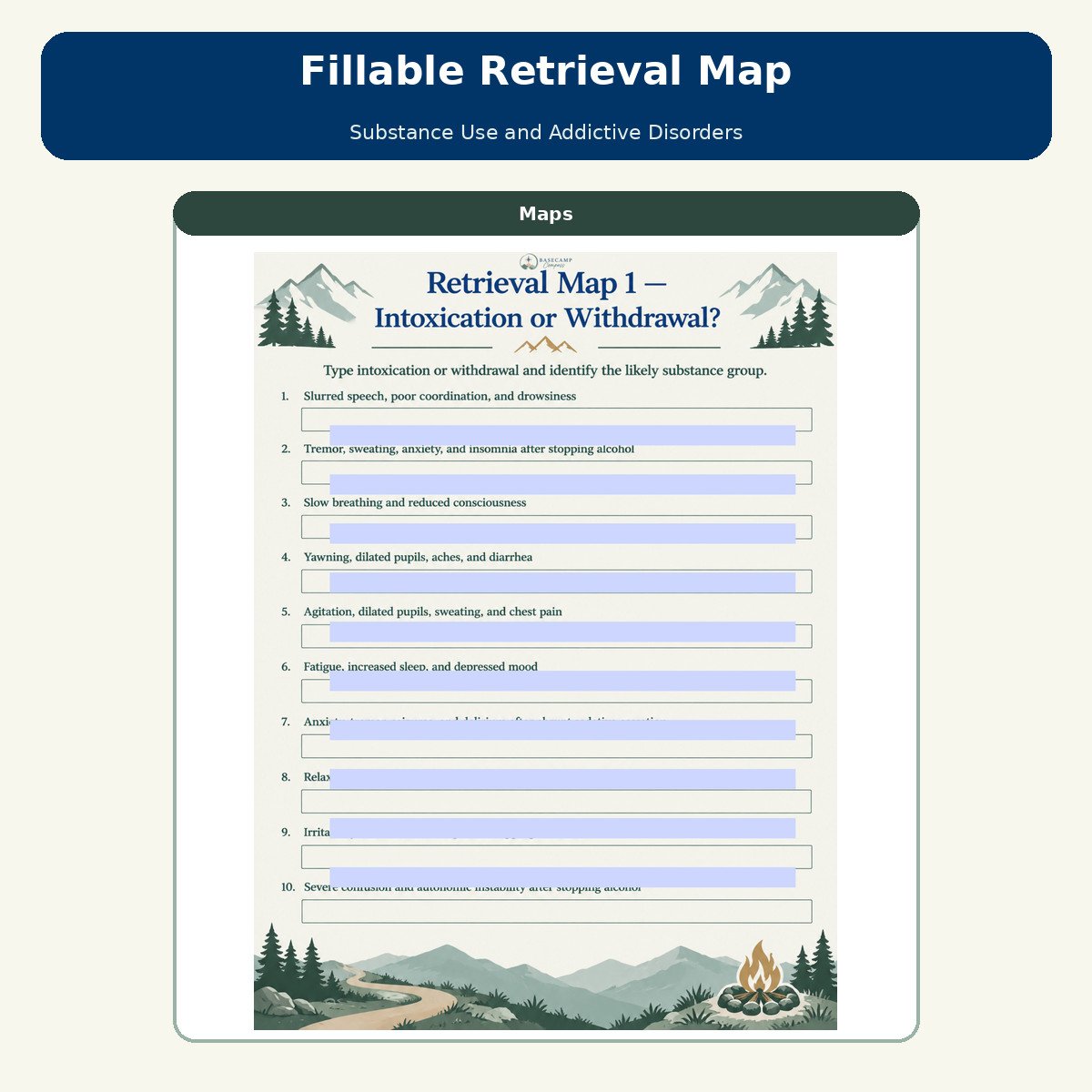
The complete Substance Use and Addictive Disorders Trail Kit combines visual learning, quick review, active retrieval, and clinical application in one coordinated substance abuse bundle. Begin with the 36-page Trail Guide, reinforce key concepts with 12 Compass Cards, test recall with four fillable Retrieval Maps and answer keys, then apply what you know with three Campfire Challenges and answer keys. The fillable maps can be completed on a phone, tablet, or computer and cleared for repeated practice—making this substance abuse bundle easy to reuse all the way to exam day.
Sale!


Substance Use and Addictive Disorders Complete Trail Kit
A complete digital study system with a Trail Guide, 12 Compass Cards, four fillable Retrieval Maps, and three Campfire Challenges.
- Estimated Reading Time: 1 hour
- Pages: 63
- Skill Level: All Levels
- Format: Digital Download (PDF + Audio)
$15.00 Original price was: $15.00.$9.99Current price is: $9.99.
DIGITAL · INSTANT ACCESS
What You'll Learn
Distinguish intoxication, tolerance, dependence, withdrawal, and substance use disorder
Recognize alcohol, opioid, stimulant, sedative, cannabis, and hallucinogen patterns
Identify withdrawal or overdose findings that require urgent intervention
Apply nonjudgmental assessment, safety, and withdrawal-support principles
Review overdose reversal, medication-assisted treatment, and relapse-prevention concepts
Plan recovery-oriented discharge teaching and continuity of care
Table of contents
Substance Use and Addiction Foundations
What This Guide Covers
Use Misuse and Substance Use Disorder
Tolerance Dependence and Withdrawal
Assessment Without Judgment
Intoxication vs Withdrawal
Alcohol Intoxication
Alcohol Withdrawal
Severe Alcohol Withdrawal
Thiamine and Neurologic Risk
Sedative and Hypnotic Disorders
Opioid Intoxication and Overdose
Naloxone and Immediate Safety
Opioid Withdrawal
Medication Treatment for Opioid Use Disorder
Stimulant Intoxication
Stimulant Withdrawal
Cocaine and Methamphetamine Risks
Cannabis Related Concerns
Hallucinogens and Dissociatives
Polysubstance Use
Substance Related Psychosis
Pregnancy and Special Populations
Withdrawal Monitoring
Therapeutic Communication
Motivational Approaches
Harm Reduction Concepts
Recovery and Relapse
Triggers Cravings and Coping
Family and Support Systems
Discharge Planning
The Substance Use Nursing Compass
Be the first to review “Substance Use and Addictive Disorders Complete Trail Kit” Cancel reply
How It Works: Your Learning Journey
LEARN
The Guide Teaches The Journey.
REMEMBER
Reinforce important concepts.
CHALLENGE
Test your knowledge and build confidence.

Campfire Challenge Preview
Take a look inside
Sample 1 — Recognize the Pattern
Which finding most strongly suggests opioid overdose? A. Tremor and sweating. B. Dilated pupils and diarrhea. C. Slow breathing and reduced consciousness. D. Increased energy and rapid speech.
Sample 2 — Emergency Priorities
A client stopping alcohol develops confusion, hallucinations, and severe agitation. What should the nurse do? A. Treat the presentation as a medical emergency. B. Assume the symptoms are harmless anxiety. C. Encourage the client to sleep without monitoring. D. Delay evaluation until morning.
Sample 3 — After Naloxone
Why must a client be monitored after responding to naloxone? A. Naloxone permanently removes all opioids. B. Respiratory depression may return after naloxone’s effect decreases. C. Naloxone prevents every withdrawal symptom. D. Monitoring is needed only after stimulant use.
Reviews
There are no reviews yet.