
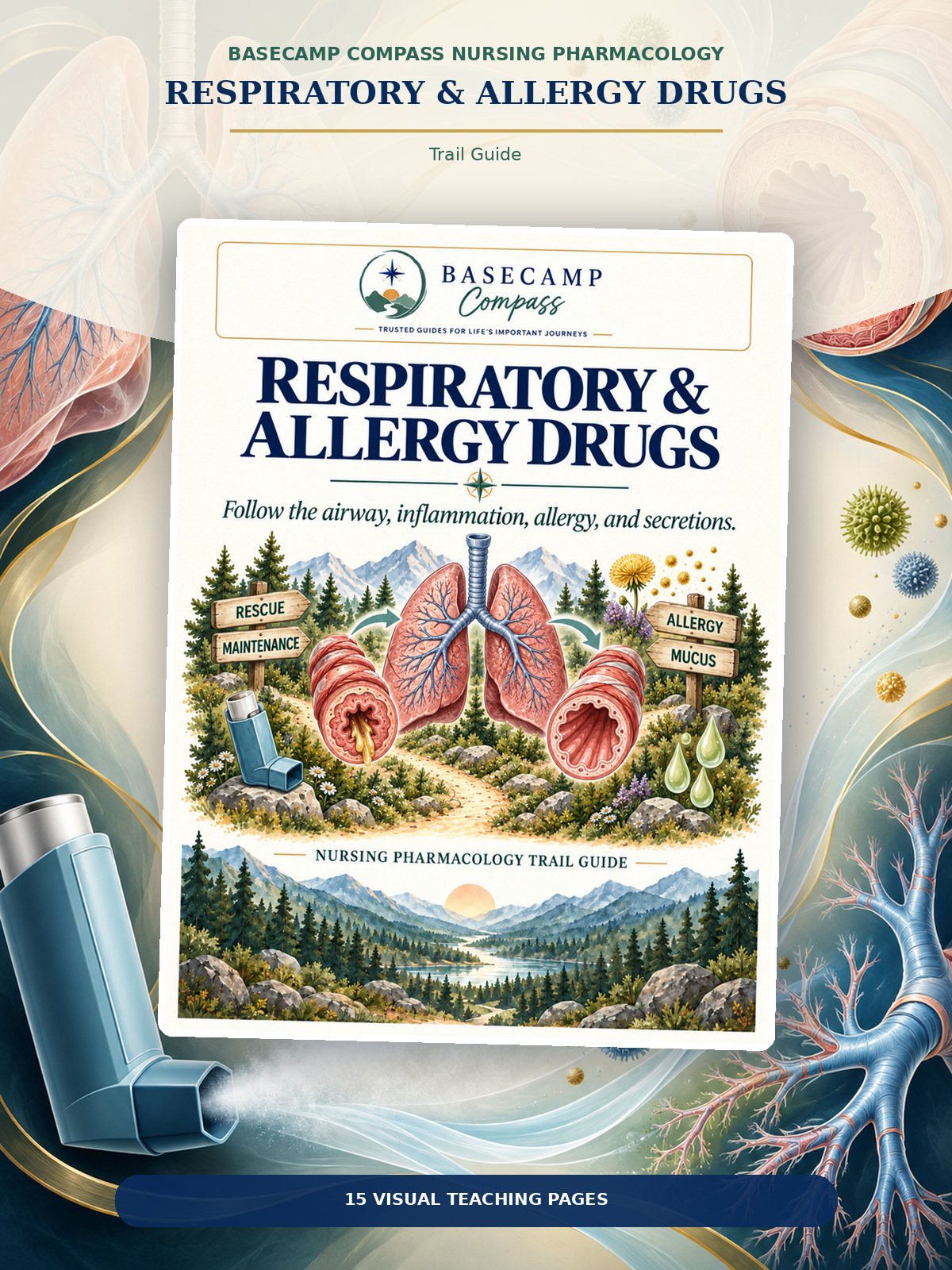
Respiratory & Allergy Drugs Trail Guide
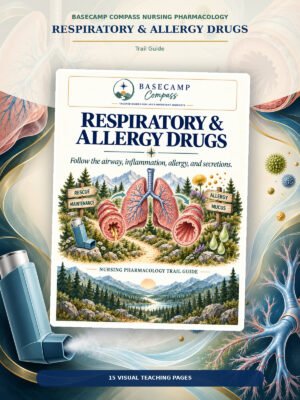
A 15-page printable trail guide mapping respiratory and allergy drug classes, key prototypes, and nursing priorities — built for exam review and clinical confidence.
- Estimated Reading Time: 30 minutes
- Pages: 15
- Skill Level: All Levels
- Format: Digital Download (PDF)
$4.99
PDF · Instant download
What You'll Learn
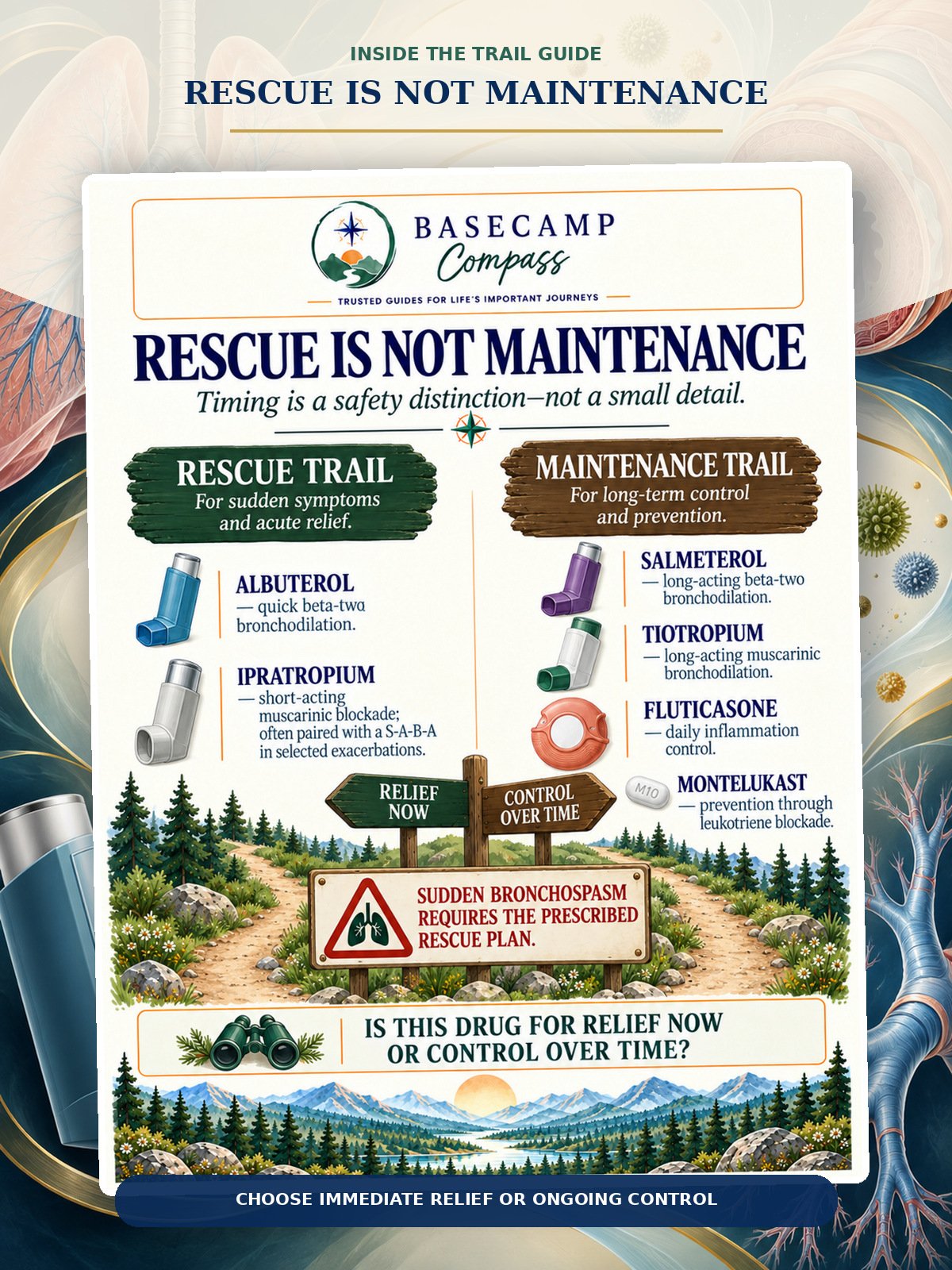
Distinguish rescue bronchodilators from maintenance and prevention therapies.
Compare beta-2 agonists with muscarinic antagonists by action and adverse effects.
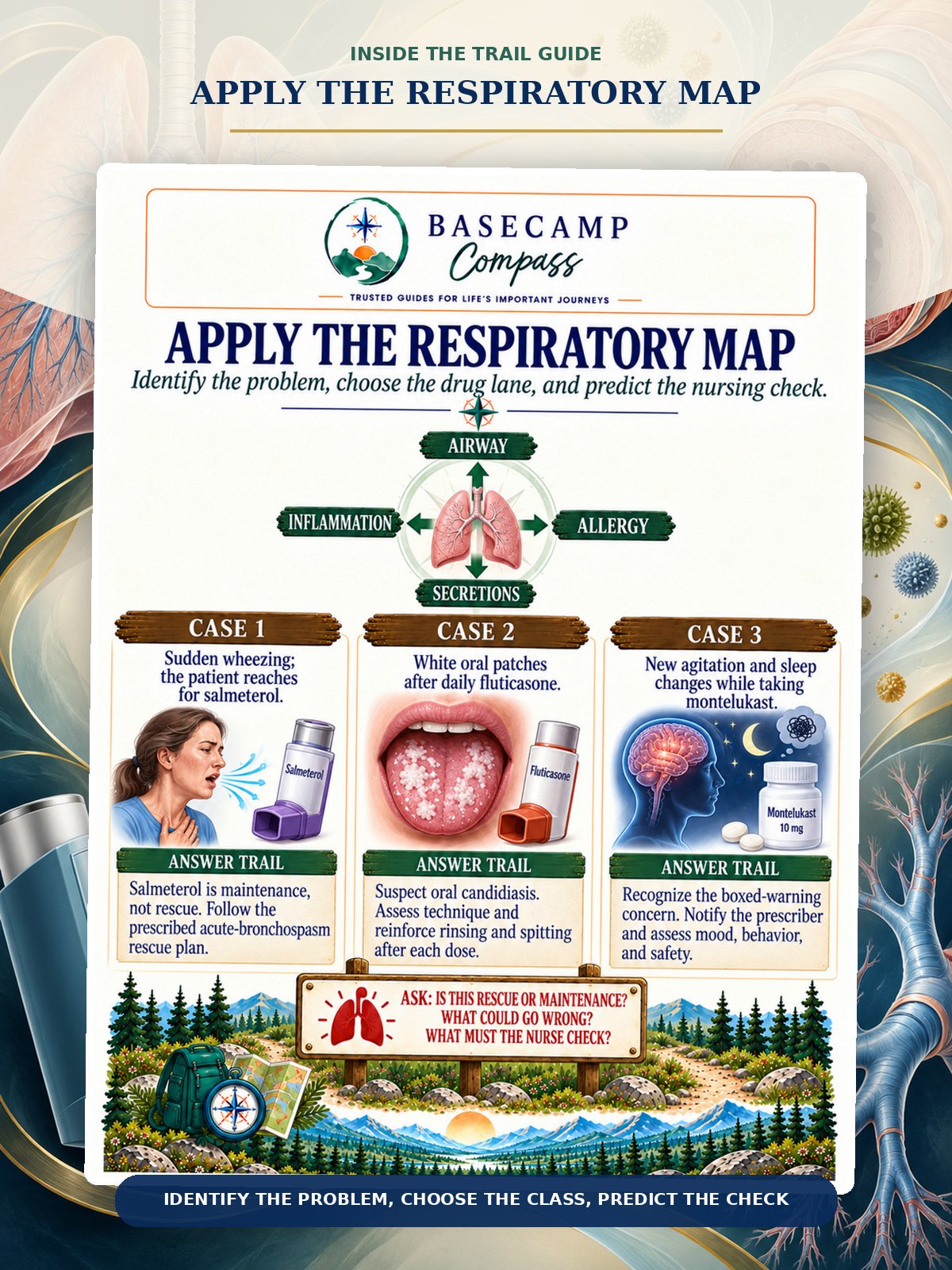
Explain the role of inhaled corticosteroids and correct mouth-rinsing teaching.
Recognize montelukast neuropsychiatric warnings and theophylline toxicity.
Compare omalizumab, diphenhydramine, cetirizine, and pseudoephedrine.
Connect acetylcysteine therapy to mucus clearance and bronchospasm monitoring.
Table of contents
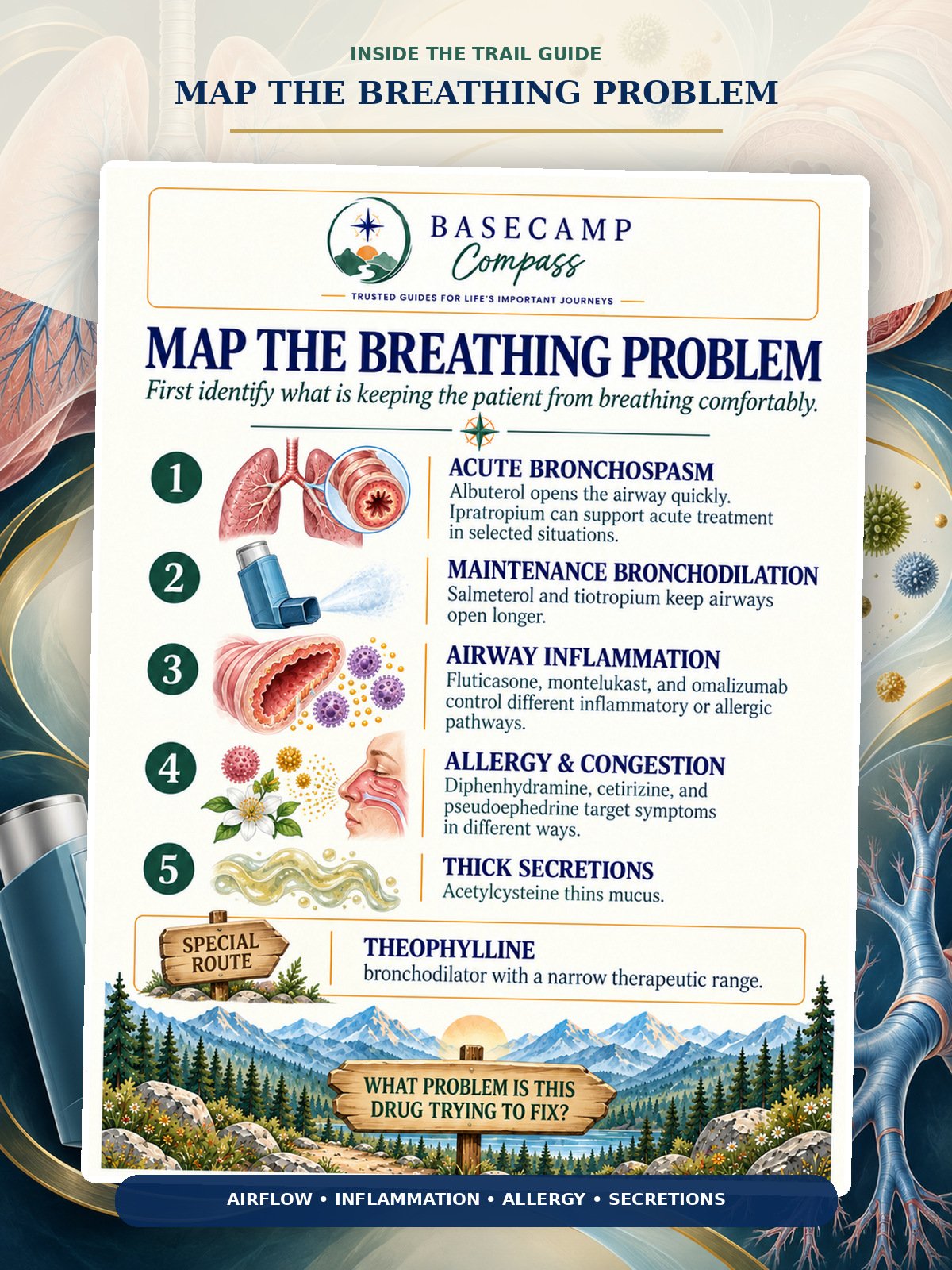
Map the Airway and Allergy Problem
Albuterol Versus Salmeterol
Ipratropium Versus Tiotropium
Fluticasone and Airway Inflammation
Montelukast and Leukotriene Control
Theophylline and the Narrow Therapeutic Range
Omalizumab and Anaphylaxis
Diphenhydramine Versus Cetirizine
Pseudoephedrine
Acetylcysteine and Secretion Clearance
The Respiratory & Allergy Drugs Trail Guide helps nursing students organize medications by the problem preventing comfortable breathing: acute bronchoconstriction, long-term airway narrowing, inflammation, allergic activation, congestion, or thick secretions. The guide makes the essential rescue-versus-maintenance distinction clear and connects each pathway to its characteristic risks and nursing assessments.
Across 15 printable pages, learners review albuterol, salmeterol, ipratropium, tiotropium, fluticasone, montelukast, theophylline, omalizumab, diphenhydramine, cetirizine, pseudoephedrine, and acetylcysteine. Side-by-side comparisons clarify SABA versus LABA, SAMA versus LAMA, first- versus second-generation antihistamines, bronchodilation versus inflammation control, and allergy-pathway therapy versus secretion management.
Safety content highlights tachycardia, tremor, paradoxical bronchospasm, anticholinergic effects, oral candidiasis, neuropsychiatric changes, theophylline toxicity, anaphylaxis, sedation, hypertension, insomnia, and secretion clearance. This guide supports nursing coursework and exam review and does not replace an asthma action plan, respiratory protocols, medication references, or clinical judgment.
Digital product: Includes one 15-page printable PDF. No physical product will be shipped.
Complete the set: pair this Trail Guide with the Compass Cards + Audio Companion, or get everything together in the Trail Kit.
How It Works: Your Learning Journey
LEARN
The Guide Teaches The Journey.
REMEMBER
Reinforce important concepts.
CHALLENGE
Test your knowledge and build confidence.

Campfire Challenge Preview
Sample Challenge Questions
Is this a printable file?
Yes. Your download is a print-ready, high-resolution PDF licensed for your personal professional use.
How quickly do I get it?
Instantly. The download link appears on the confirmation screen and in your email receipt.
Reviews
There are no reviews yet.