
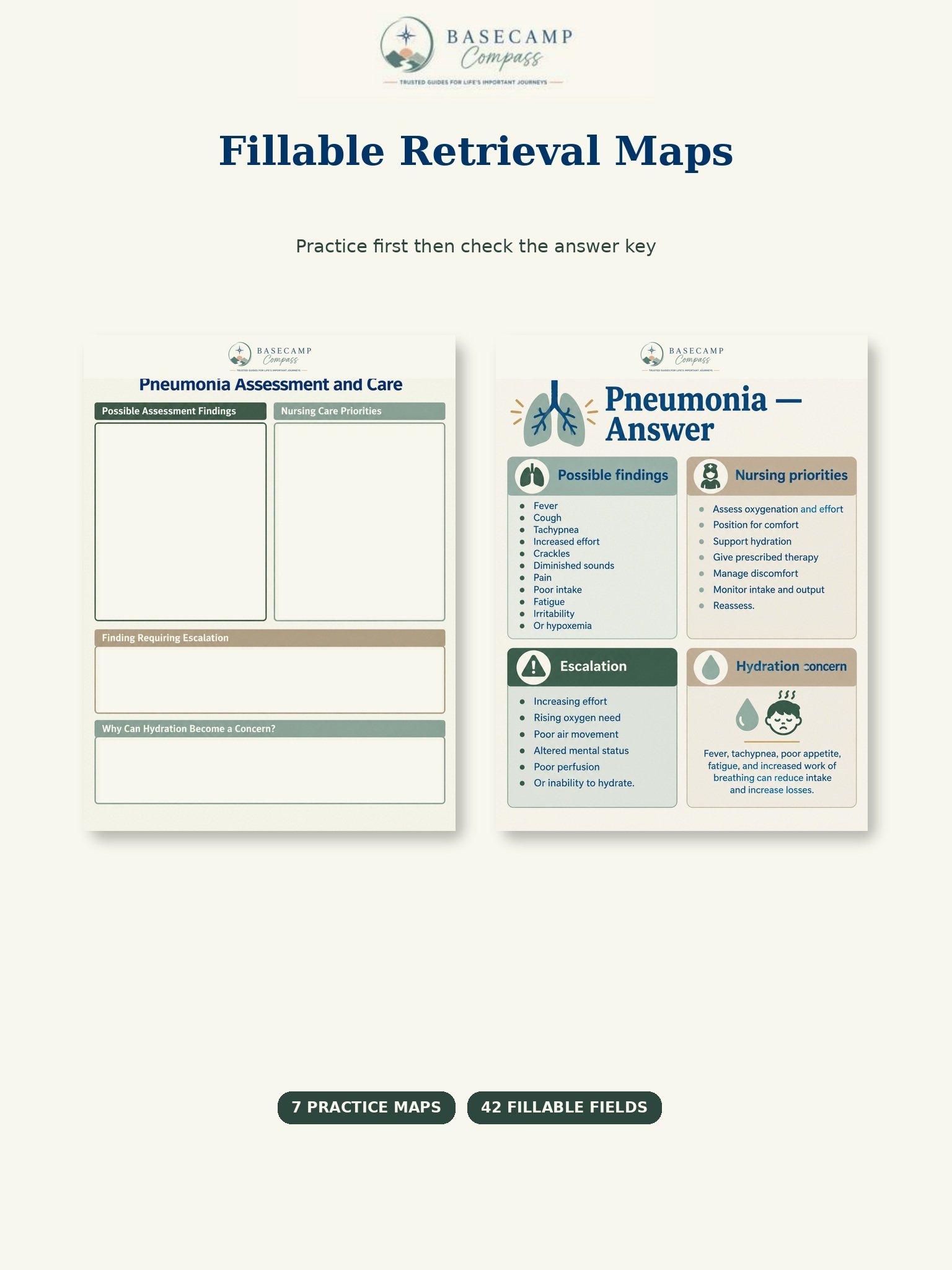
Move from visual review to retrieval practice to clinical reasoning in one cohesive pediatric respiratory bundle. The Pediatric Respiratory Disorders Trail Kit combines a visual Trail Guide, quick-reference Compass Cards, 7 fillable Retrieval Maps, and 8 Campfire Challenge cases. Inside this pediatric respiratory bundle, each Retrieval Map student page is followed immediately by its answer key, and every Campfire Challenge is followed by its answer and rationale for instant feedback. The maps include 42 interactive fields that can be cleared and reused. This pediatric respiratory bundle is a study companion and does not replace assigned course materials, current clinical guidance, facility policy, or clinical judgment.
Sale!


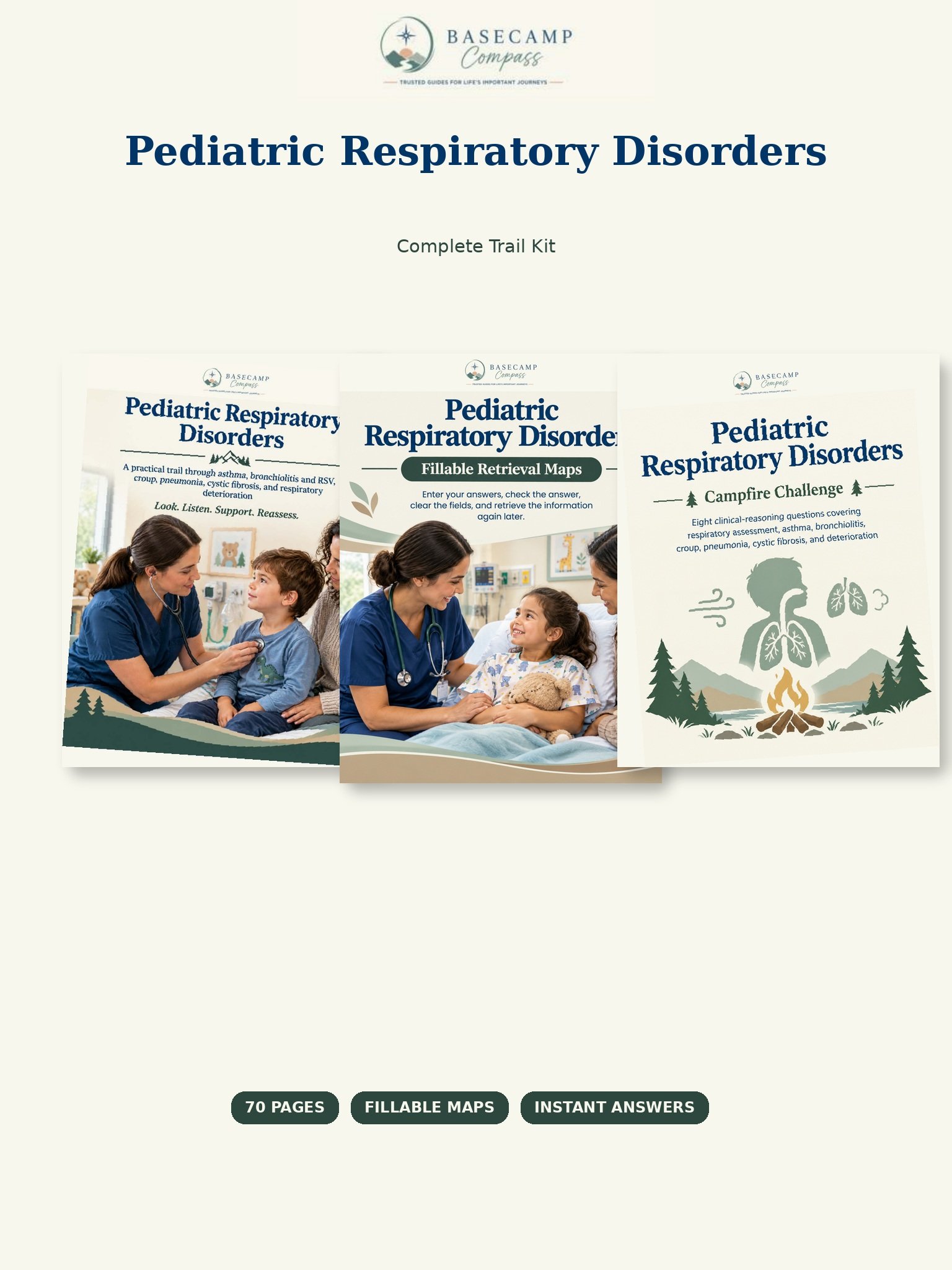
Pediatric Respiratory Disorders Trail Kit
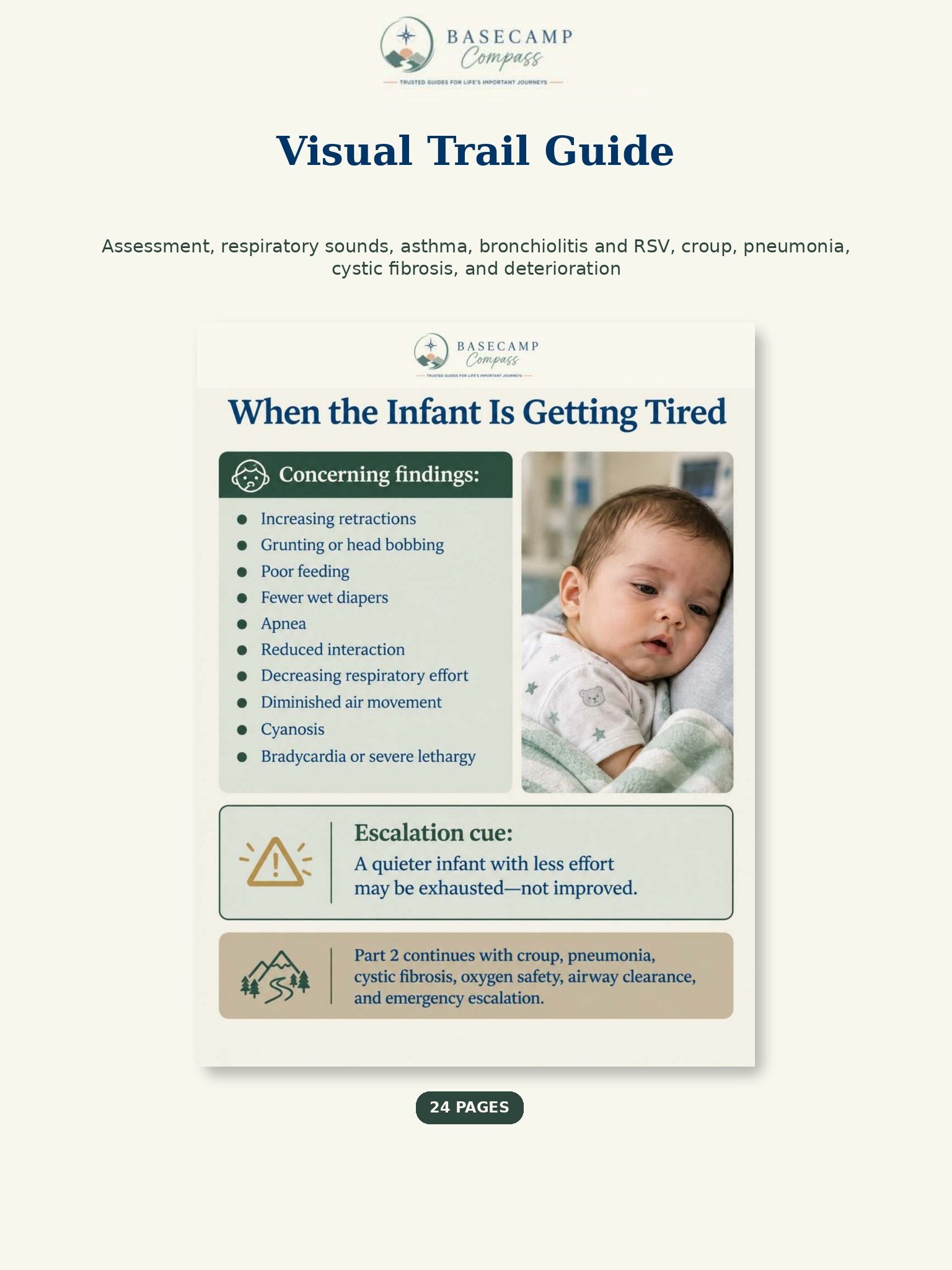
A complete 70-page pediatric nursing study kit with a 24-page Trail Guide, 12 Compass Cards, 7 fillable Retrieval Maps with answer keys, and 8 Campfire Challenges with immediate answers.
- Estimated Reading Time: 1 hour
- Pages: 51
- Skill Level: All Levels
- Format: Digital Download (PDF + Audio)
$15.00 Original price was: $15.00.$9.99Current price is: $9.99.
DIGITAL · INSTANT ACCESS
What You'll Learn
Assess appearance rate effort sounds air movement oxygenation and fatigue.
Differentiate stridor wheezing crackles grunting and a quiet chest.
Recognize asthma bronchiolitis RSV croup pneumonia and cystic fibrosis patterns.
Support airway oxygenation hydration nutrition medication delivery and secretion clearance.
Identify the transition from respiratory distress to respiratory failure.
Practice recall with 7 fillable maps and immediate answer keys.
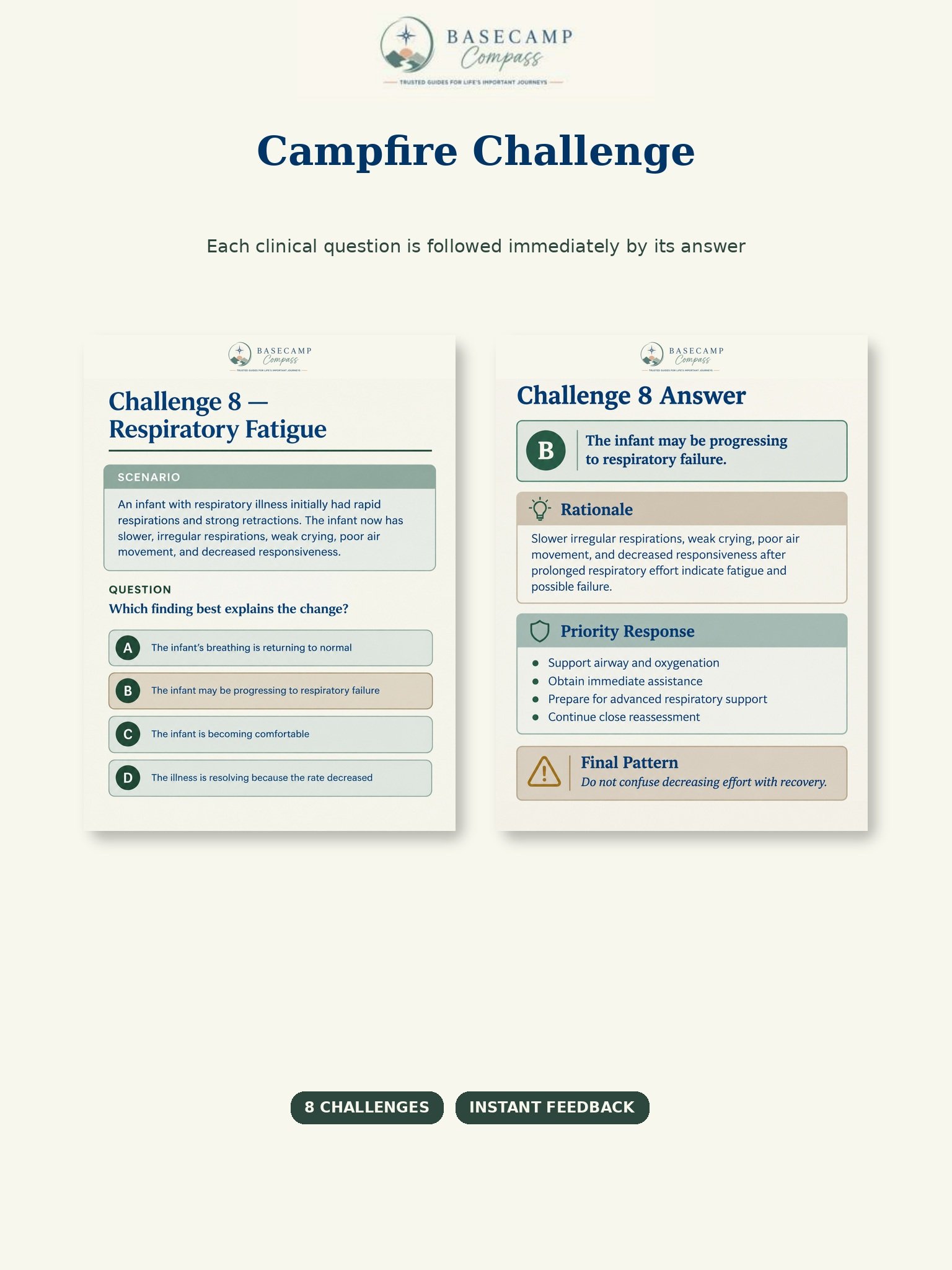
Apply clinical reasoning through 8 Campfire Challenges with immediate feedback.
Table of contents
24-page visual Trail Guide
12-page Compass Card set
7 fillable Retrieval Maps with 7 immediate answer keys
8 Campfire Challenges with immediate answer pages
Assessment, respiratory sounds, asthma, bronchiolitis and RSV, croup, pneumonia, cystic fibrosis, and deterioration.
Be the first to review “Pediatric Respiratory Disorders Trail Kit” Cancel reply
How It Works: Your Learning Journey
LEARN
The Guide Teaches The Journey.
REMEMBER
Reinforce important concepts.
CHALLENGE
Test your knowledge and build confidence.
Campfire Challenge Preview
Take a look inside
Sample 1 — Quiet Chest
A child with severe asthma initially had loud wheezing and marked retractions. The child is now drowsy with shallow respirations, minimal air movement, and almost no wheezing. Question: How should the nurse interpret the change? A The asthma attack is resolving B The child may be developing respiratory failure C The child is resting after treatment D The absence of wheezing confirms open airways
Sample 2 — Asthma Medication Roles
A school-age child uses a quick-relief inhaler several times most days and frequently wakes at night coughing. What is the nurse’s best interpretation? A Frequent rescue use indicates excellent control B The child may have poorly controlled asthma C Nighttime symptoms are unrelated to asthma D The controller medication should be used only during emergencies
Sample 3 — Respiratory Fatigue
An infant with respiratory illness initially had rapid respirations and strong retractions. The infant now has slower, irregular respirations, weak crying, poor air movement, and decreased responsiveness. Question: Which finding best explains the change? A The infant’s breathing is returning to normal B The infant may be progressing to respiratory failure C The infant is becoming comfortable D The illness is resolving because the rate decreased
Reviews
There are no reviews yet.