
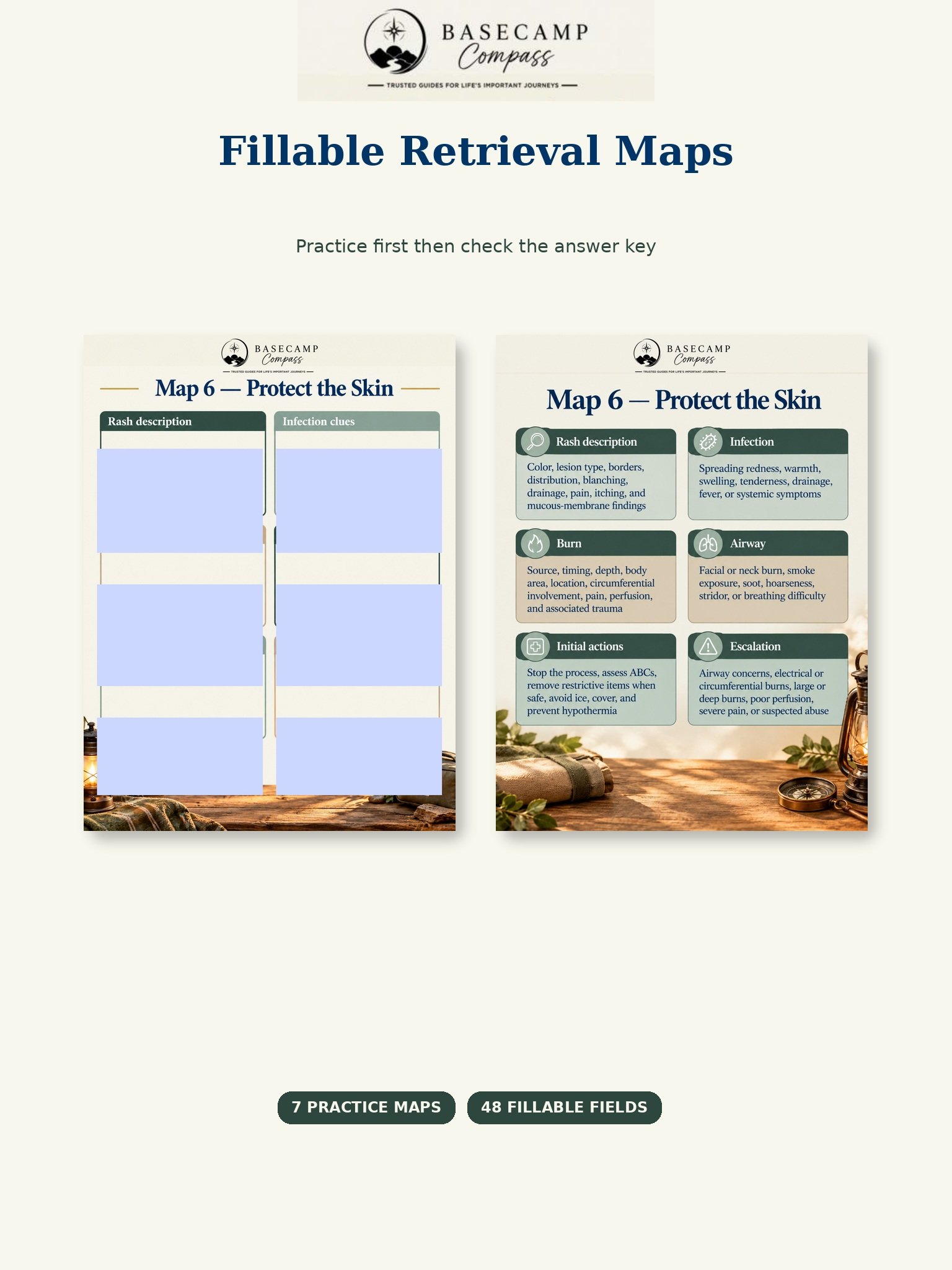
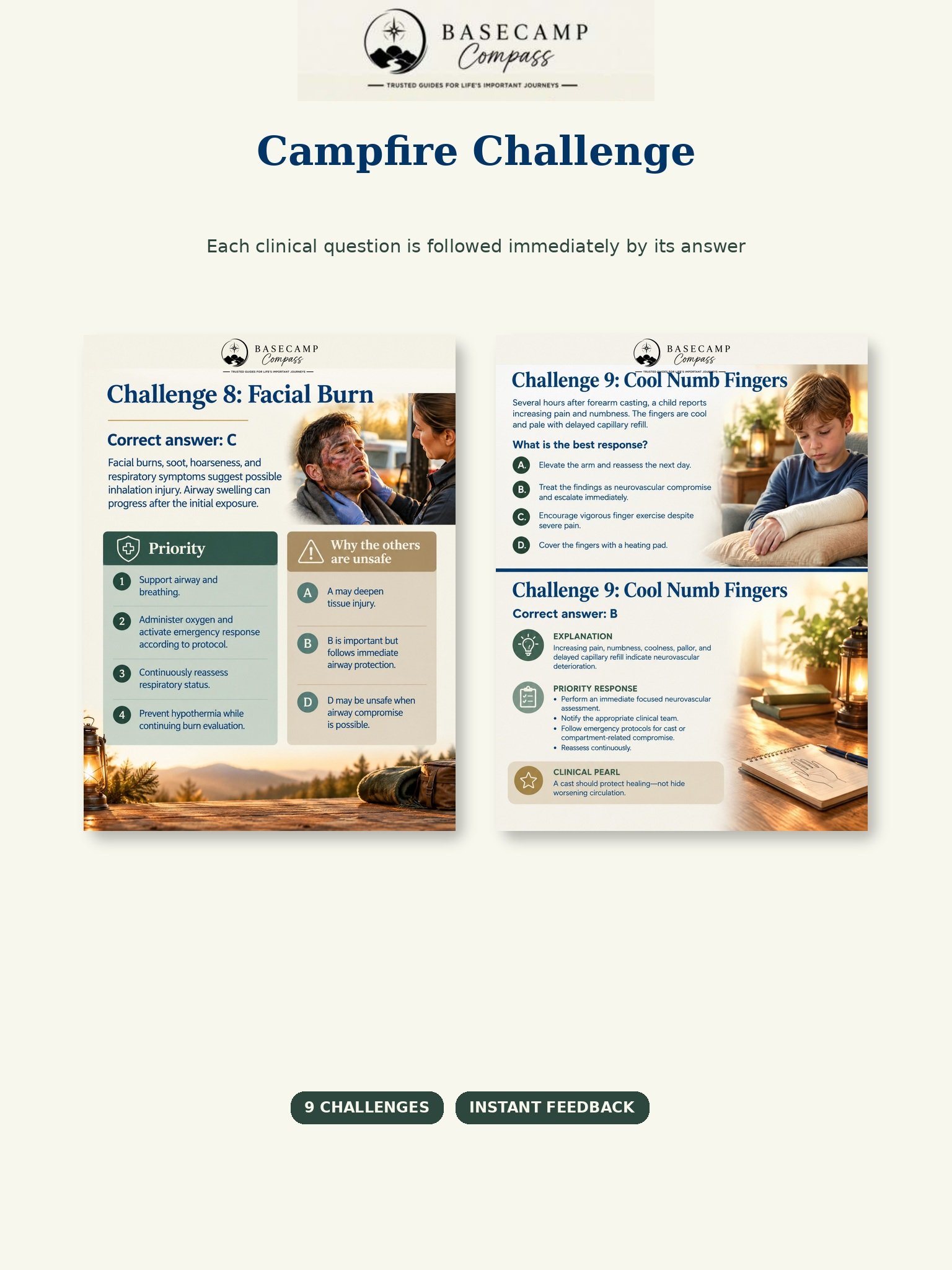
Move from visual review to retrieval practice to clinical reasoning in one cohesive pediatric MSK bundle. The Pediatric Musculoskeletal and Integumentary Disorders Trail Kit combines a visual Trail Guide, quick-reference Compass Cards, 7 fillable Retrieval Maps, and 9 Campfire Challenge cases. Inside this pediatric MSK bundle, each Retrieval Map student page is followed immediately by its answer key, and every Campfire Challenge is followed by its answer and rationale for instant feedback. The maps include 48 interactive fields that can be cleared and reused. This pediatric MSK bundle is a study companion and does not replace assigned course materials, current clinical guidance, facility policy, or clinical judgment.
Sale!


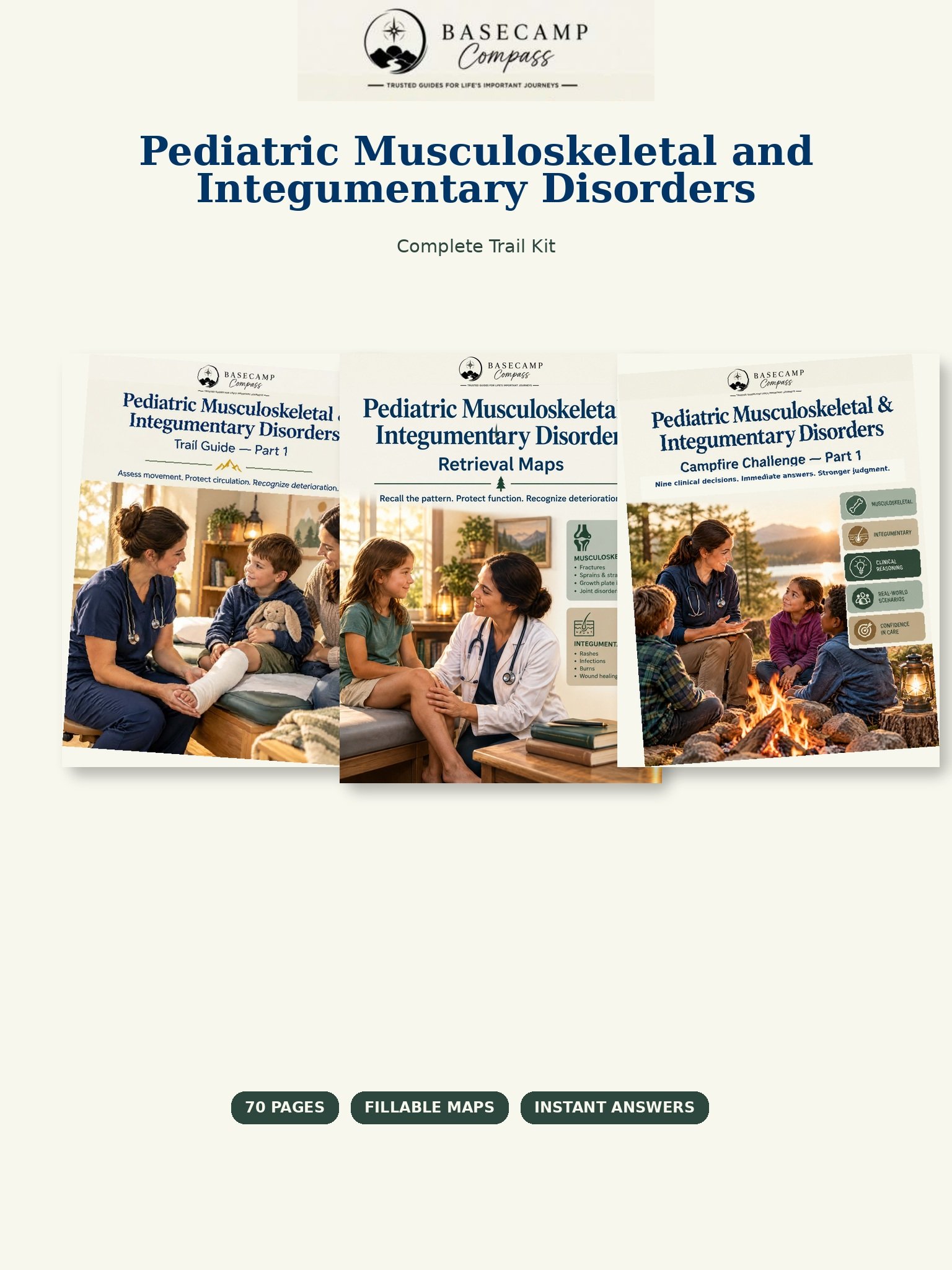
Pediatric Musculoskeletal and Integumentary Disorders Trail Kit
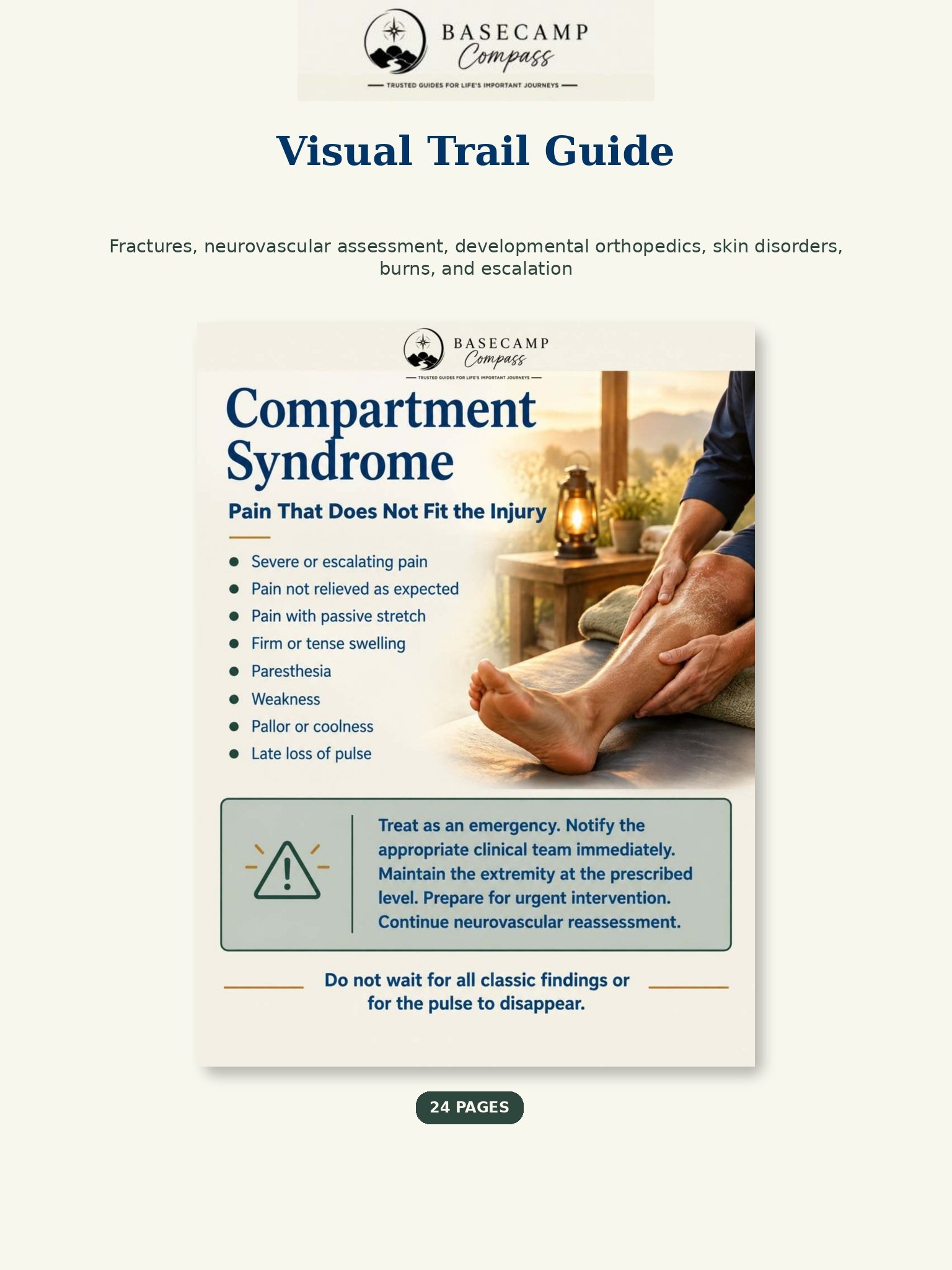
A complete 70-page pediatric nursing study kit with a 24-page Trail Guide, 12 Compass Cards, 7 fillable Retrieval Maps with answer keys, and 9 Campfire Challenges with immediate answers.
- Estimated Reading Time: 1 hour
- Pages: 51
- Skill Level: All Levels
- Format: Digital Download (PDF + Audio)
$15.00 Original price was: $15.00.$9.99Current price is: $9.99.
DIGITAL · INSTANT ACCESS
What You'll Learn
Perform focused musculoskeletal skin and neurovascular assessments.
Recognize fracture cast traction and compartment syndrome safety priorities.
Compare developmental dysplasia clubfoot and scoliosis care patterns.
Identify bone joint and skin infection findings that require escalation.
Apply pediatric burn airway circulation and skin protection priorities.
Practice recall with 7 fillable maps and immediate answer keys.
Apply clinical reasoning through 9 Campfire Challenges with immediate feedback.
Table of contents
24-page visual Trail Guide
12-page Compass Card set
7 fillable Retrieval Maps with 7 immediate answer keys
9 Campfire Challenges with immediate answer pages
Fractures, neurovascular assessment, developmental orthopedics, skin disorders, burns, and escalation.
Be the first to review “Pediatric Musculoskeletal and Integumentary Disorders Trail Kit” Cancel reply
How It Works: Your Learning Journey
LEARN
The Guide Teaches The Journey.
REMEMBER
Reinforce important concepts.
CHALLENGE
Test your knowledge and build confidence.
Campfire Challenge Preview
Take a look inside
Sample 1 — Casting Pain
A child with a newly applied lower-leg cast reports rapidly increasing pain despite prescribed analgesia. The child has severe pain when the toes are passively moved. What is the nurse’s priority interpretation? A. Normal discomfort while the cast dries B. Possible compartment syndrome requiring immediate escalation C. Expected anxiety about the cast D. Mild skin itching
Sample 2 — Hip-Harness Care
An infant is wearing a prescribed harness for developmental dysplasia of the hip. The caregiver says, “I tighten and reposition the straps whenever they look loose.” Which teaching is most important? A. Adjust the straps every day to keep the legs straight. B. Remove the harness whenever the infant sleeps. C. Do not adjust the straps without direction from the orthopedic team. D. Wrap the legs tightly together beneath the harness.
Sample 3 — Cool Numb Fingers
Several hours after forearm casting, a child reports increasing pain and numbness. The fingers are cool and pale with delayed capillary refill. What is the best response? A Elevate the arm and reassess the next day. B. Treat the findings as neurovascular compromise and escalate immediately. C Encourage vigorous finger exercise despite severe pain. D Cover the fingers with a heating pad.
Reviews
There are no reviews yet.