
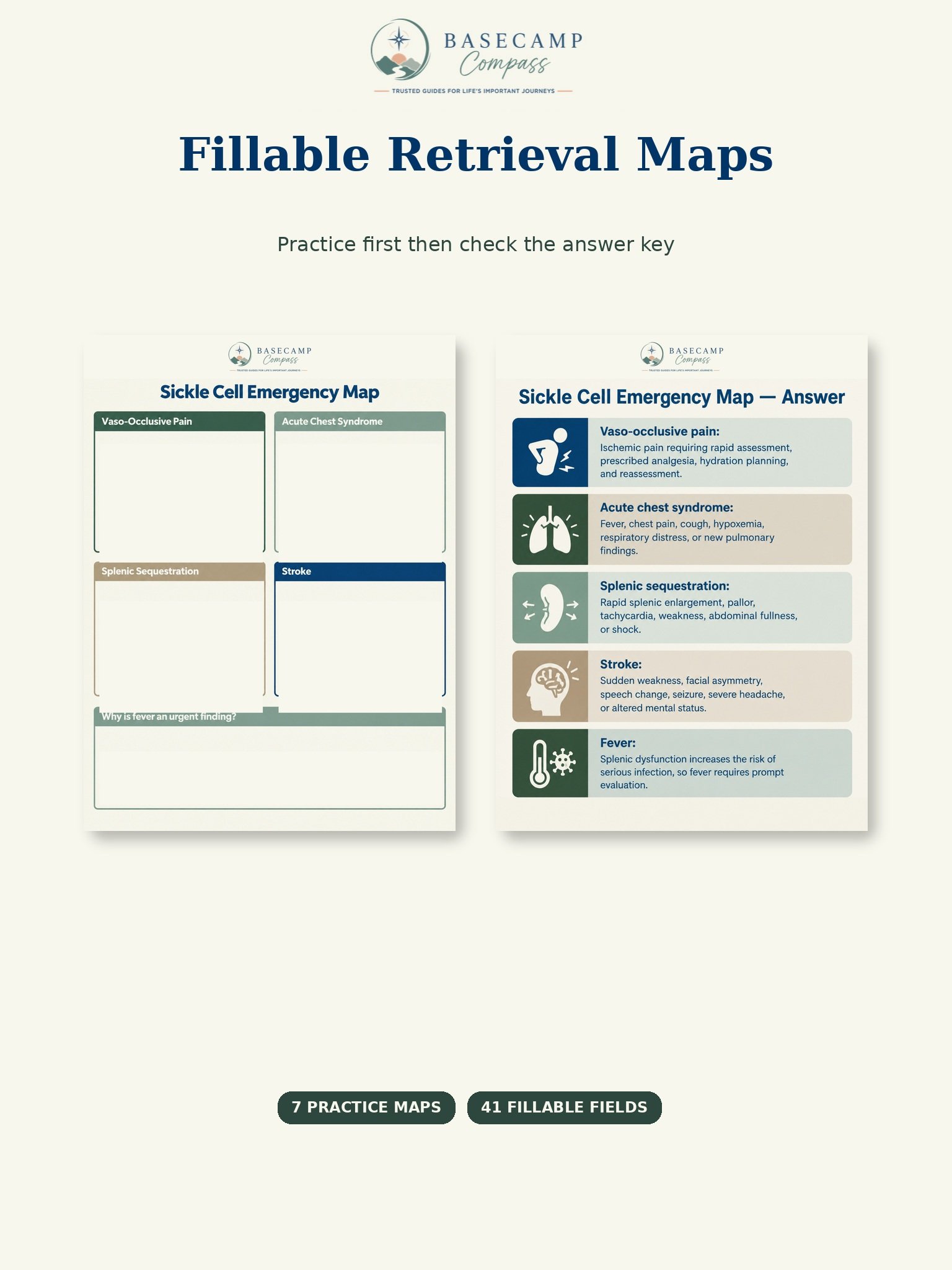
Move from learning to retrieval practice to clinical reasoning with this pediatric cardiac bundle, all in one cohesive kit. The Pediatric Cardiovascular and Hematologic Disorders Trail Kit combines a visual Trail Guide, quick-reference Compass Cards, fillable Retrieval Maps, and Campfire Challenge questions. Each Retrieval Map student page is followed immediately by its answer key, and every Campfire Challenge is followed by its answer and rationale for instant feedback. The maps include 41 interactive fields that can be cleared and reused. This pediatric cardiac bundle is a study companion and does not replace assigned course materials, current clinical references, facility policy, or clinical judgment.
Sale!


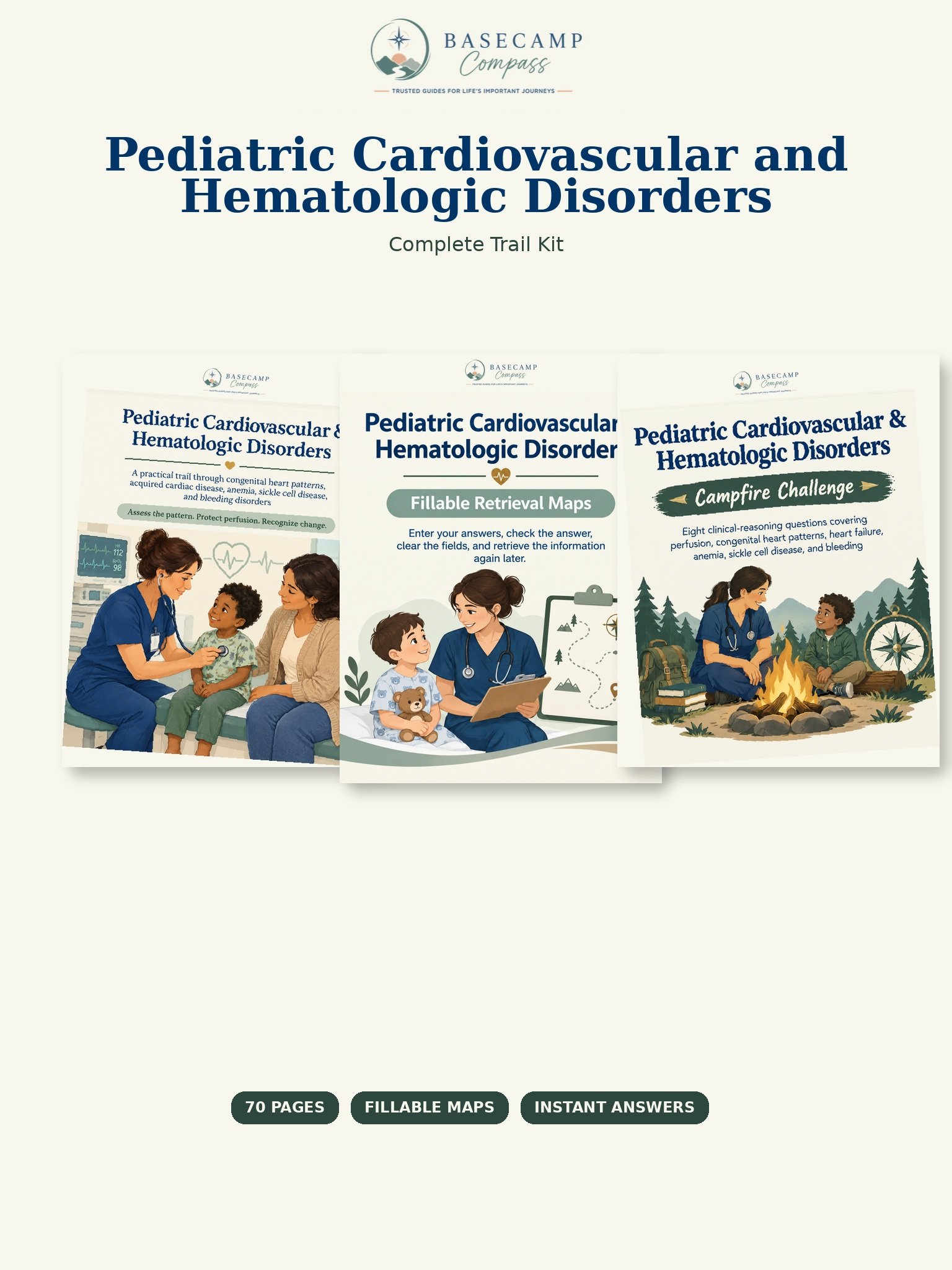
Pediatric Cardiovascular and Hematologic Disorders Trail Kit
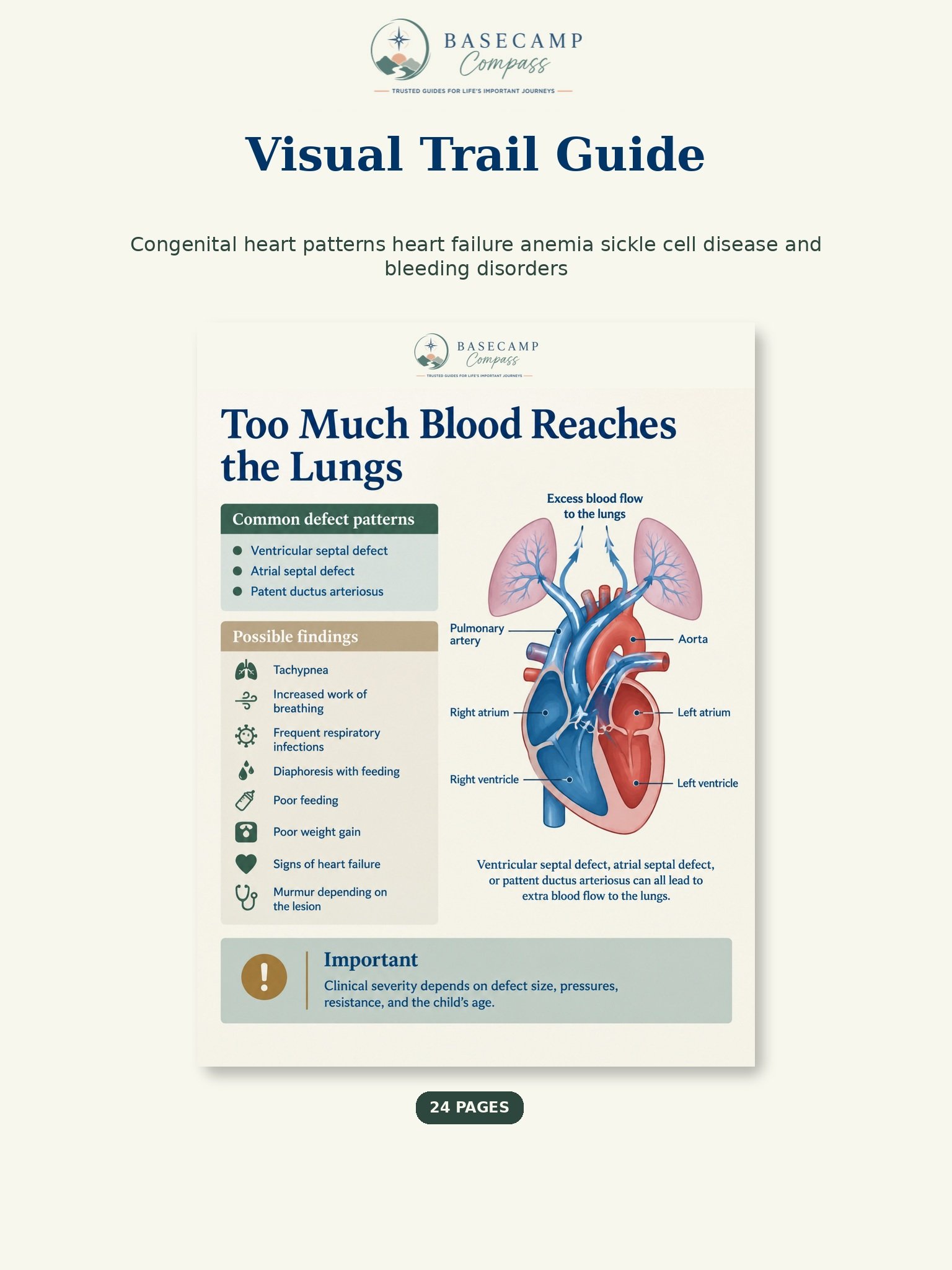
A complete 70-page pediatric nursing study kit with a 24-page Trail Guide, 12 Compass Cards, seven fillable Retrieval Maps with answer keys, and eight Campfire Challenges with immediate answers.
- Estimated Reading Time: 1 hour
- Pages: 70 pages total
- Skill Level: All Levels
- Format: Digital Download (PDF + Audio)
$15.00 Original price was: $15.00.$9.99Current price is: $9.99.
DIGITAL · INSTANT ACCESS
What You'll Learn
Organize congenital heart disorders by blood-flow pattern and perfusion findings.
Recognize heart failure, Kawasaki disease, rheumatic fever, anemia, sickle cell emergencies, and bleeding disorders.
Practice recall with seven fillable student maps and immediate answer keys.
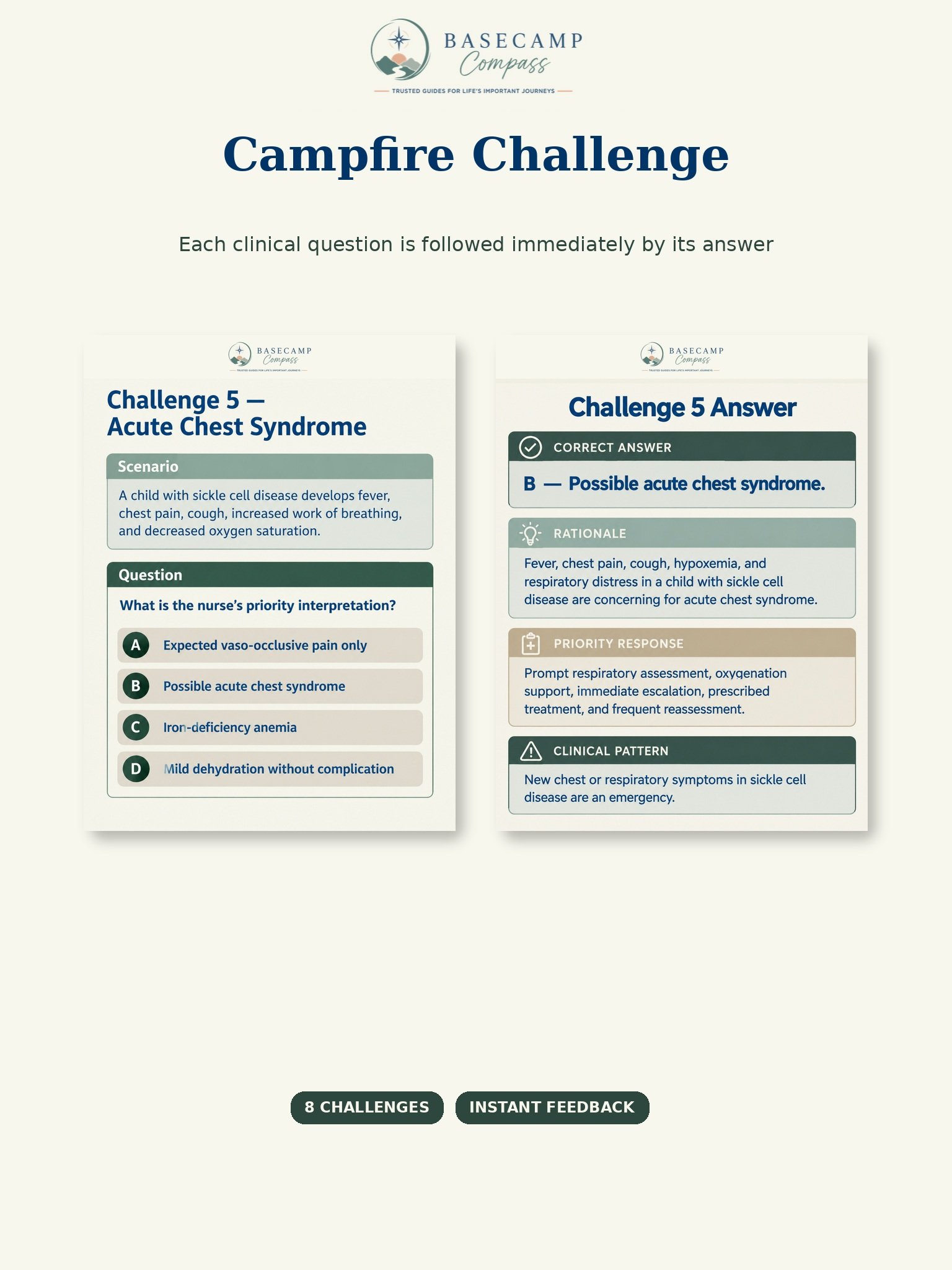
Apply priorities through eight clinical Campfire Challenges with immediate rationales.
Review quickly with twelve visual Compass Cards.
Table of contents
24-page visual Trail Guide
12-page Compass Card set
Seven fillable Retrieval Maps with seven answer keys
Eight Campfire Challenge questions with eight immediate answer pages
Cardiac assessment, congenital heart patterns, heart failure, acquired cardiac disease, anemia, sickle cell disease, bleeding disorders, and transfusion safety
Be the first to review “Pediatric Cardiovascular and Hematologic Disorders Trail Kit” Cancel reply
How It Works: Your Learning Journey
LEARN
The Guide Teaches The Journey.
REMEMBER
Reinforce important concepts.
CHALLENGE
Test your knowledge and build confidence.
Campfire Challenge Preview
Take a look inside
Sample 1 — Feeding Fatigue
An infant with a congenital heart defect becomes tachypneic and diaphoretic during feeding. Feedings take 45 minutes, and weight gain has slowed. Which interpretation is most appropriate? A These are expected developmental findings B The infant may be showing heart-failure symptoms C The infant needs a larger feeding volume at once D Sweating confirms a fever
Sample 2 — Acute Chest Syndrome
A child with sickle cell disease develops fever, chest pain, cough, increased work of breathing, and decreased oxygen saturation. Question: What is the nurse’s priority interpretation? A Expected vaso-occlusive pain only B Possible acute chest syndrome C Iron-deficiency anemia D Mild dehydration without complication
Sample 3 — Transfusion Reaction
Ten minutes after a blood transfusion begins, a child develops chills, flushing, shortness of breath, and sudden anxiety. Question: What should the nurse do first? A Increase the transfusion rate B Stop the transfusion and assess the child C Reassure the child and continue D Disconnect all vascular access
Reviews
There are no reviews yet.