
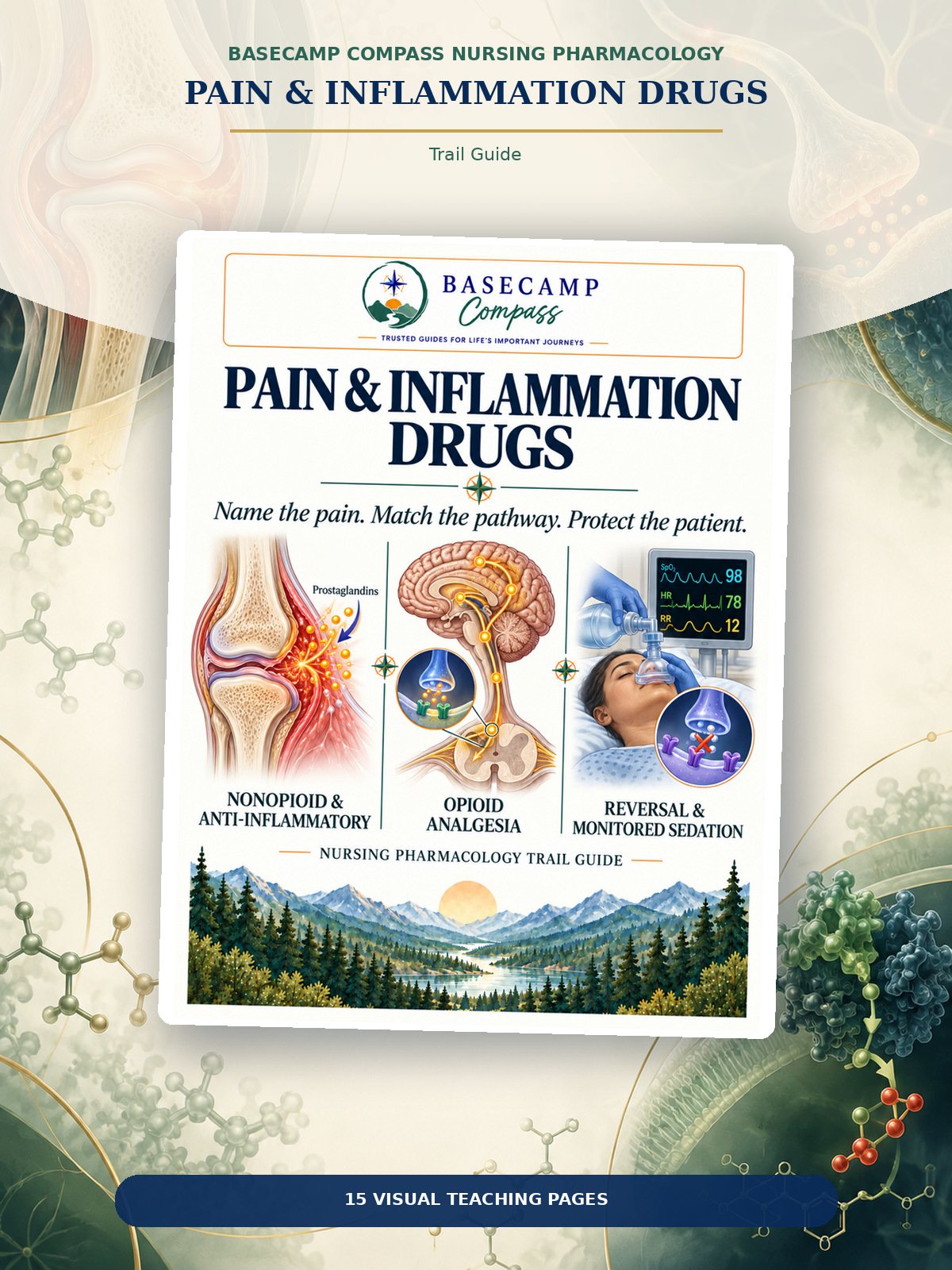
Pain & Inflammation Drugs Trail Guide
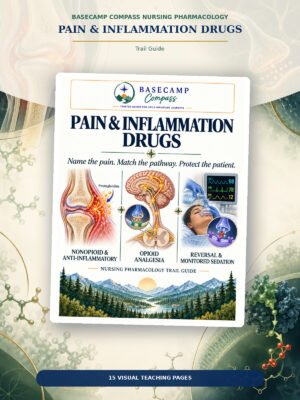
A 15-page printable trail guide mapping pain and inflammation drug classes, key prototypes, and nursing priorities — built for exam review and clinical confidence.
- Estimated Reading Time: 30 minutes
- Pages: 15
- Skill Level: All Levels
- Format: Digital Download (PDF)
$4.99
PDF · Instant download
What You'll Learn
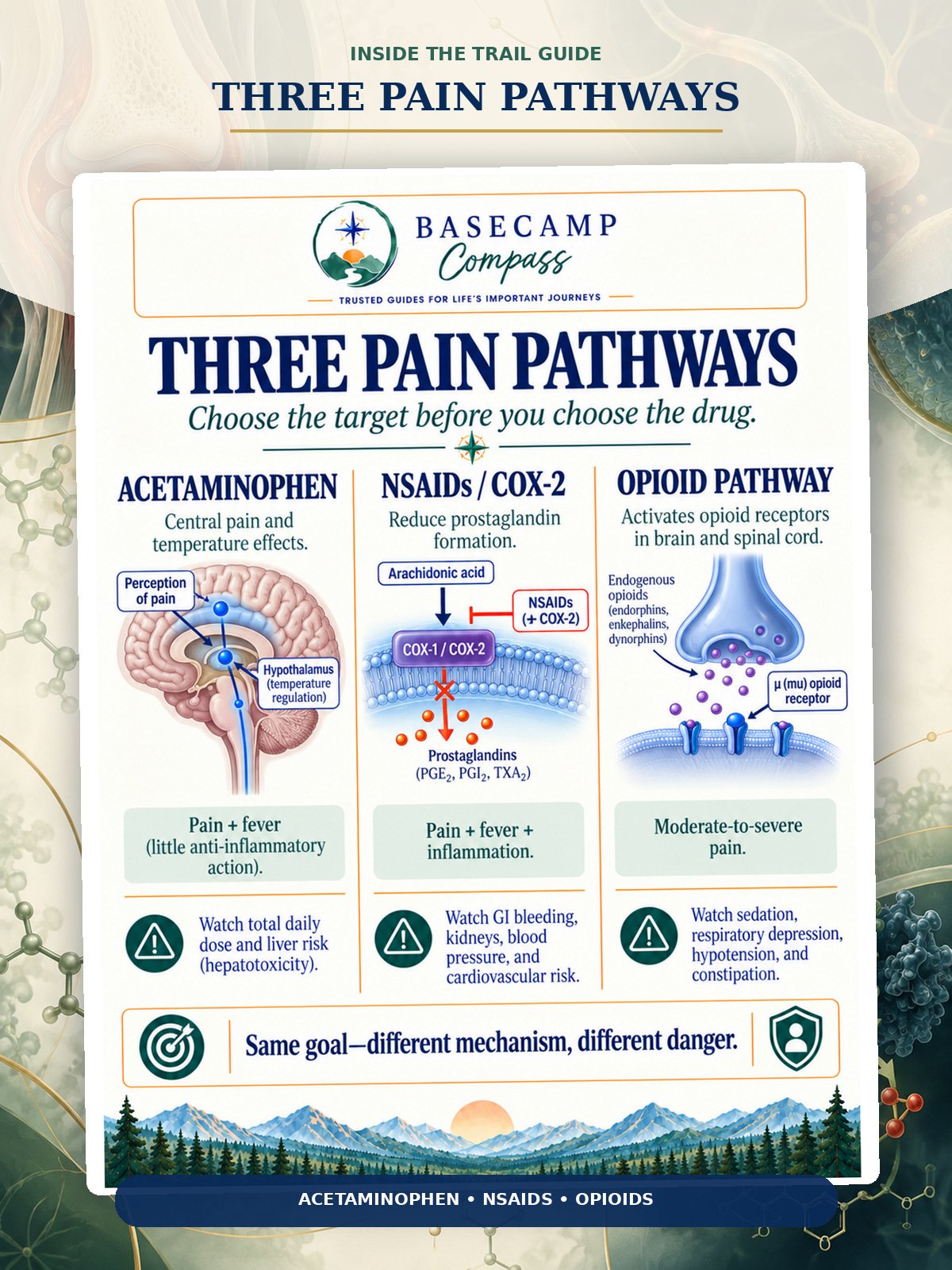
Compare acetaminophen with traditional and COX-2–selective NSAIDs.
Relate prostaglandin inhibition to pain relief, bleeding, renal injury, and cardiovascular risk.
Compare major opioid analgesics by potency, monitoring, and respiratory danger.
Recognize tramadol-related seizure and serotonin-syndrome concerns.
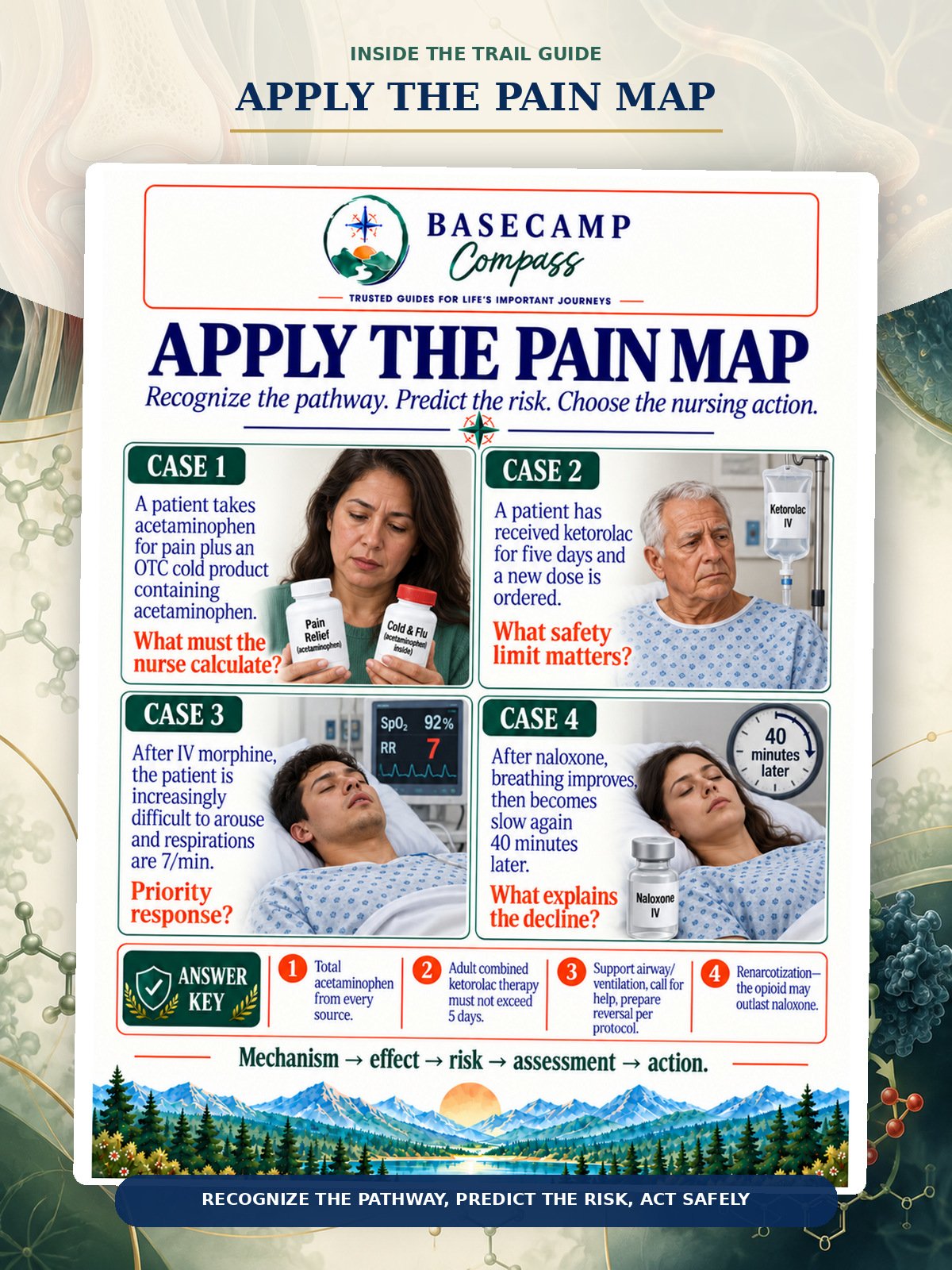
Explain naloxone reversal, short duration, and the need for continued monitoring.
Distinguish fentanyl and ketamine safety considerations from conventional analgesic therapy.
Table of contents
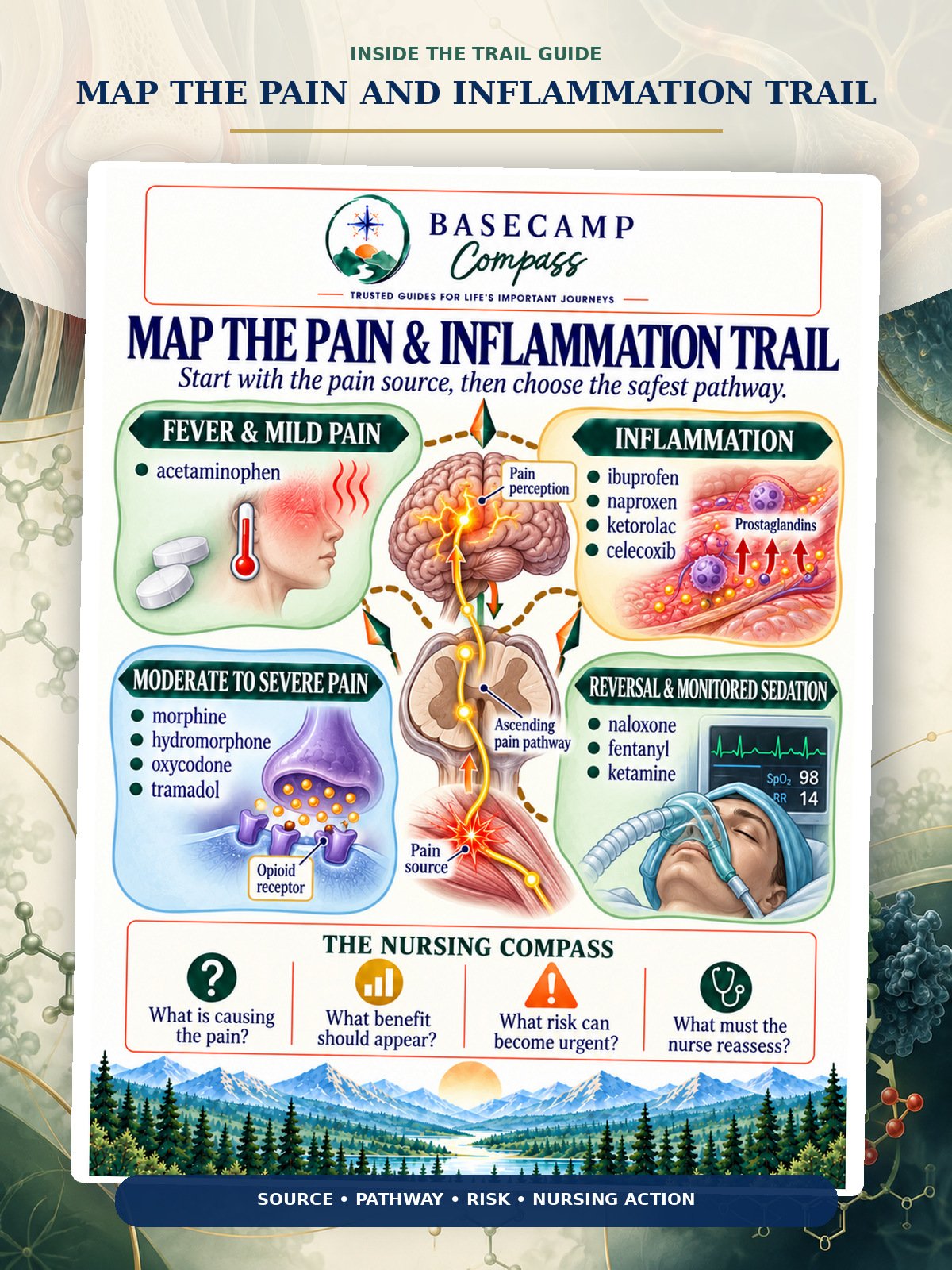
Map Pain and Inflammation
Acetaminophen and Liver Safety
Ibuprofen Versus Naproxen
Ketorolac and Short-Term NSAID Therapy
Celecoxib and Selective COX-2 Inhibition
Morphine, Hydromorphone, and Oxycodone
Tramadol
Naloxone and Recurrent Opioid Toxicity
Fentanyl and Ketamine
Respiratory, Renal, GI, and Neurologic Safety
The Pain & Inflammation Drugs Trail Guide helps nursing students compare nonopioid analgesics, NSAIDs, opioids, reversal therapy, and specialized pain or sedation medications. The guide begins with a practical question—where is the pain or inflammatory signal being changed?—and follows that effect to the medication’s benefits, risks, assessments, and teaching needs.
Across 15 printable pages, learners review acetaminophen, ibuprofen, naproxen, ketorolac, celecoxib, morphine, hydromorphone, oxycodone, tramadol, naloxone, fentanyl, and ketamine. The guide distinguishes liver toxicity from gastrointestinal and renal NSAID risks, compares opioid potency and respiratory effects, and explains why tramadol, fentanyl, and ketamine require their own safety frameworks.
Clinical connections include maximum-dose awareness, bleeding, kidney injury, cardiovascular risk, sedation, constipation, respiratory depression, serotonin syndrome, seizures, resedation after naloxone, chest-wall rigidity, dissociation, and emergence reactions. This resource supports nursing pharmacology and exam review and does not replace pain-management protocols, medication references, or clinical judgment.
Digital product: Includes one 15-page printable PDF. No physical product will be shipped.
Complete the set: pair this Trail Guide with the Compass Cards + Audio Companion, or get everything together in the Trail Kit.
How It Works: Your Learning Journey
LEARN
The Guide Teaches The Journey.
REMEMBER
Reinforce important concepts.
CHALLENGE
Test your knowledge and build confidence.

Campfire Challenge Preview
Sample Challenge Questions
Is this a printable file?
Yes. Your download is a print-ready, high-resolution PDF licensed for your personal professional use.
How quickly do I get it?
Instantly. The download link appears on the confirmation screen and in your email receipt.
Reviews
There are no reviews yet.