
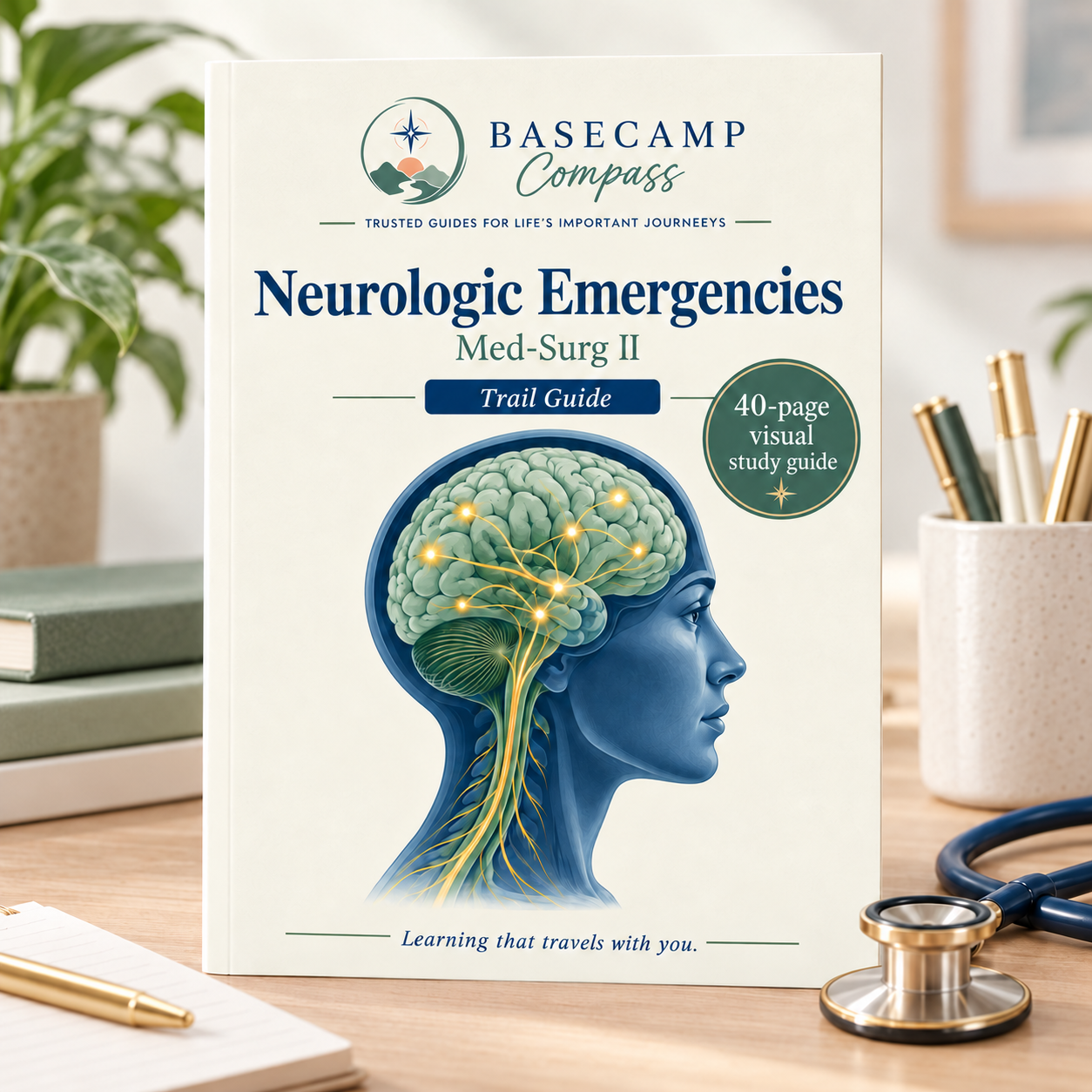
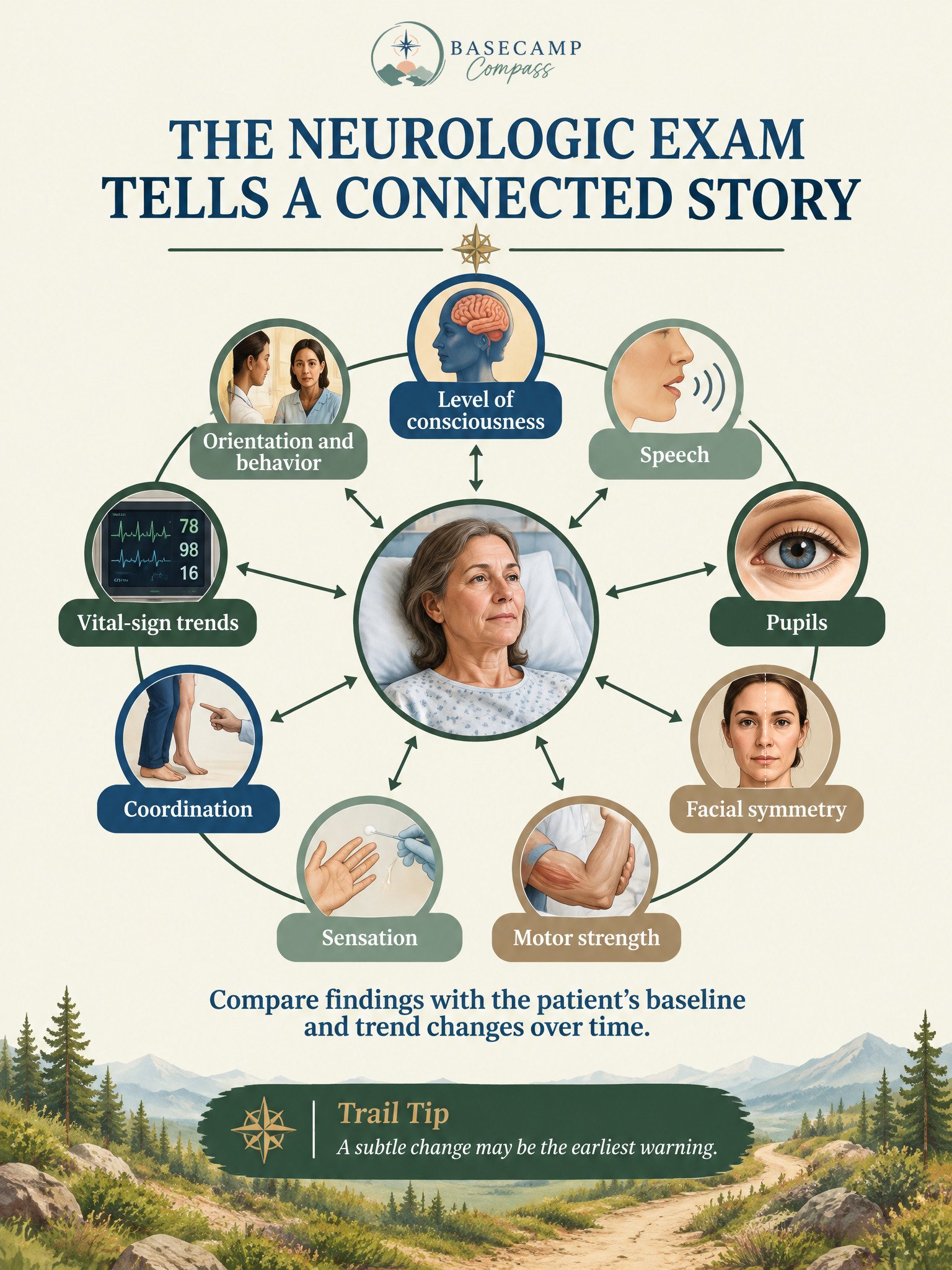
Neurologic Emergencies Trail Guide is a 40-page visual study companion for Med-Surg II nursing students. It connects urgent assessment findings with the first nursing priorities, safety concerns and changes that require escalation. Use it alongside your course resources to organize time-sensitive patterns and revisit difficult topics.
The guide starts with the emergency first look, focused assessment, consciousness, Glasgow Coma Scale, pupils and motor or sensory changes. Intracranial pressure and herniation sections connect early deterioration with airway, perfusion, positioning and monitoring priorities.
Stroke sections cover ischemic and hemorrhagic patterns, TIA, last known well, urgent diagnostics, thrombolytic safety and thrombectomy. Seizures, status epilepticus, meningitis, encephalitis, head injury and intracranial bleeding are then reviewed with their nursing safety connections.
Spinal cord injury, spinal versus neurogenic shock, autonomic dysreflexia and neuromuscular respiratory crises complete the emergency patterns. Medication safety, aspiration prevention, temperature, glucose and oxygenation bring the concepts back to nursing assessment and escalation. Two integrated practice pages and a final trail check reinforce the connections.
This standalone digital product includes the Trail Guide PDF. Cards, audio, Retrieval Maps and Campfire Challenges are separate products or part of the Trail Kit. This resource supports study and does not replace course texts, clinical instruction or current facility protocols.
WHAT YOU WILL LEARN
- Recognize neurologic deterioration through focused assessment and trends.
- Record GCS components and recognize limitations in untestable responses.
- Connect increased ICP and herniation patterns with urgent safety priorities.
- Distinguish stroke patterns and document last known well separately from discovery.
- Review seizure, CNS infection and head-injury emergency responses.
- Compare spinal shock, neurogenic shock, autonomic dysreflexia and respiratory crises.
- Organize medication, aspiration, glucose, temperature, ventilation and perfusion safety.
TABLE OF CONTENTS
- Orientation and neurologic emergency first look
- Focused assessment, consciousness, GCS, pupils and motor/sensory changes
- ICP concepts, recognition, nursing priorities and herniation
- Ischemic and hemorrhagic stroke, TIA and last known well
- Stroke diagnostics, thrombolytic safety, thrombectomy and complications
- Status epilepticus, seizure safety and postictal deterioration
- Bacterial meningitis and encephalitis
- TBI, epidural/subdural hematoma and basilar skull fracture
- Spinal cord injury, shock comparison, autonomic dysreflexia, MG and GBS respiratory crises
- Medication safety, aspiration prevention, physiologic protection, integrated practice and final trail check

Reviews
There are no reviews yet.