
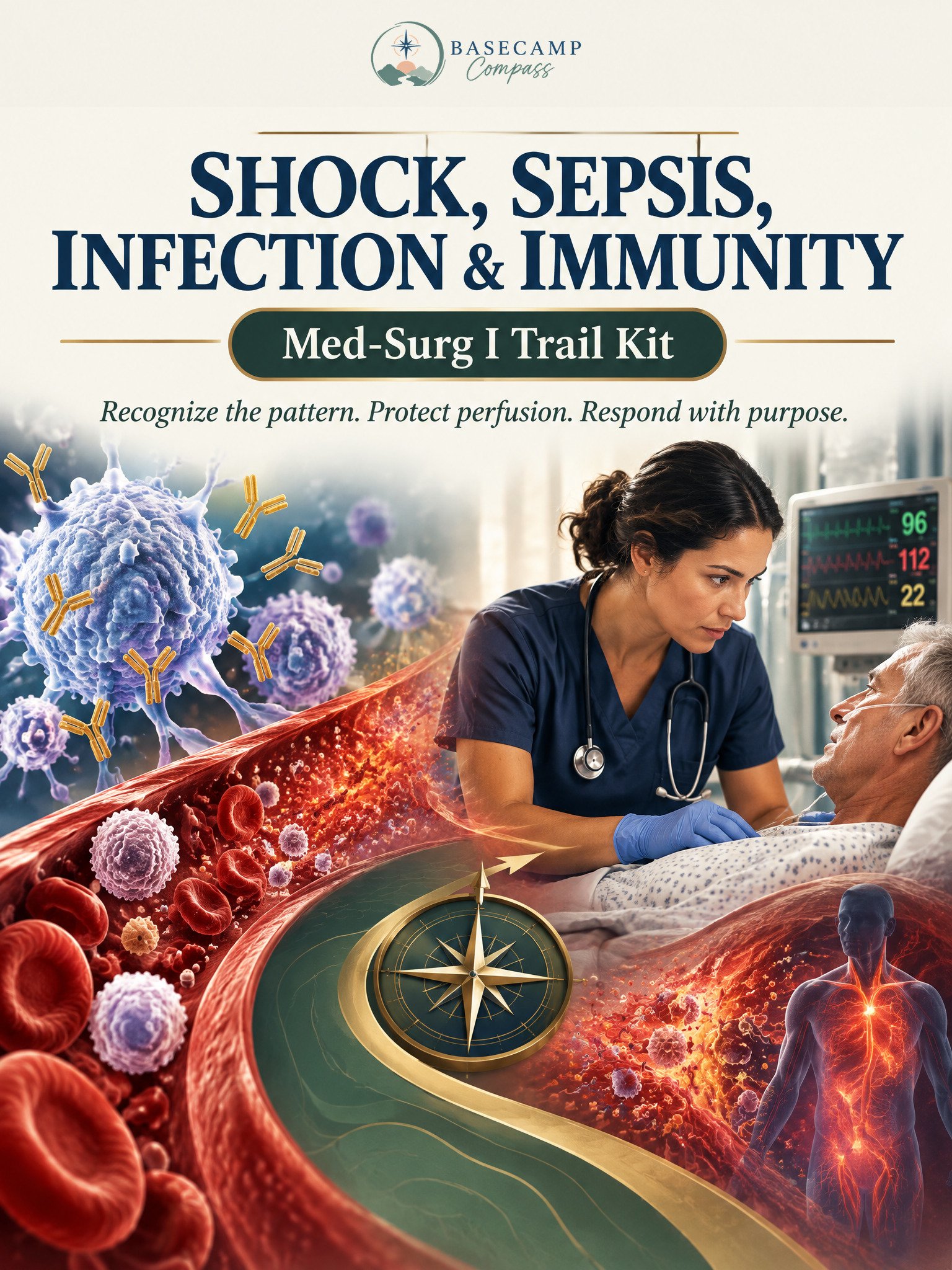
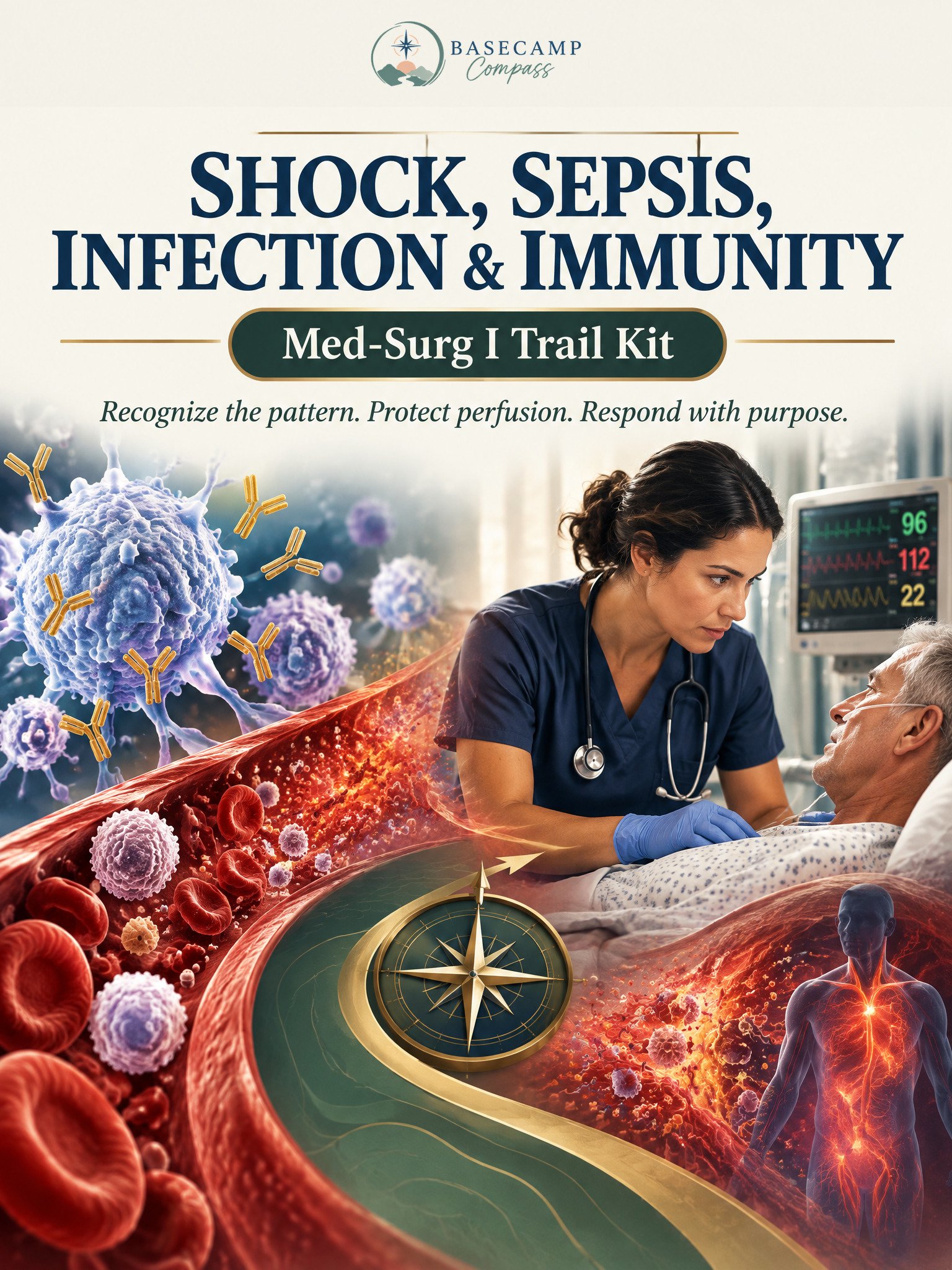


MedSurg I Shock, Sepsis, Infection & Immunity Trail Guide
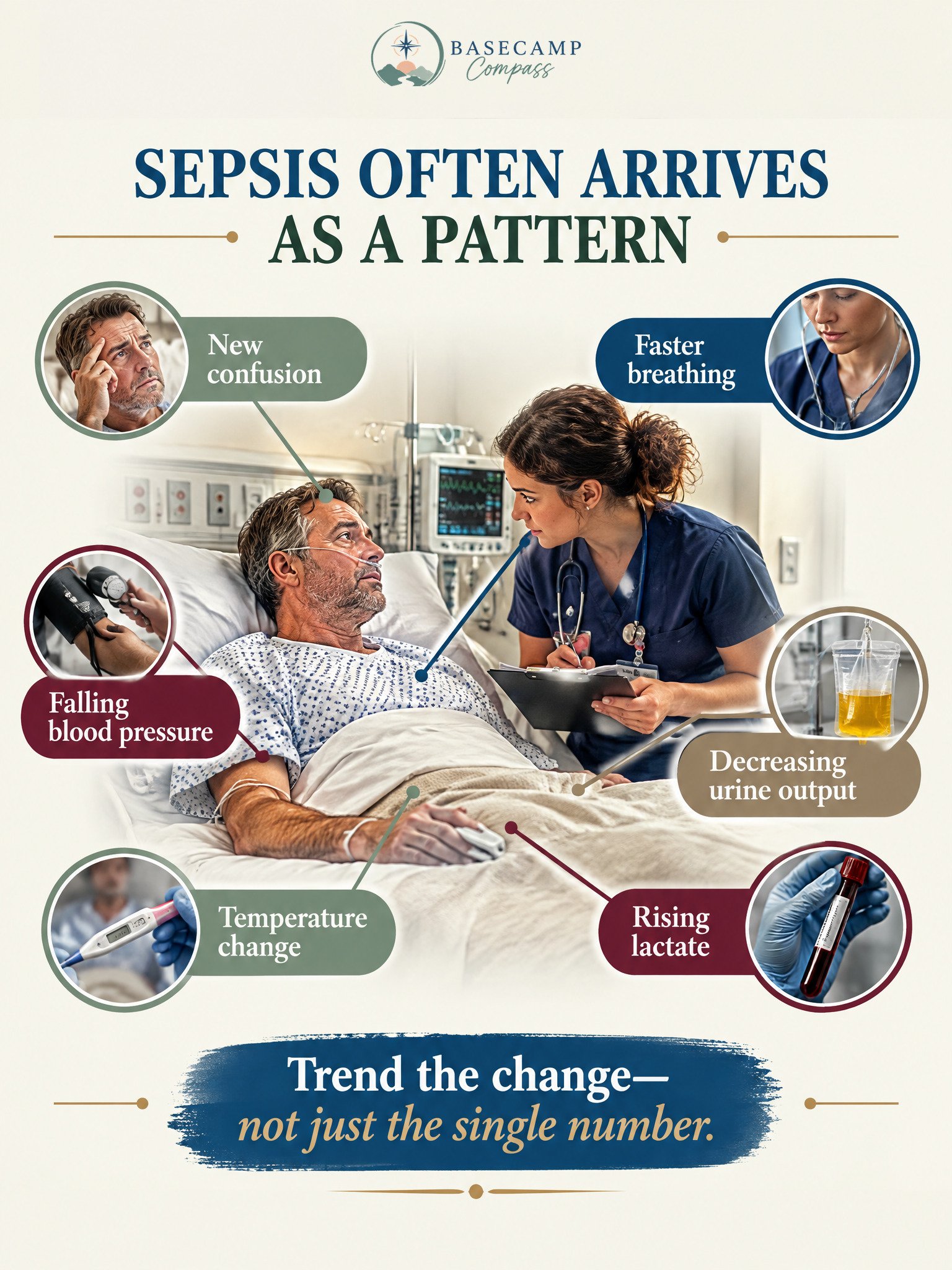
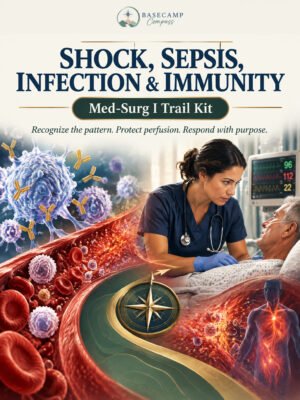
Shock and sepsis become easier to recognize when students can connect immune defense, infection, inflammation, organ dysfunction, and perfusion as one changing clinical story. This 48-page visual Trail Guide turns those relationships into a structured path from foundational immunity through infection prevention, early sepsis recognition, shock states, and reassessment.
- Estimated Reading Time: 30 minutes
- Pages: 48
- Skill Level: All Levels
- Format: Digital Download (PDF)
$9.99
PDF · Instant download
What You'll Learn
Explain how innate and adaptive immunity respond to infection.
Break the chain of infection and match transmission patterns with precautions.
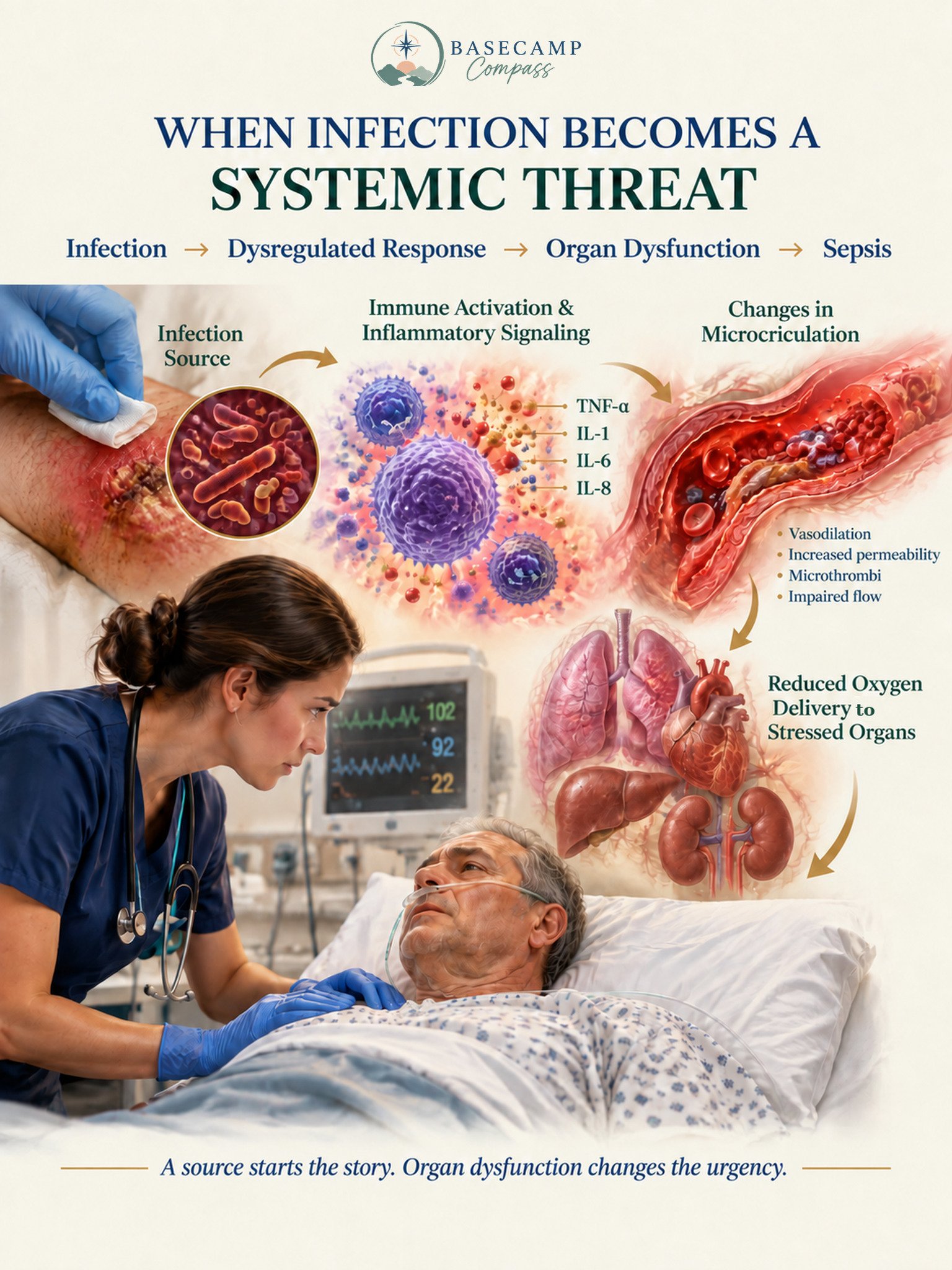
Recognize the transition from localized infection to organ dysfunction and sepsis.
Assess perfusion using mental status, skin, pulses, blood pressure, urine output, oxygenation, and lactate trends.
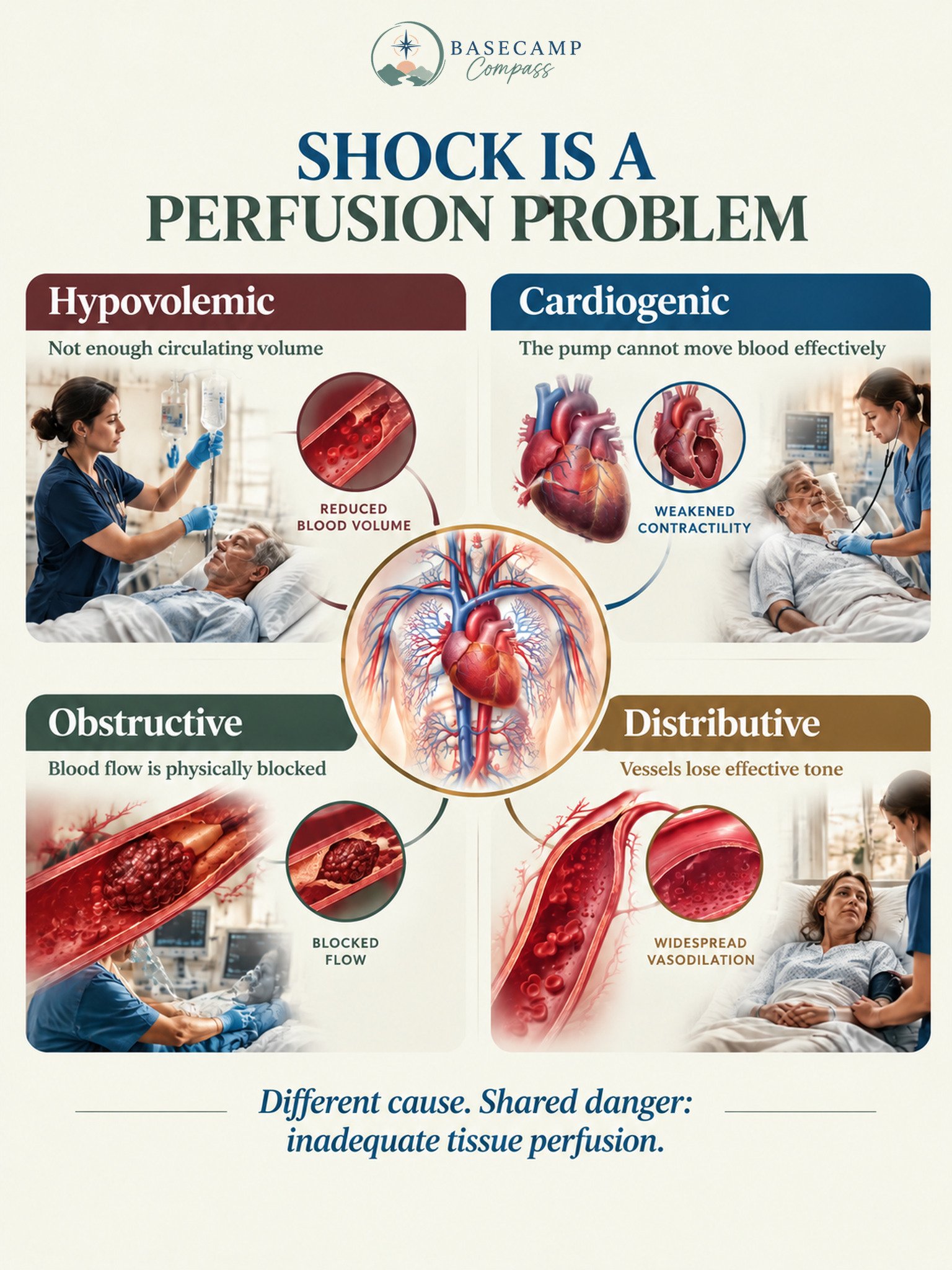
Compare hypovolemic, cardiogenic, obstructive, and distributive shock.
Connect fluids, vasopressors, source control, and frequent reassessment with clinical priorities.
Table of contents
Welcome and Trail Map
Immunity at a Glance
First-Line Defenses
Innate Immunity
Adaptive Immunity
Innate vs Adaptive Immunity
White Blood Cell Roles
Inflammation
Local vs Systemic Response
Infection Language
Chain of Infection
Breaking the Chain
Standard Precautions
Transmission-Based Precautions
Precaution Pattern Recognition
Culture Collection
Infection Lab Clues
Subtle Infection
Healthcare-Associated Infection Prevention
CAUTI Prevention
Central-Line Infection Prevention
Surgical-Site Infection Prevention
Infection to Sepsis
Common Sources of Sepsis
Early Recognition
Organ Dysfunction Clues
Bedside Perfusion Assessment
Lab Patterns
Initial Response
Cultures and Antimicrobials
Fluid Resuscitation
Vasopressor Support
Septic Shock
Shock Overview
Compensated Shock
Progressive Shock
Hypovolemic Shock
Hemorrhagic Shock
Cardiogenic Shock
Obstructive Shock
Distributive Shock
Neurogenic Shock
Anaphylactic Shock
Disseminated Intravascular Coagulation
Reassessment and Prioritization
Closing Review
Companion Compass Card Sets
Recommended for this trail.



NCLEX Compass Cards plus Audio Companion
Build fast clinical recognition with 192 original NCLEX-style questions organized
$39.99

TRAIL KIT
Everything recommended
for this journey.
- First Week in the OR Trail Guide
- OR Fundamentals Compass Cards
- Patient Safety Compass Cards
- Documentation & Handoffs Cards

EXCLUSIVE CAMPFIRE
CHALLENGE CARDS
Only available inside Trail Kits,
Shock and sepsis become easier to recognize when students can connect immune defense, infection, inflammation, organ dysfunction, and perfusion as one changing clinical story. This 48-page visual Trail Guide turns those relationships into a structured path from foundational immunity through infection prevention, early sepsis recognition, shock states, and reassessment.
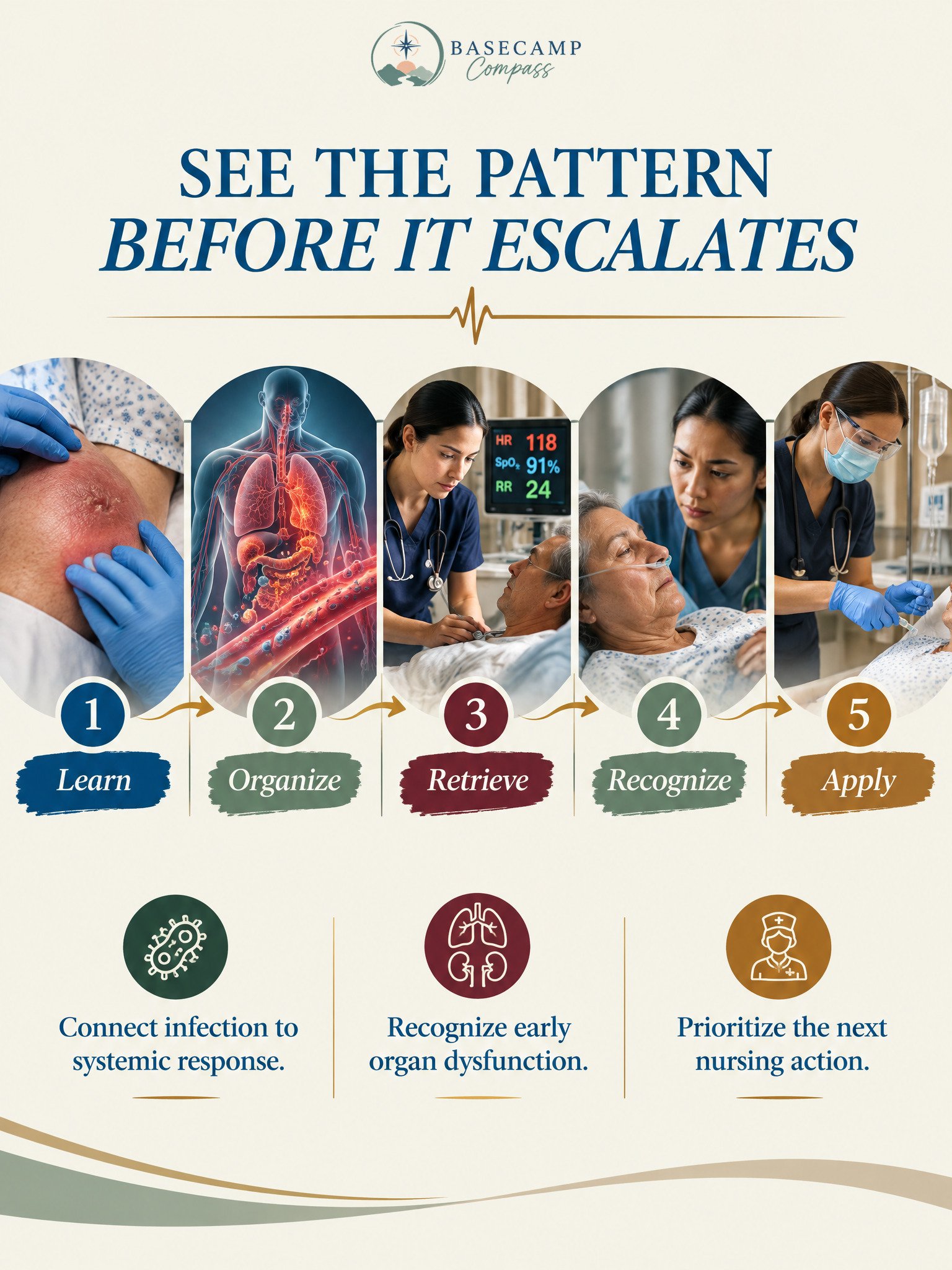
Students move from innate and adaptive immunity into white blood cells, inflammation, the chain of infection, precautions, culture collection, infection clues, healthcare-associated infection prevention, sepsis, organ dysfunction, lactate and perfusion trends, fluid and vasopressor support, and the major categories of shock. The guide repeatedly returns to patient direction: what changed, what suggests inadequate perfusion, and what must be escalated now.
Designed for nursing-school review, clinical preparation, and focused exam study, the guide pairs concise explanation with visual pattern recognition. It supports learning and clinical reasoning while reinforcing that facility policy, provider orders, emergency protocols, and patient-specific judgment govern care.
What You Will Learn
- Explain how innate and adaptive immunity respond to infection.
- Break the chain of infection and match transmission patterns with precautions.
- Recognize the transition from localized infection to organ dysfunction and sepsis.
- Assess perfusion using mental status, skin, pulses, blood pressure, urine output, oxygenation, and lactate trends.
- Compare hypovolemic, cardiogenic, obstructive, and distributive shock.
- Connect fluids, vasopressors, source control, and frequent reassessment with clinical priorities.
- Recognize DIC, multiple organ dysfunction, and post-sepsis recovery needs.
Table of Contents
- Welcome and Trail Map
- Immunity at a Glance
- First-Line Defenses
- Innate Immunity
- Adaptive Immunity
- Innate vs Adaptive Immunity
- White Blood Cell Roles
- Inflammation
- Local vs Systemic Response
- Infection Language
- Chain of Infection
- Breaking the Chain
- Standard Precautions
- Transmission-Based Precautions
- Precaution Pattern Recognition
- Culture Collection
- Infection Lab Clues
- Subtle Infection
- Healthcare-Associated Infection Prevention
- CAUTI Prevention
- Central-Line Infection Prevention
- Surgical-Site Infection Prevention
- Infection to Sepsis
- Common Sources of Sepsis
- Early Recognition
- Organ Dysfunction Clues
- Bedside Perfusion Assessment
- Lab Patterns
- Initial Response
- Cultures and Antimicrobials
- Fluid Resuscitation
- Vasopressor Support
- Septic Shock
- Shock Overview
- Compensated Shock
- Progressive Shock
- Hypovolemic Shock
- Hemorrhagic Shock
- Cardiogenic Shock
- Obstructive Shock
- Distributive Shock
- Neurogenic Shock
- Anaphylactic Shock
- Disseminated Intravascular Coagulation
- Reassessment and Prioritization
- Closing Review
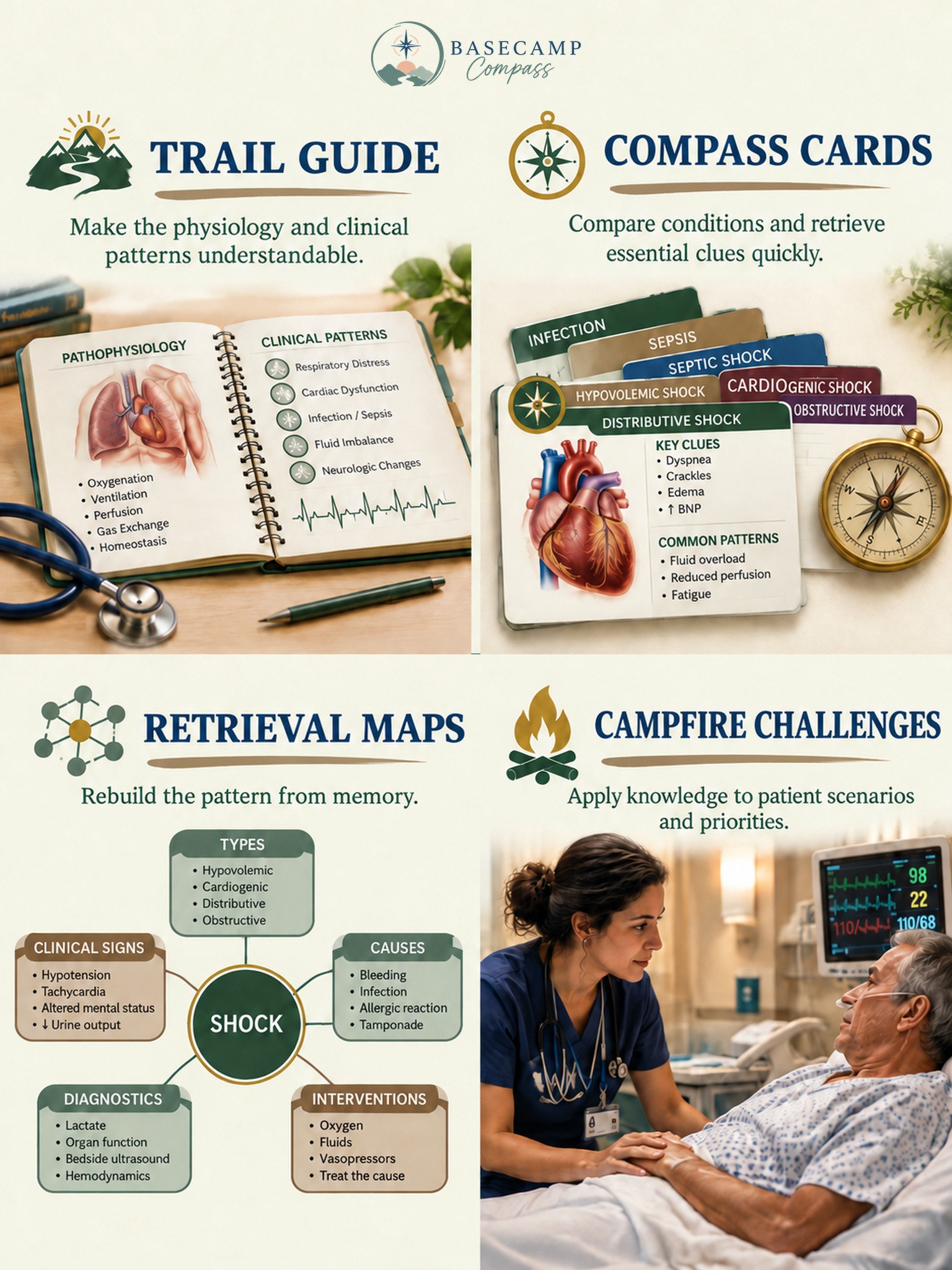
How It Works: Your Learning Journey
LEARN
The Guide Teaches The Journey.
REMEMBER
Reinforce important concepts.
CHALLENGE
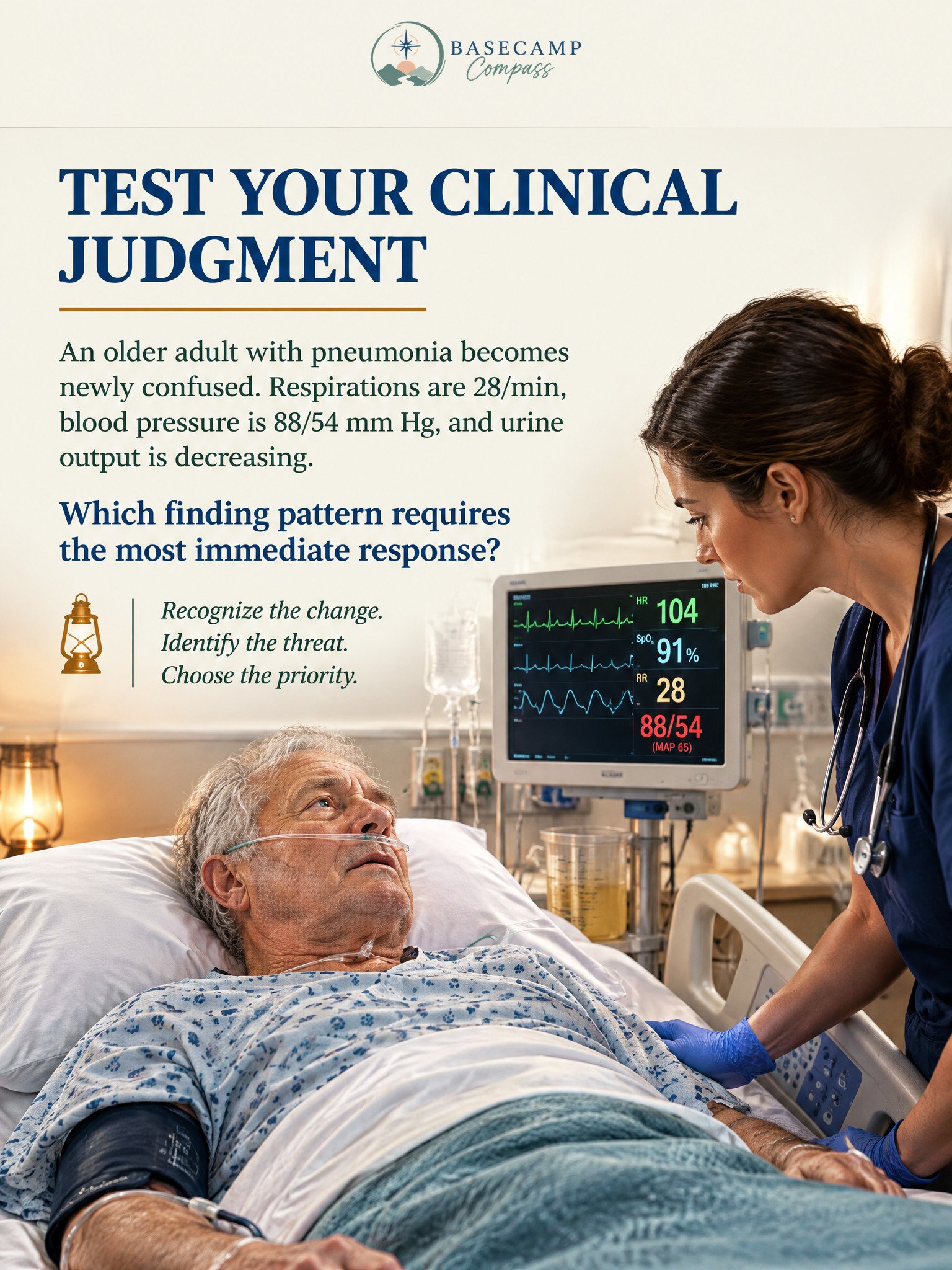
Test your knowledge and build confidence.

Reviews
There are no reviews yet.