
MedSurg I Respiratory Trail Guide
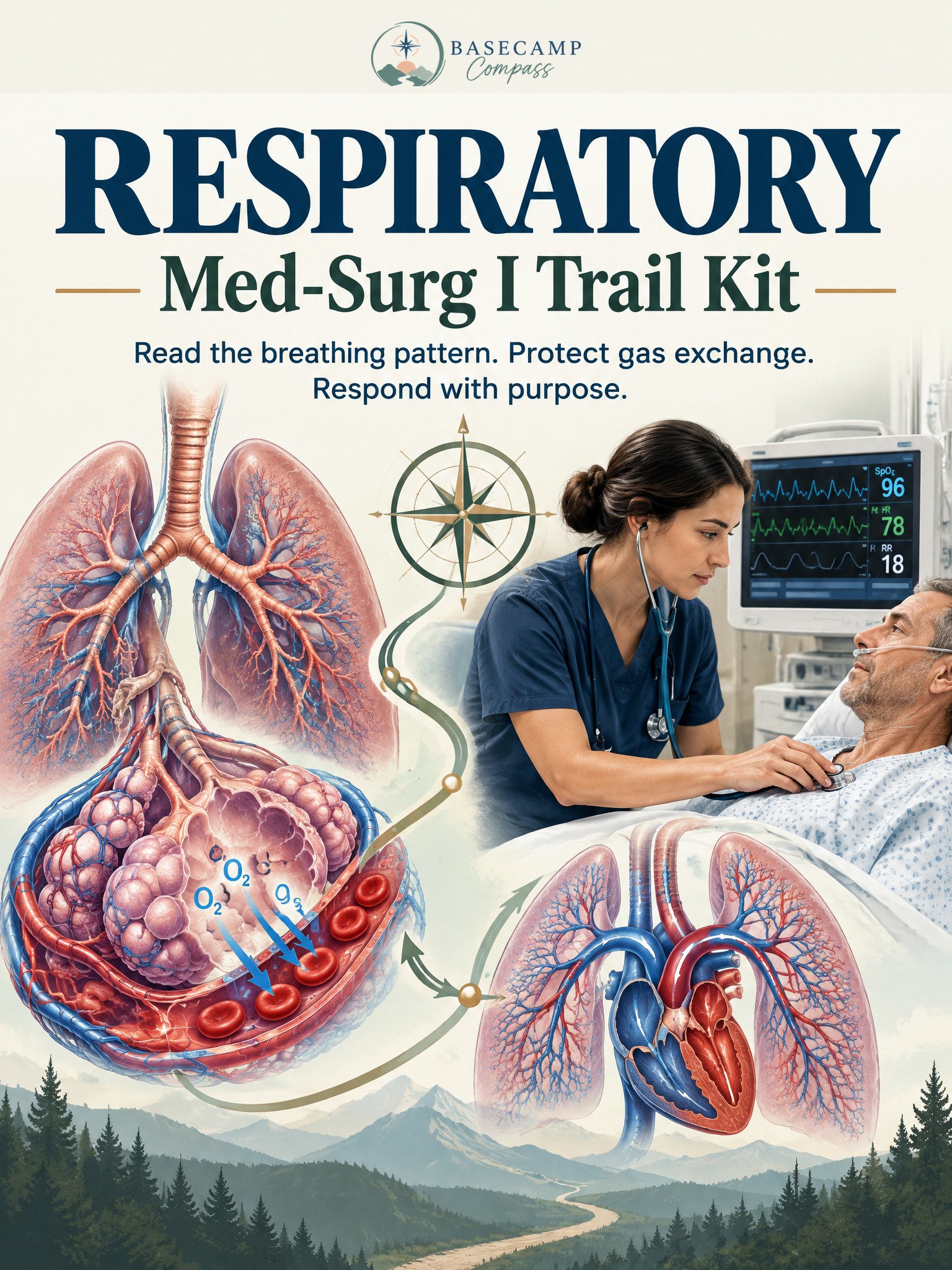
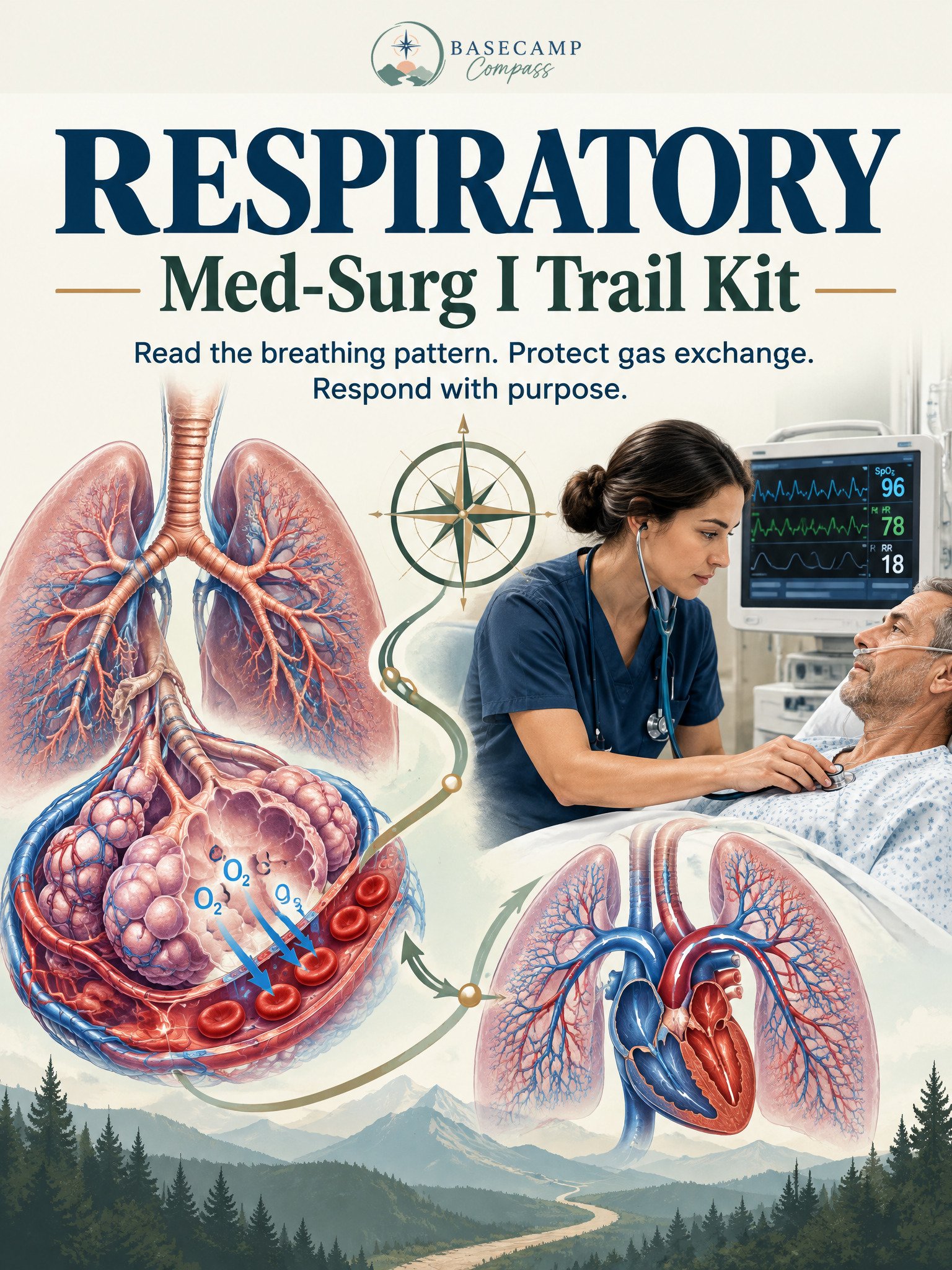
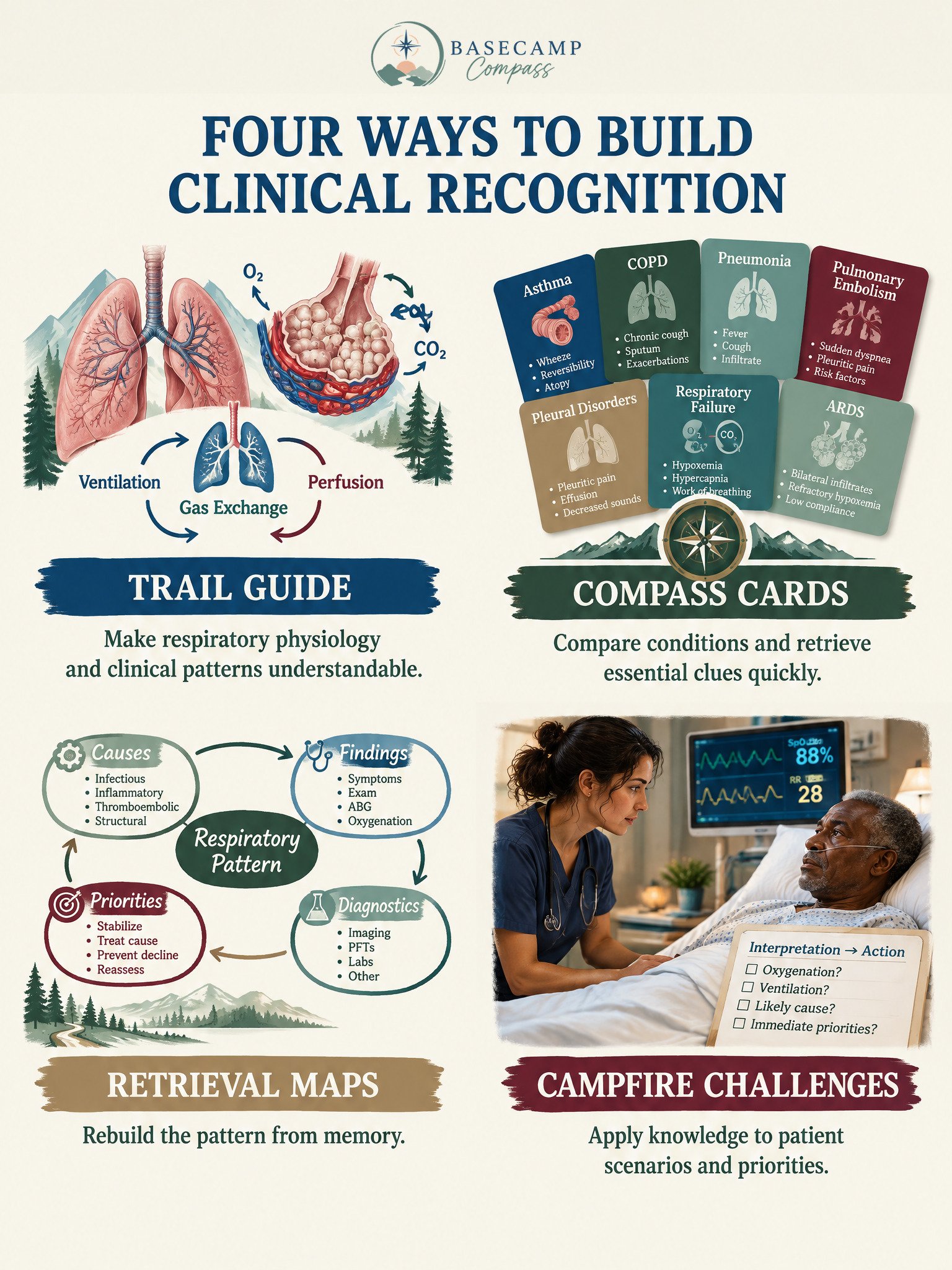
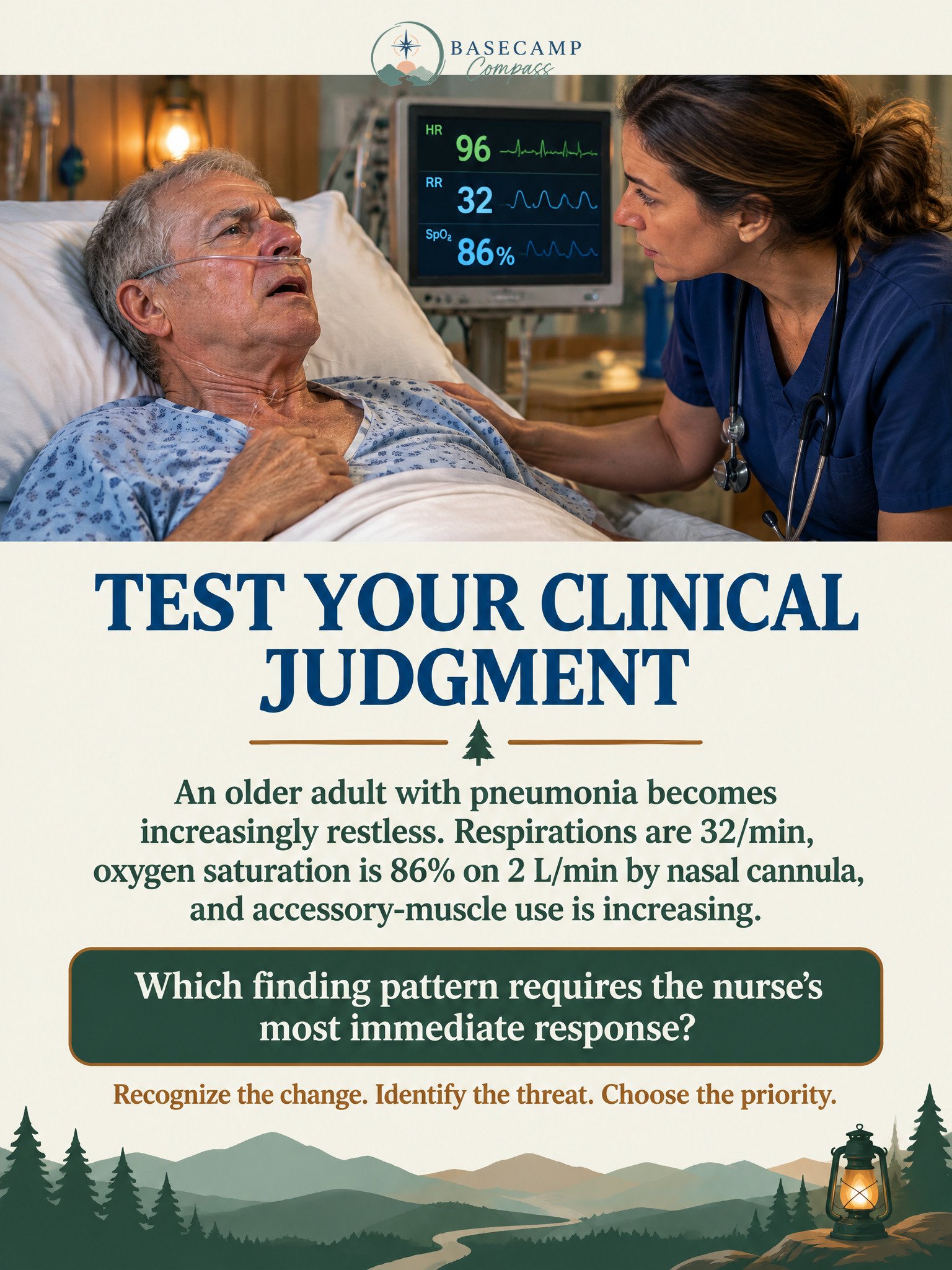
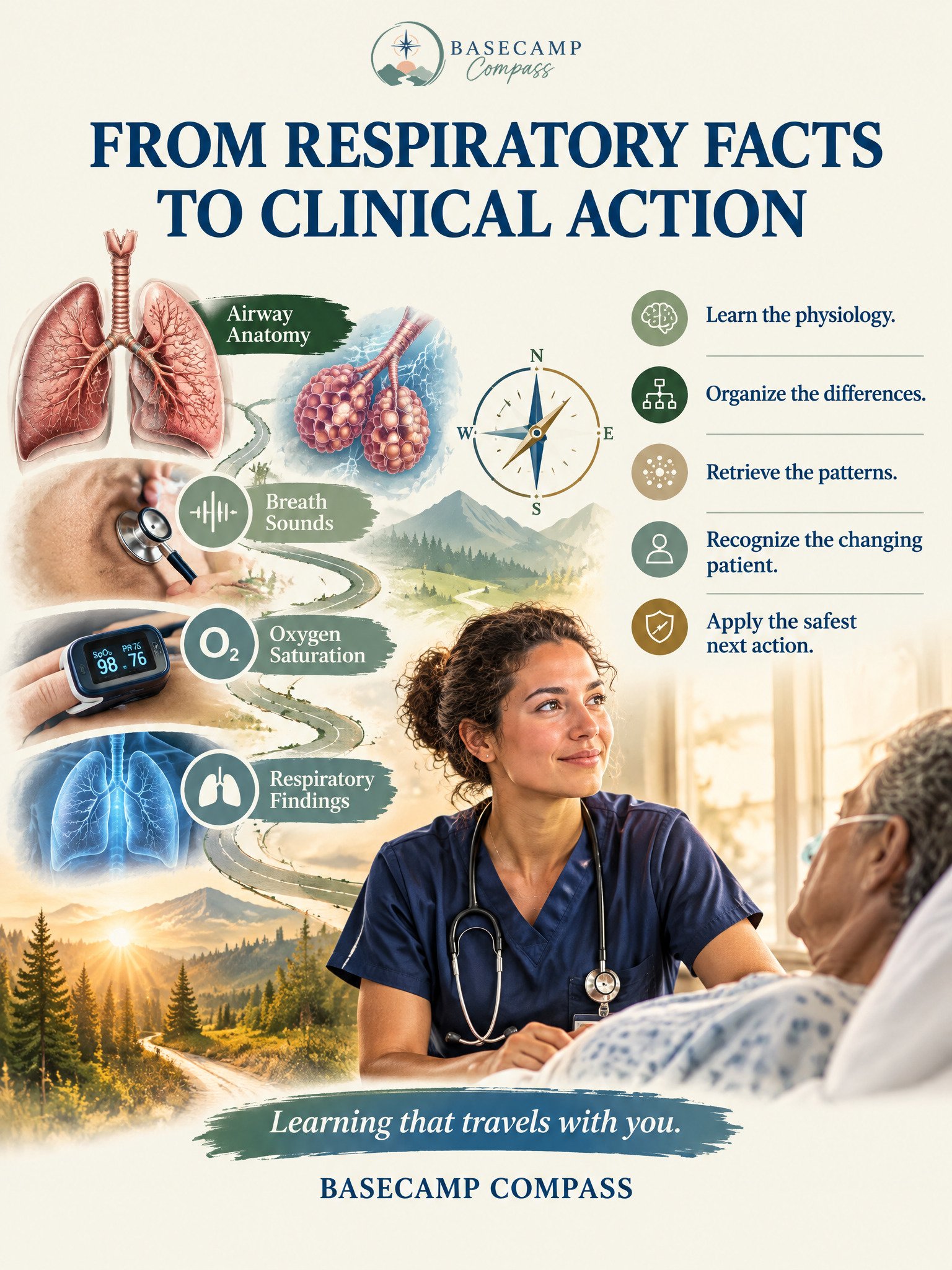
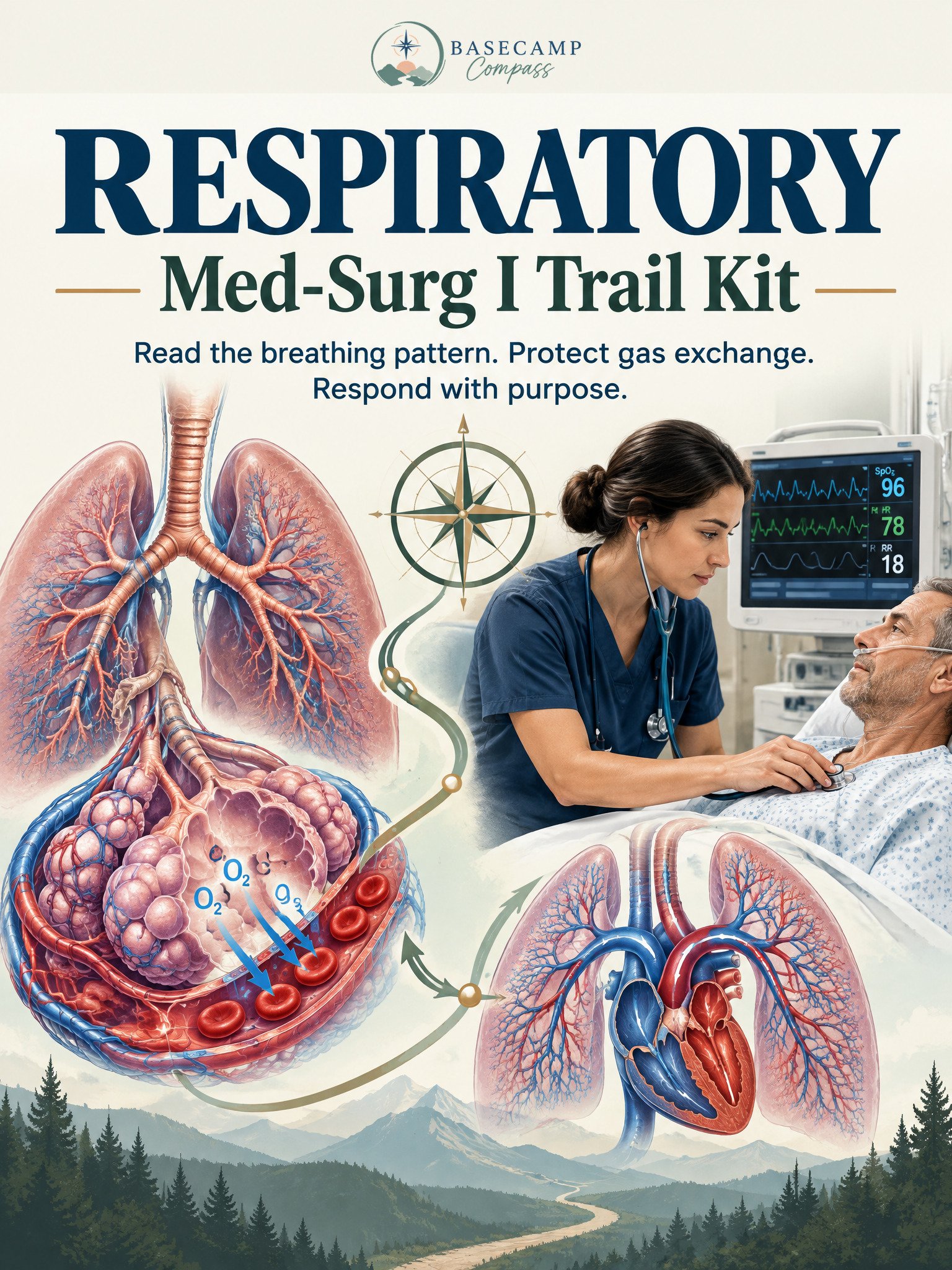
Respiratory nursing becomes easier when students can connect anatomy, ventilation, diffusion, perfusion, assessment findings, and the patient’s direction of change. This 39-page visual Trail Guide turns those connections into a clear clinical pathway rather than a list of disconnected disorders.
- Estimated Reading Time: 30 minutes
- Pages: 39
- Skill Level: All Levels
- Format: Digital Download (PDF)
$9.99
PDF · Instant download
What You'll Learn
Trace air from the upper airway to the alveoli and connect structure with function.
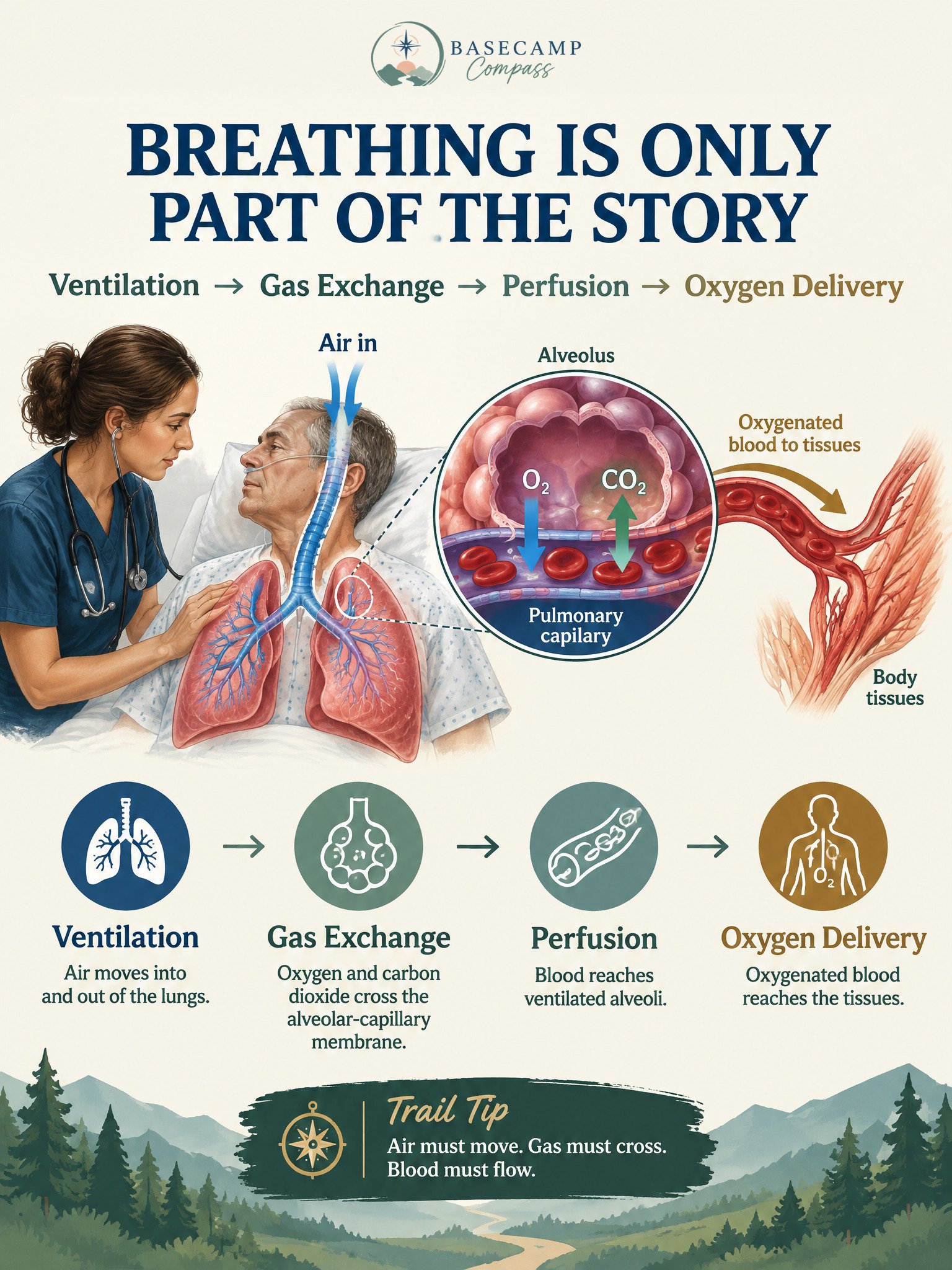
Differentiate ventilation, diffusion, perfusion, and oxygen delivery problems.
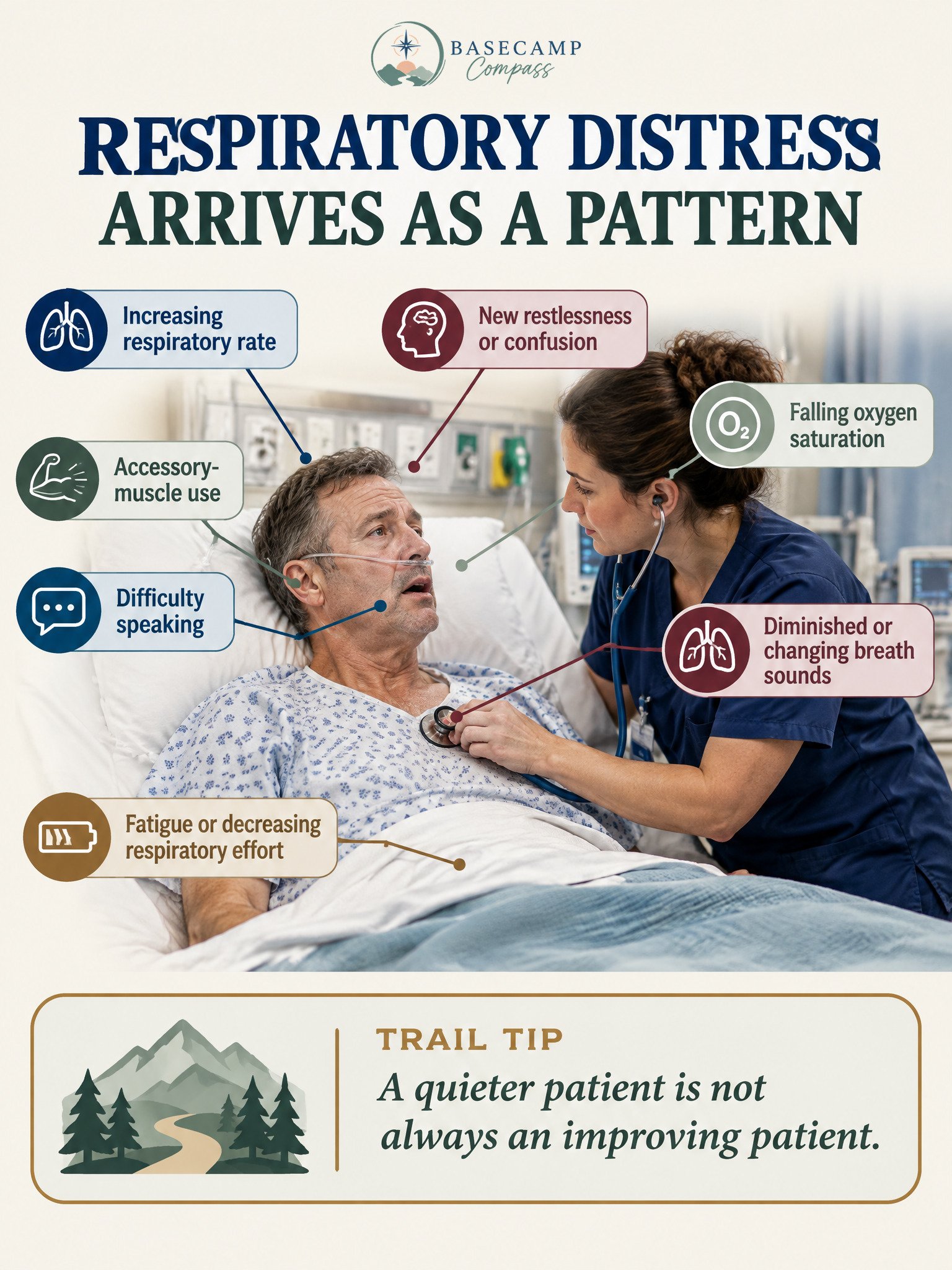
Interpret work of breathing, respiratory patterns, breath sounds, pulse oximetry, and patient trends.
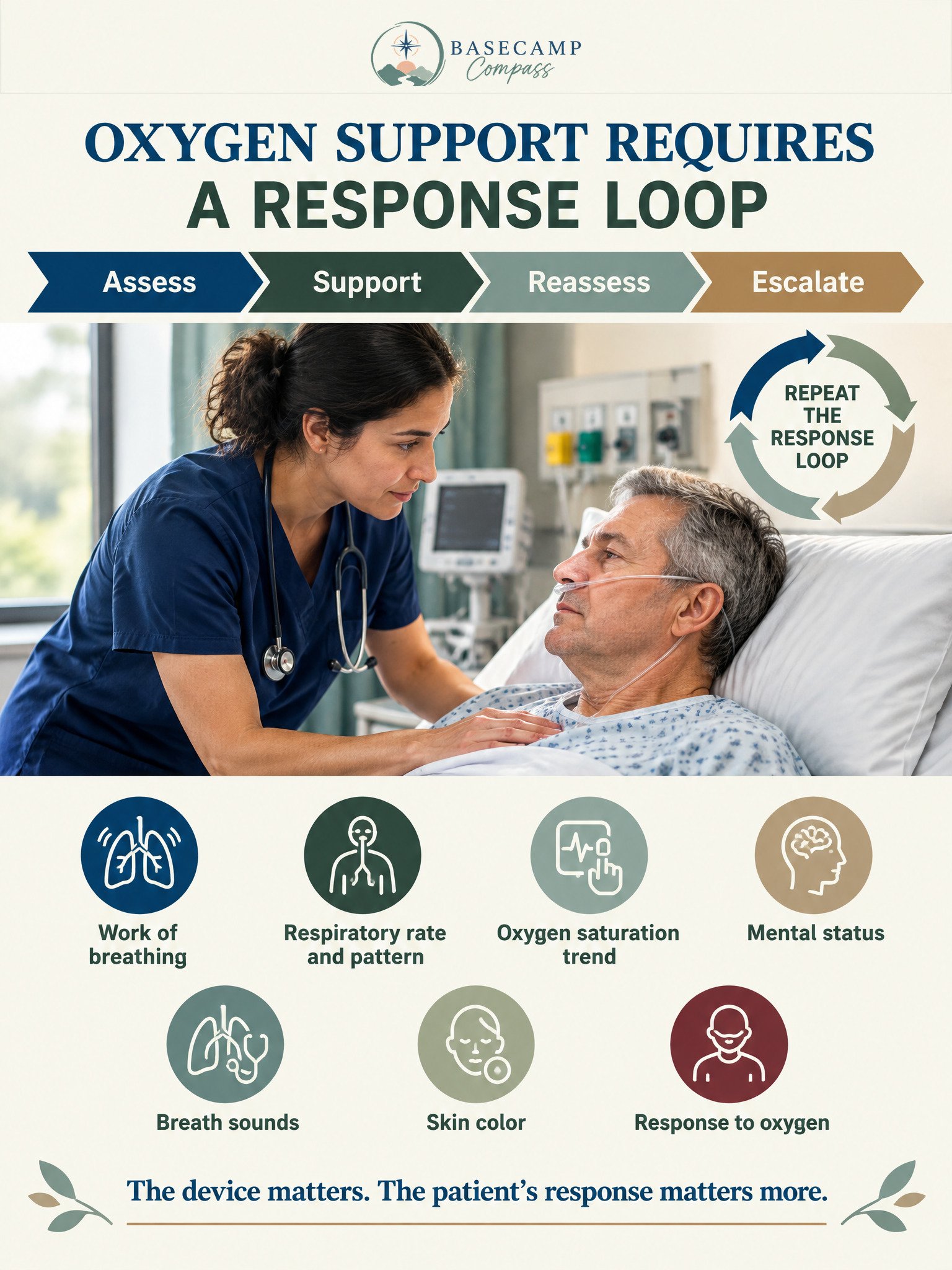
Compare oxygen-delivery devices and explain why reassessment matters after support begins.
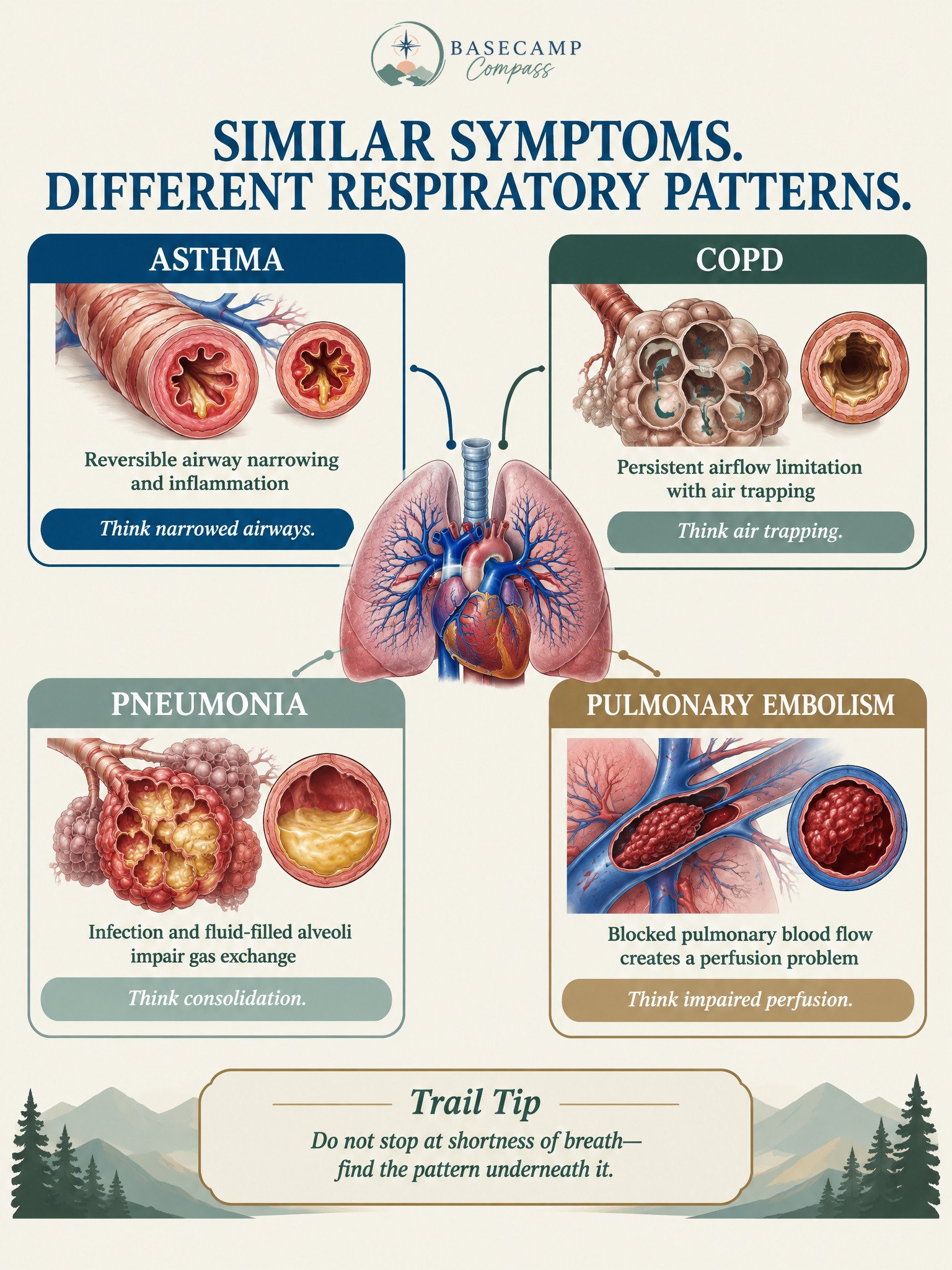
Distinguish obstructive and restrictive patterns and recognize common respiratory disorders.
Recognize urgent changes involving asthma, COPD, pneumothorax, pulmonary embolism, ARDS, and respiratory failure.
Table of contents
Respiratory Trail Guide cover
Before You Begin
Your Respiratory Trail Map
Meet the Respiratory System
Follow the Air
Breathing Is a Pressure Story
Three Links to Oxygenation
Across the Alveolar Membrane
First Look Is the Patient Working
Pulse Oximetry One Clue
Listen With a Route
What the Sounds Suggest
Oxygen Is a Medication
Low Flow Oxygen Devices
Controlled and Higher Support
Help the Lungs Do Their Job
Respiratory Diagnostic Toolbox
Spirometry Read the Pattern
Obstructive Versus Restrictive
Pneumonia Alveoli Fill
Tuberculosis Airborne Chain
Asthma Airways Narrow
Asthma Exacerbation Act Fast
COPD Trapped Air Less Reserve
COPD Exacerbation Find the Change
Bronchiectasis The Damage Cycle
Atelectasis Alveoli Collapse
Pleural Effusion Fluid Compresses
Pneumothorax Air Breaks the Seal
Chest Tubes Follow the System
Pulmonary Embolism Perfusion Stops
ARDS Leaky Alveoli Stiff Lungs
Respiratory Failure
Mechanical Ventilation
Respiratory Priorities Who First
Respiratory Red Flags
Final Trail Check
Your Respiratory Field Map
Closing review
Companion Compass Card Sets
Recommended for this trail.

TRAIL KIT
Everything recommended
for this journey.
- First Week in the OR Trail Guide
- OR Fundamentals Compass Cards
- Patient Safety Compass Cards
- Documentation & Handoffs Cards

EXCLUSIVE CAMPFIRE
CHALLENGE CARDS
Only available inside Trail Kits,
Respiratory nursing becomes easier when students can connect anatomy, ventilation, diffusion, perfusion, assessment findings, and the patient’s direction of change. This 39-page visual Trail Guide turns those connections into a clear clinical pathway rather than a list of disconnected disorders.
Students move from the airway and alveoli into work of breathing, breath sounds, pulse oximetry, oxygen devices, spirometry, common respiratory disorders, chest tubes, pulmonary embolism, ARDS, respiratory failure, and mechanical ventilation. The guide repeatedly returns to bedside priorities: assess the patient before the number, compare findings with baseline, recognize fatigue and deterioration early, and choose the safest next nursing action.
Designed for nursing-school review, clinical preparation, and focused exam study, the guide uses concise explanations, medically grounded comparisons, and memorable visual cues. It supports learning without replacing course materials, facility policy, provider orders, or clinical judgment.
What You Will Learn
- Trace air from the upper airway to the alveoli and connect structure with function.
- Differentiate ventilation, diffusion, perfusion, and oxygen delivery problems.
- Interpret work of breathing, respiratory patterns, breath sounds, pulse oximetry, and patient trends.
- Compare oxygen-delivery devices and explain why reassessment matters after support begins.
- Distinguish obstructive and restrictive patterns and recognize common respiratory disorders.
- Recognize urgent changes involving asthma, COPD, pneumothorax, pulmonary embolism, ARDS, and respiratory failure.
- Apply patient-first priorities to chest tubes, ventilatory support, and worsening respiratory status.
Table of Contents
- Respiratory Trail Guide cover
- Before You Begin
- Your Respiratory Trail Map
- Meet the Respiratory System
- Follow the Air
- Breathing Is a Pressure Story
- Three Links to Oxygenation
- Across the Alveolar Membrane
- First Look Is the Patient Working
- Pulse Oximetry One Clue
- Listen With a Route
- What the Sounds Suggest
- Oxygen Is a Medication
- Low Flow Oxygen Devices
- Controlled and Higher Support
- Help the Lungs Do Their Job
- Respiratory Diagnostic Toolbox
- Spirometry Read the Pattern
- Obstructive Versus Restrictive
- Pneumonia Alveoli Fill
- Tuberculosis Airborne Chain
- Asthma Airways Narrow
- Asthma Exacerbation Act Fast
- COPD Trapped Air Less Reserve
- COPD Exacerbation Find the Change
- Bronchiectasis The Damage Cycle
- Atelectasis Alveoli Collapse
- Pleural Effusion Fluid Compresses
- Pneumothorax Air Breaks the Seal
- Chest Tubes Follow the System
- Pulmonary Embolism Perfusion Stops
- ARDS Leaky Alveoli Stiff Lungs
- Respiratory Failure
- Mechanical Ventilation
- Respiratory Priorities Who First
- Respiratory Red Flags
- Final Trail Check
- Your Respiratory Field Map
- Closing review
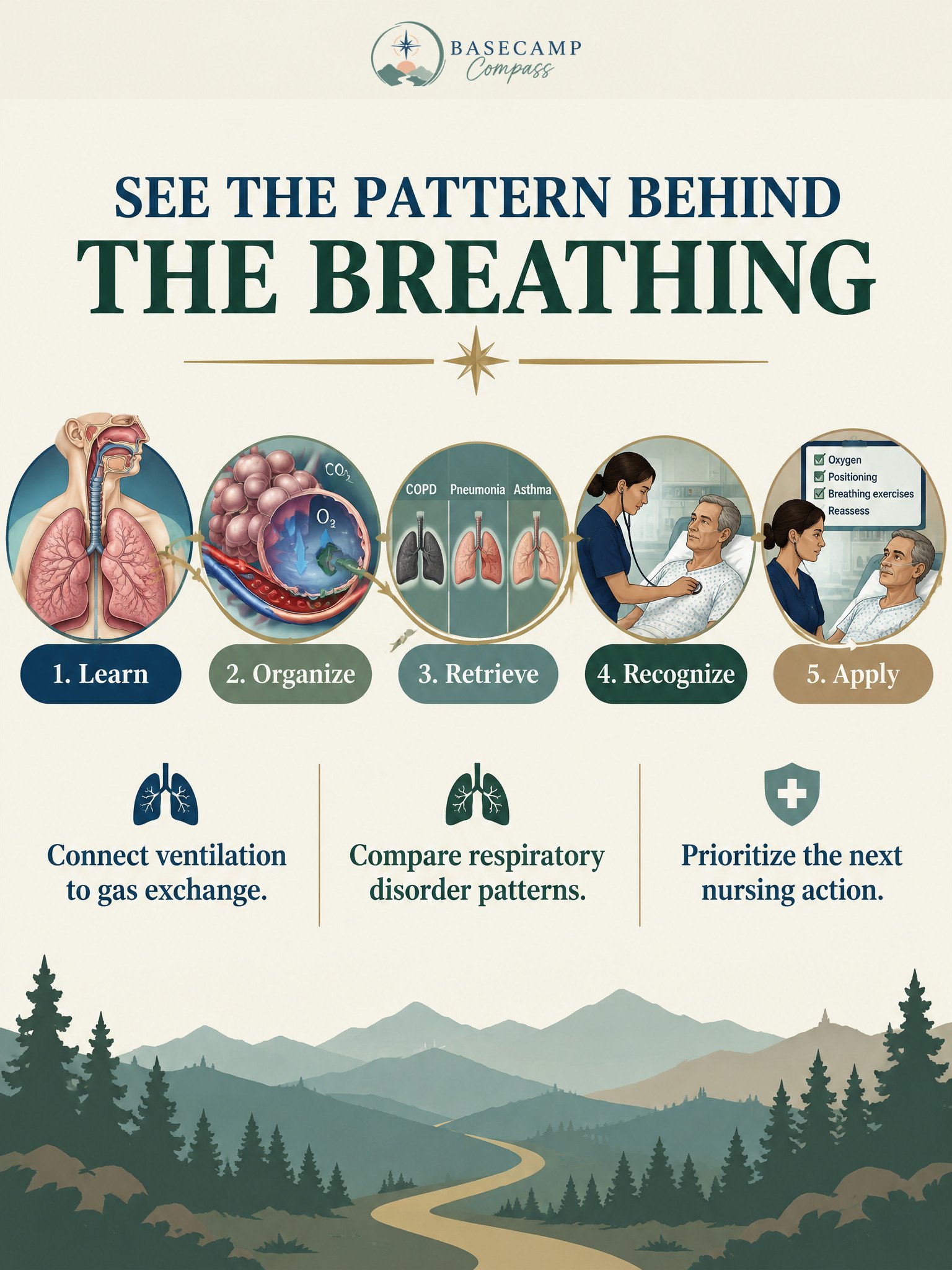
How It Works: Your Learning Journey
LEARN
The Guide Teaches The Journey.
REMEMBER
Reinforce important concepts.
CHALLENGE
Test your knowledge and build confidence.

Campfire Challenge Preview
Sample Challenge Questions
Reviews
There are no reviews yet.