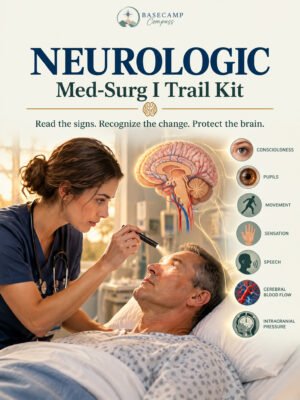
MedSurg I Neurologic Trail Kit
- Format: Digital Download (PDF)
$15.00
PDF · Instant download
What You'll Learn
No data was found
Table of contents
No data was found
Companion Compass Card Sets
Recommended for this trail.
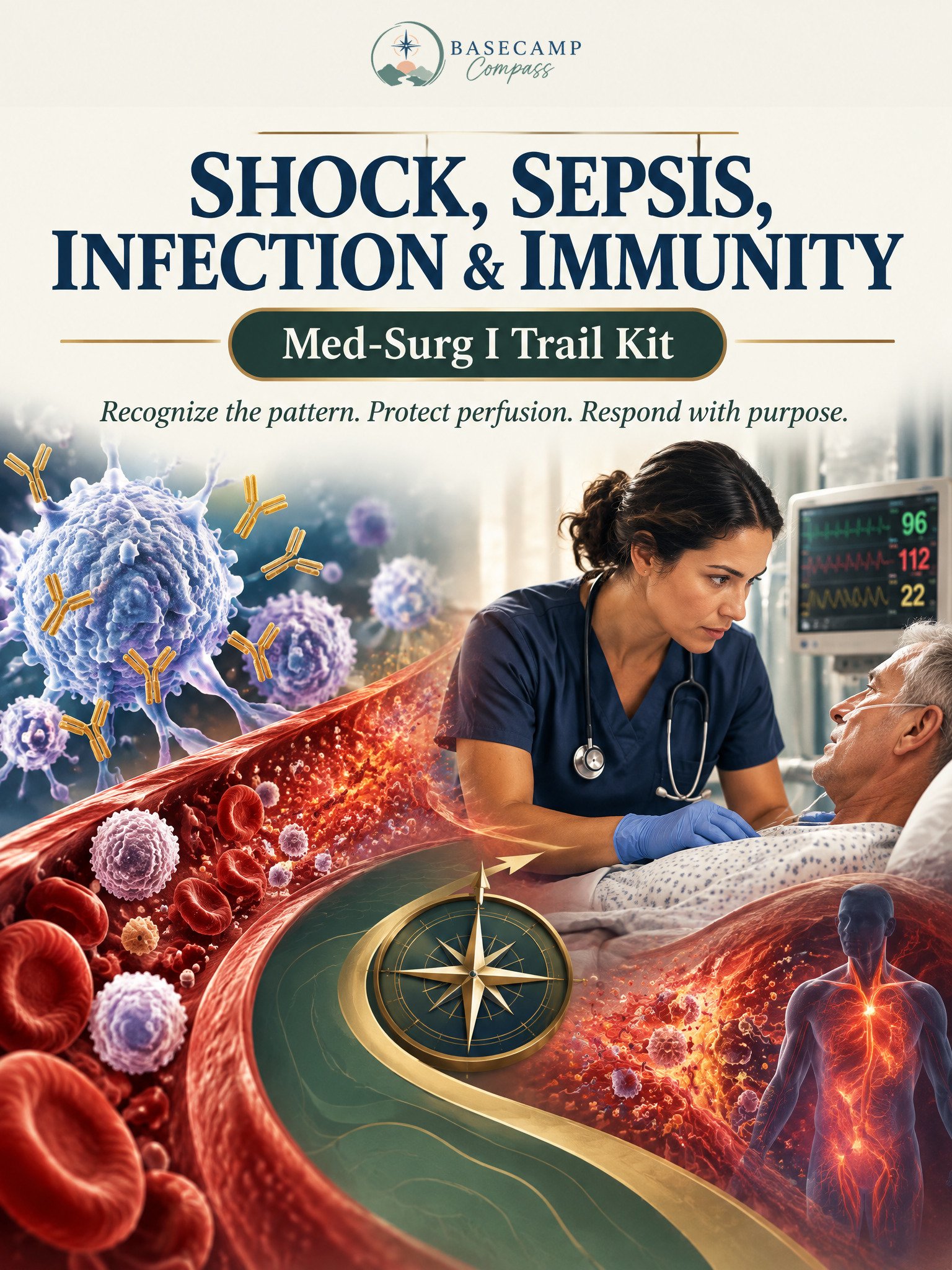
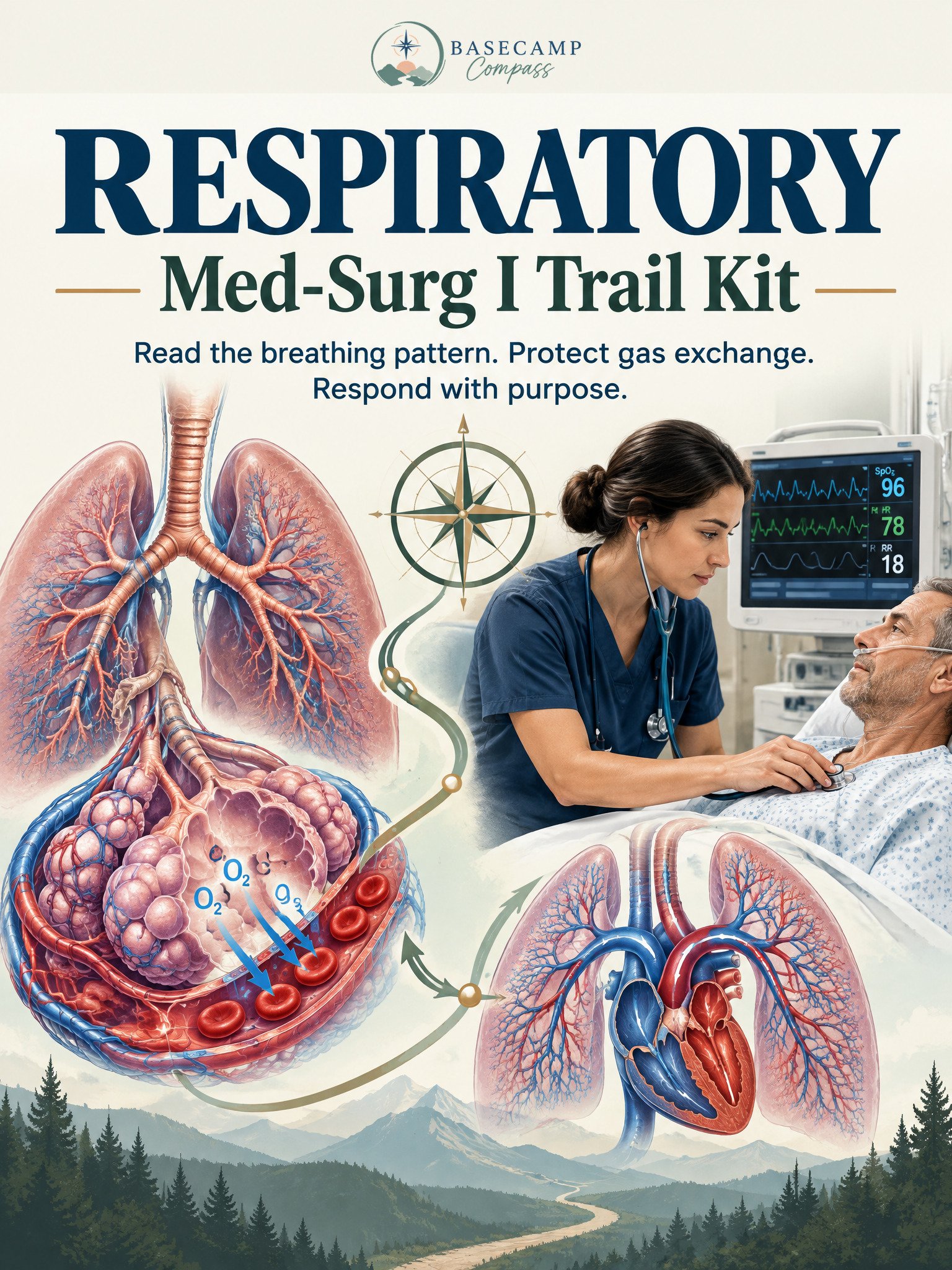
TRAIL KIT
Everything recommended
for this journey.
- First Week in the OR Trail Guide
- OR Fundamentals Compass Cards
- Patient Safety Compass Cards
- Documentation & Handoffs Cards
EXCLUSIVE CAMPFIRE
CHALLENGE CARDS
Only available inside Trail Kits,
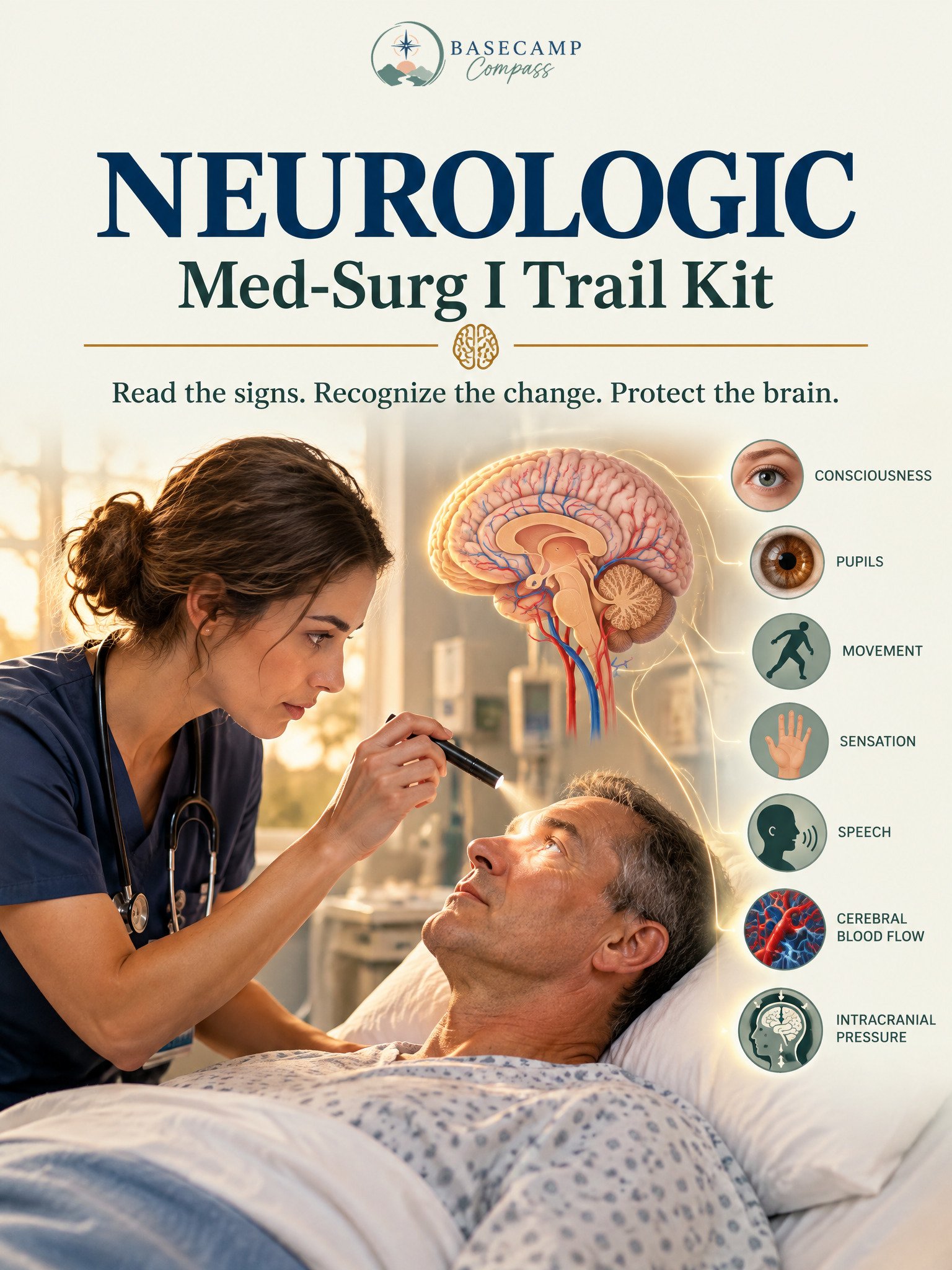
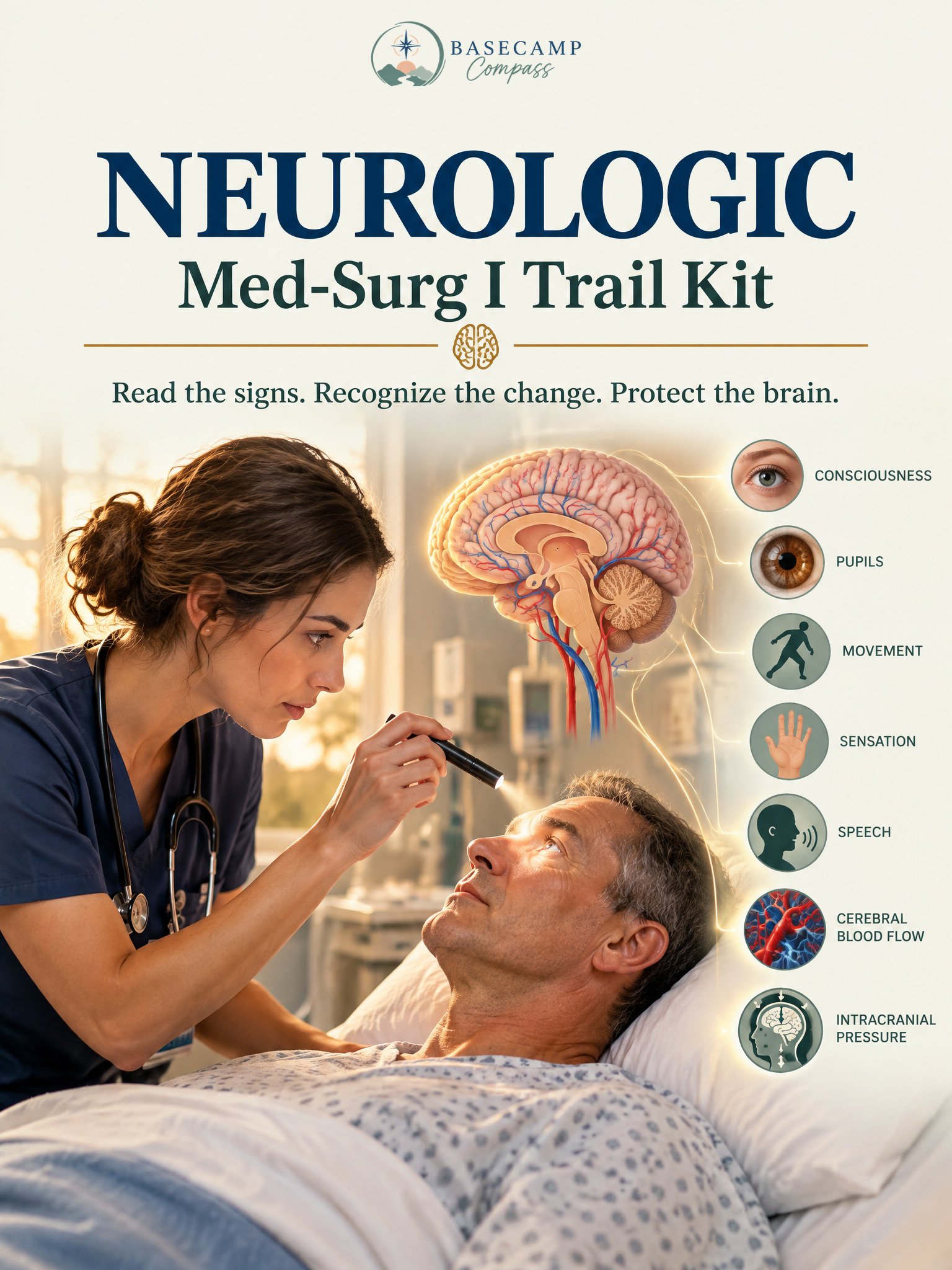
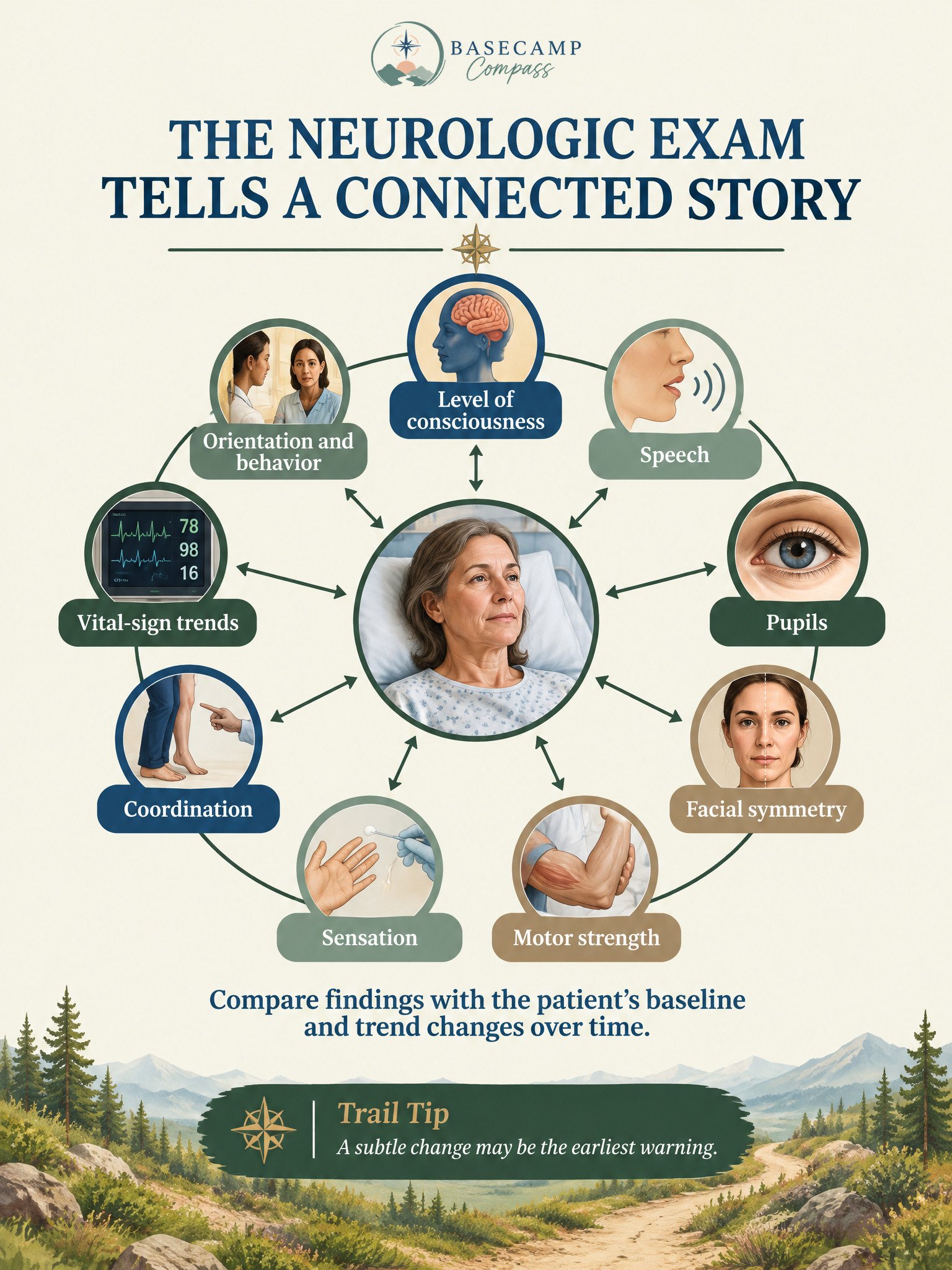
Neurologic nursing depends on noticing change early, connecting findings across the examination, and acting before subtle deterioration becomes an emergency. The Basecamp Compass Med-Surg I Neurologic Trail Kit turns the neurologic assessment into a connected clinical story—from level of consciousness, pupils, speech, symmetry, motor response, and sensation to stroke activation, seizure protection, intracranial pressure, infection, trauma, spinal emergencies, and progressive neuromuscular weakness.
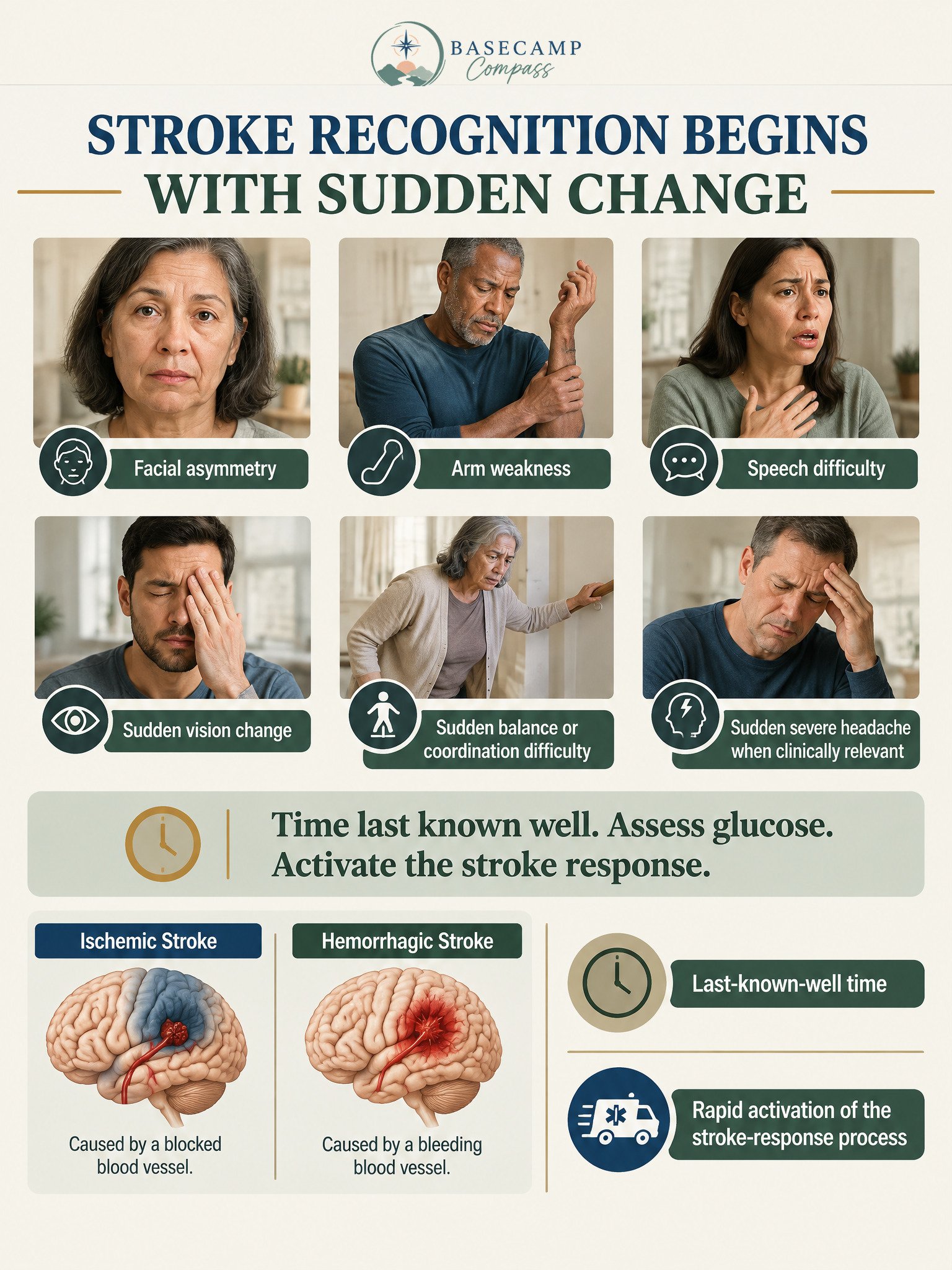
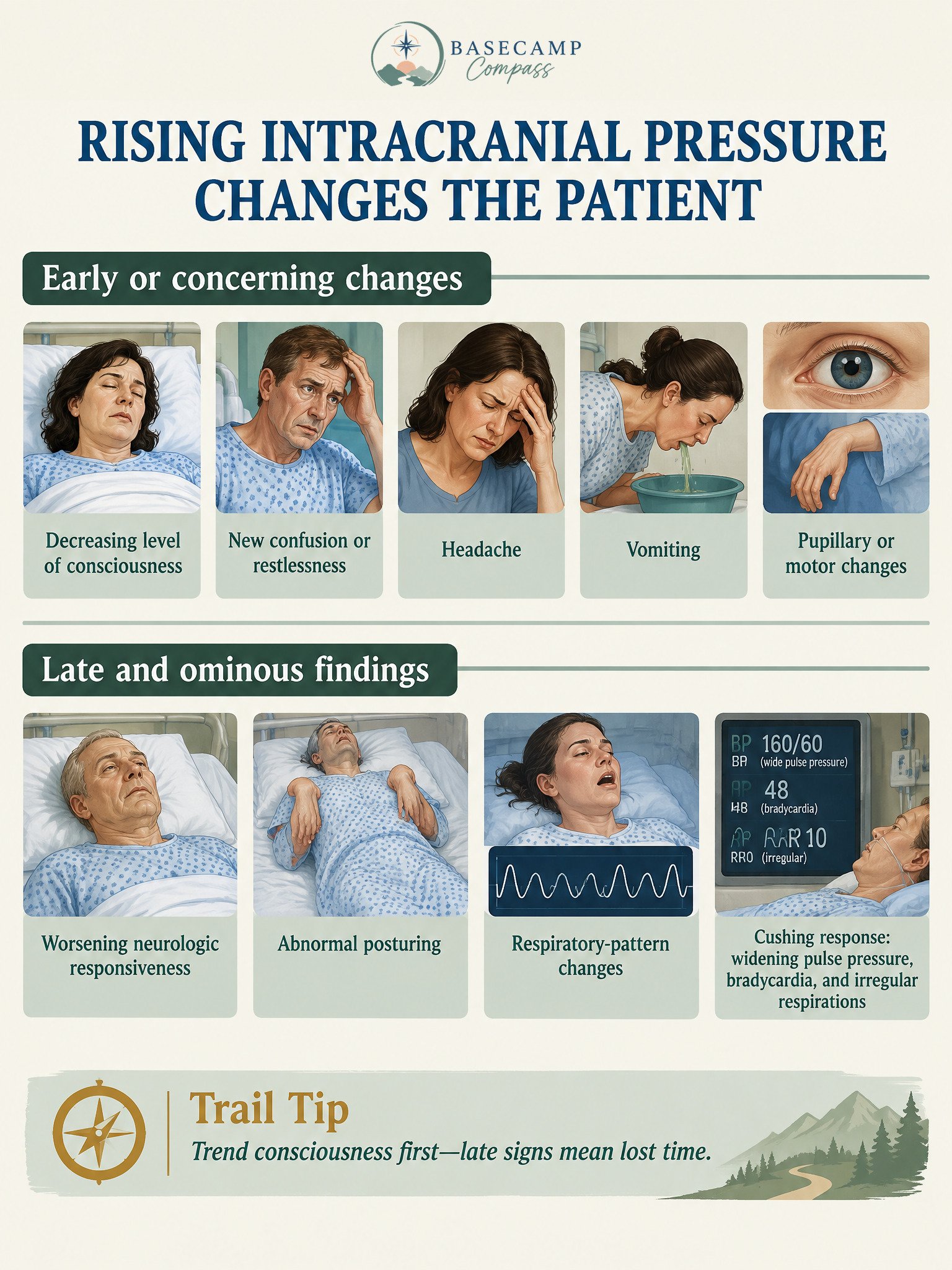
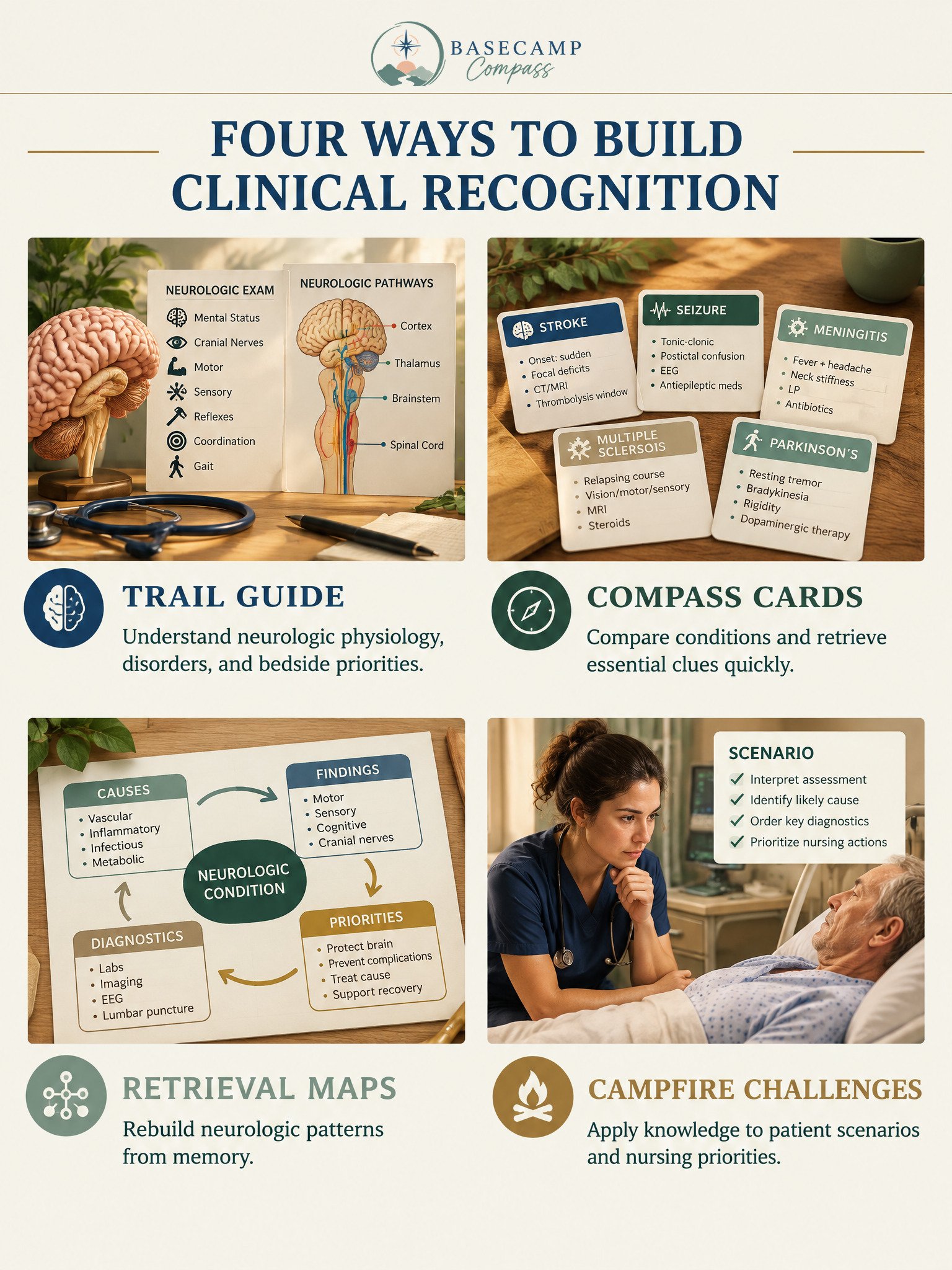
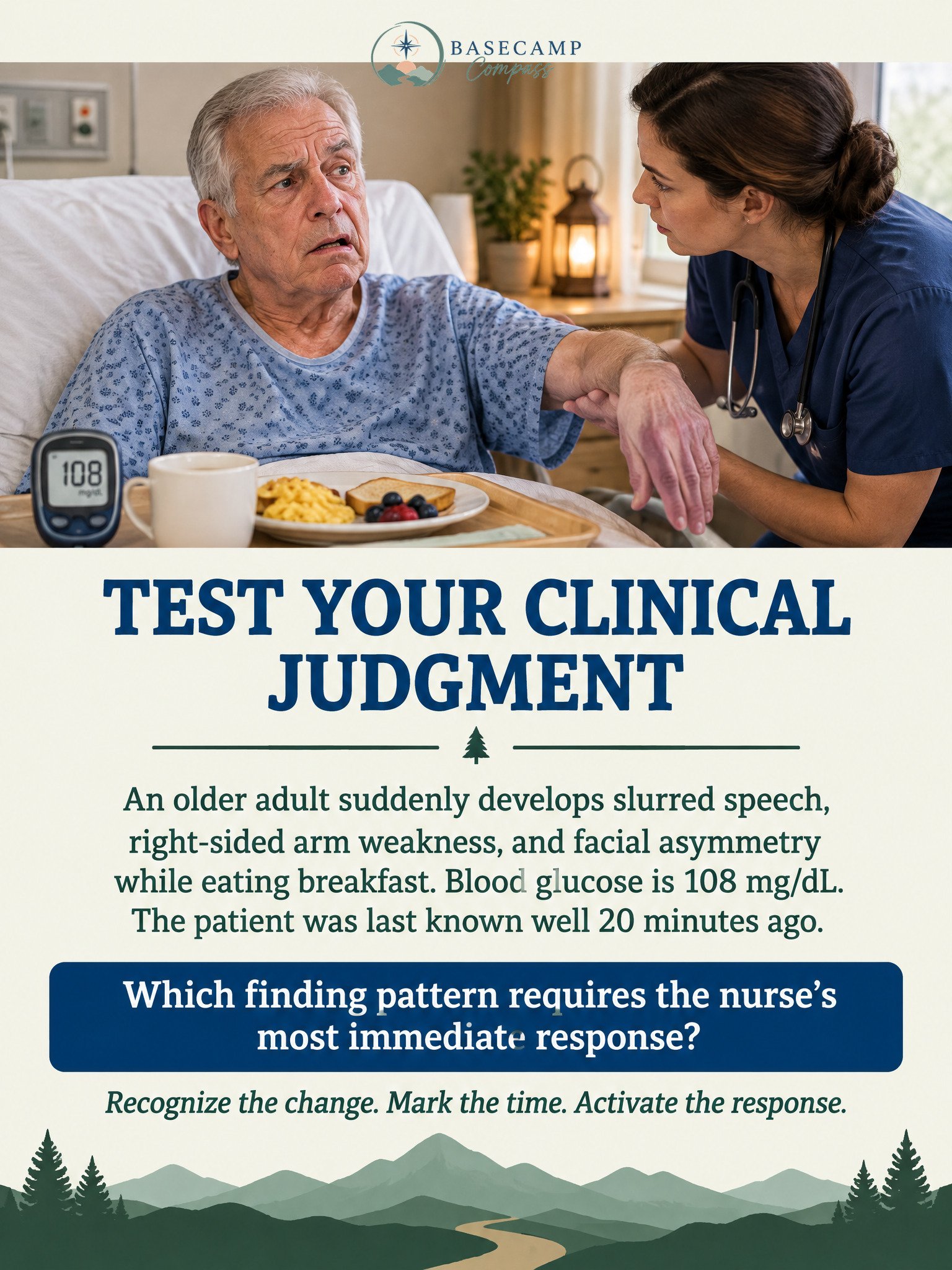
The 48-page Trail Guide builds the physiology and bedside patterns step by step. Learners see how the central and peripheral nervous systems communicate, practice a repeatable focused assessment, interpret Glasgow Coma Scale and pupil findings, recognize rising intracranial pressure and herniation, and follow an evidence-aligned stroke response path that includes last-known-well time, glucose assessment, urgent imaging, and protocol-based treatment evaluation.
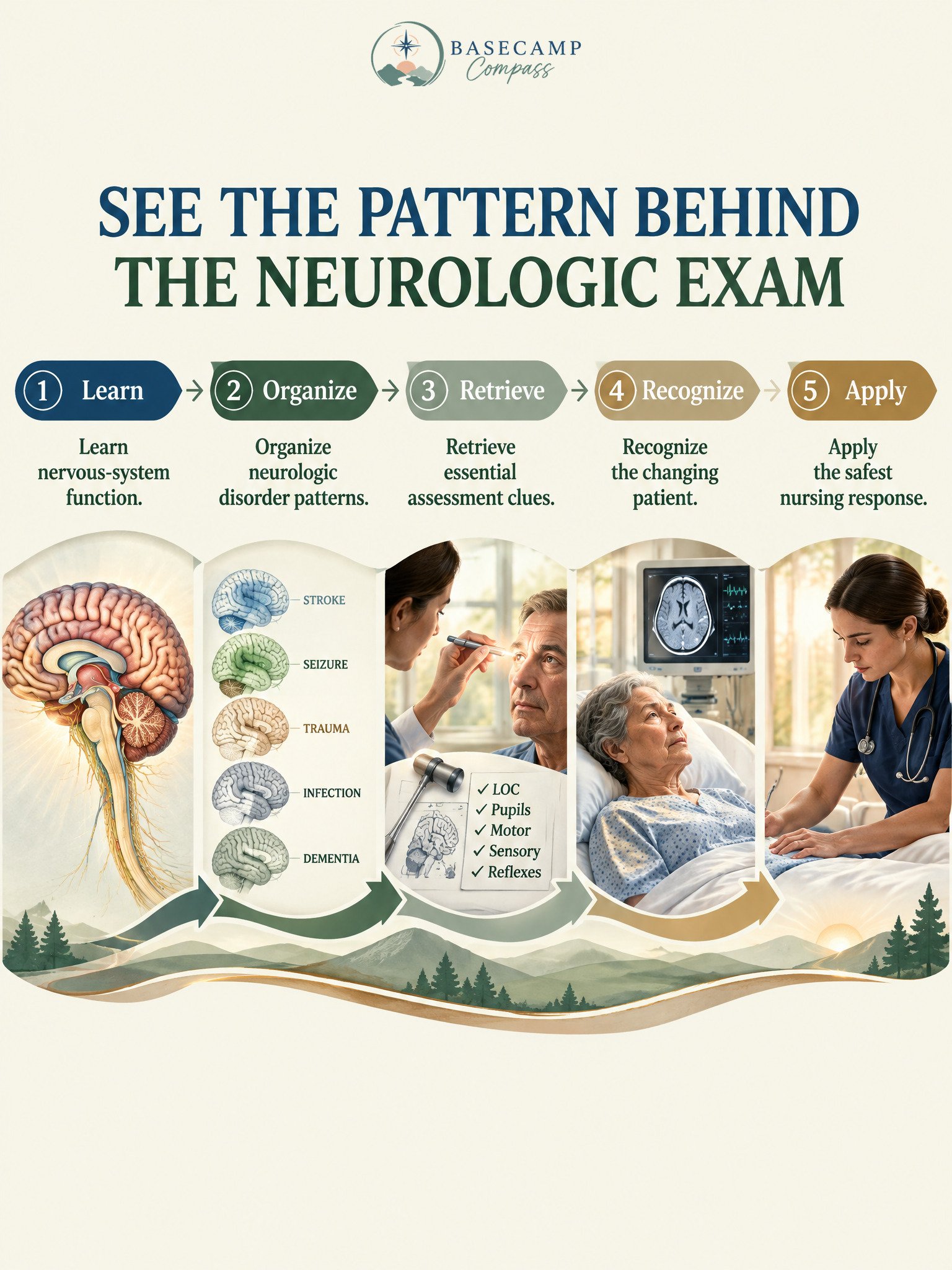
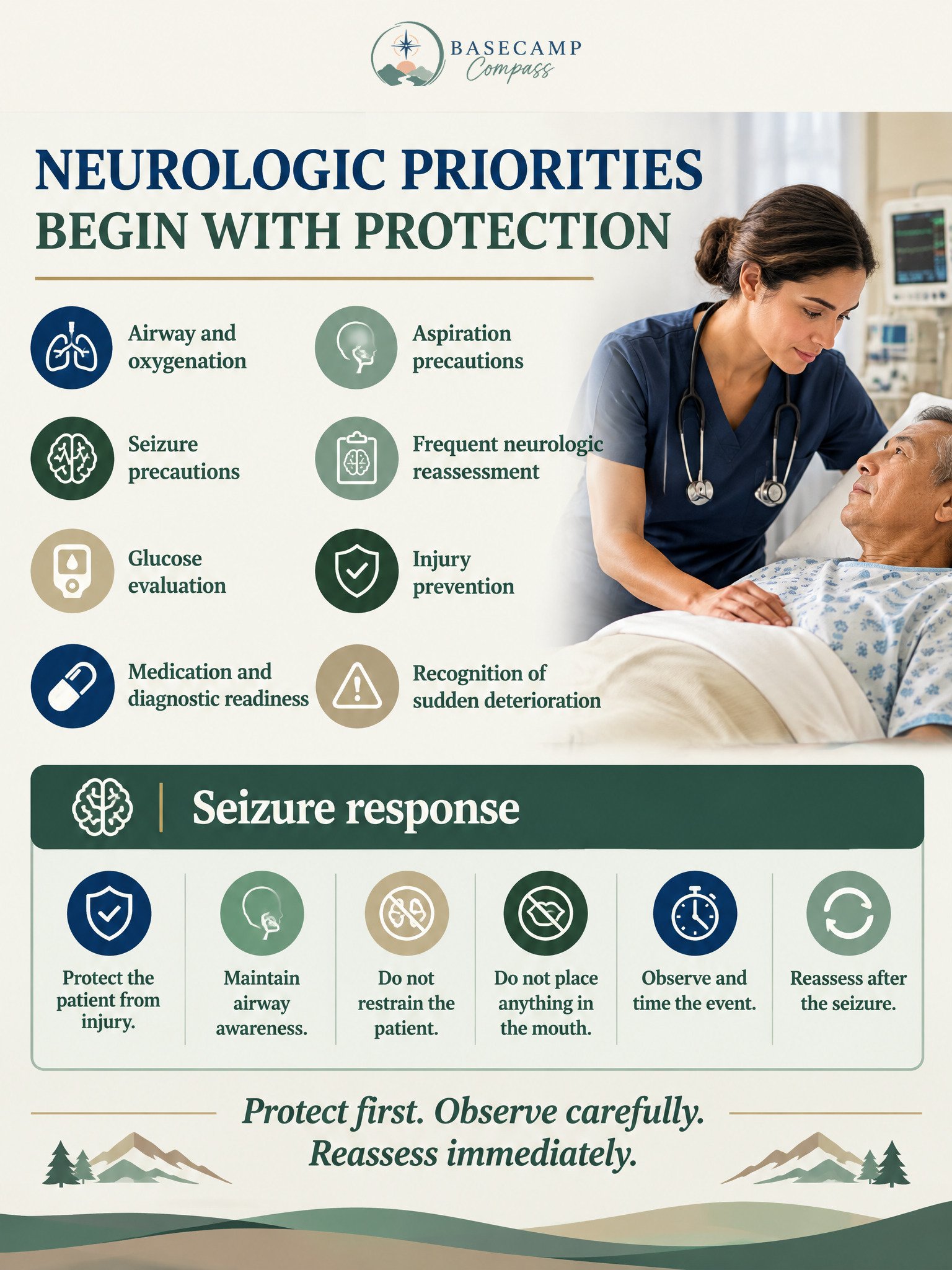
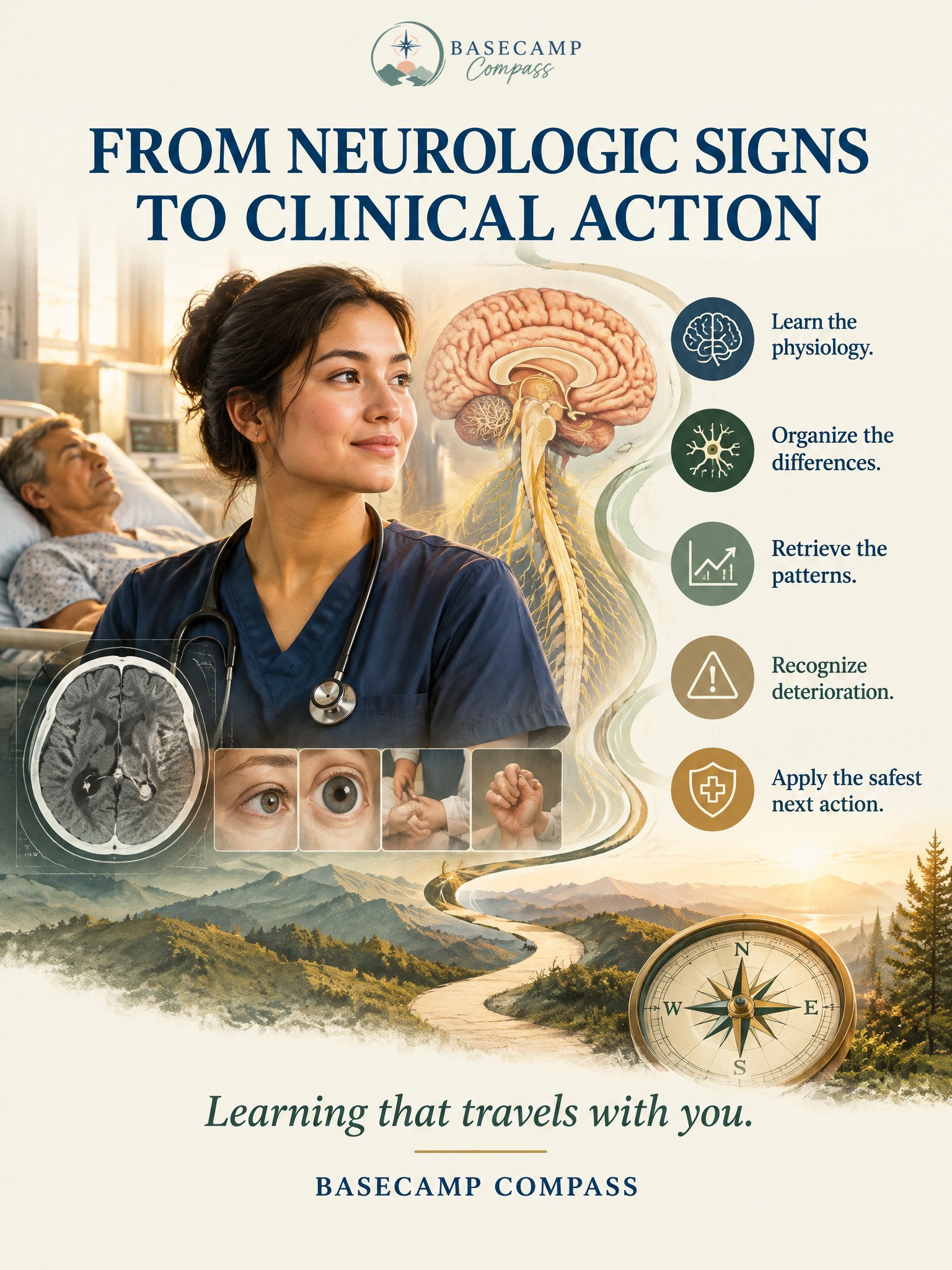
The guide then connects seizure care, meningitis and encephalitis, traumatic brain and spinal cord injury, neurogenic shock, autonomic dysreflexia, Parkinson disease, multiple sclerosis, myasthenia gravis, Guillain-Barré syndrome, ALS, Bell palsy, headache red flags, delirium, and dementia. The companion tools serve different jobs: Compass Cards support rapid retrieval, fillable Retrieval Maps require active reconstruction, and Campfire Challenges apply recognition and priority setting to realistic patient scenarios. Together, they follow Learn → Organize → Retrieve → Recognize → Apply.
What You Will Learn
- Perform and trend a focused neurologic assessment using consciousness, orientation, speech, pupils, cranial-nerve clues, motor function, sensation, coordination, and vital-sign changes.
- Use the Glasgow Coma Scale as one part of a broader neurologic trend rather than as an isolated number.
- Recognize early versus late signs of rising intracranial pressure and identify findings that suggest herniation.
- Differentiate decorticate and decerebrate posturing and connect either pattern to urgent deterioration.
- Recognize stroke with B.E. F.A.S.T., determine last known well, check glucose, activate the stroke response, and protect swallowing and oxygenation.
- Distinguish ischemic and hemorrhagic stroke patterns while understanding that treatment depends on imaging and protocol.
- Protect a patient during an active seizure, recognize status epilepticus, and complete a focused postictal assessment.
- Recognize meningitis, encephalitis, traumatic brain injury, concussion deterioration, skull-fracture clues, and spinal-cord emergencies.
- Differentiate spinal shock, neurogenic shock, and autonomic dysreflexia and prioritize the safest immediate response.
- Compare Parkinson disease, multiple sclerosis, myasthenia gravis, Guillain-Barré syndrome, ALS, Bell palsy, delirium, and dementia.
- Identify respiratory decline, altered consciousness, new focal deficits, and other neurologic red flags requiring escalation.
What Is Included
- 48-page visual Trail Guide
- 30 Compass Cards plus cover
- 10 fillable Retrieval Maps with 10 immediately paired answer pages plus cover
- 20 Campfire Challenges with a matching answer-key page after every two-challenge set
- Nine optimized storefront JPEGs
- Digital PDF format for screen study or printing.
How It Works: Your Learning Journey
LEARN
The Guide Teaches The Journey.
REMEMBER
Reinforce important concepts.
CHALLENGE
Test your knowledge and build confidence.
Campfire Challenge Preview
Sample Challenge Questions
Reviews
There are no reviews yet.