
$15.00
Everything recommended
for this journey.
CHALLENGE CARDS
Only available inside Trail Kits,
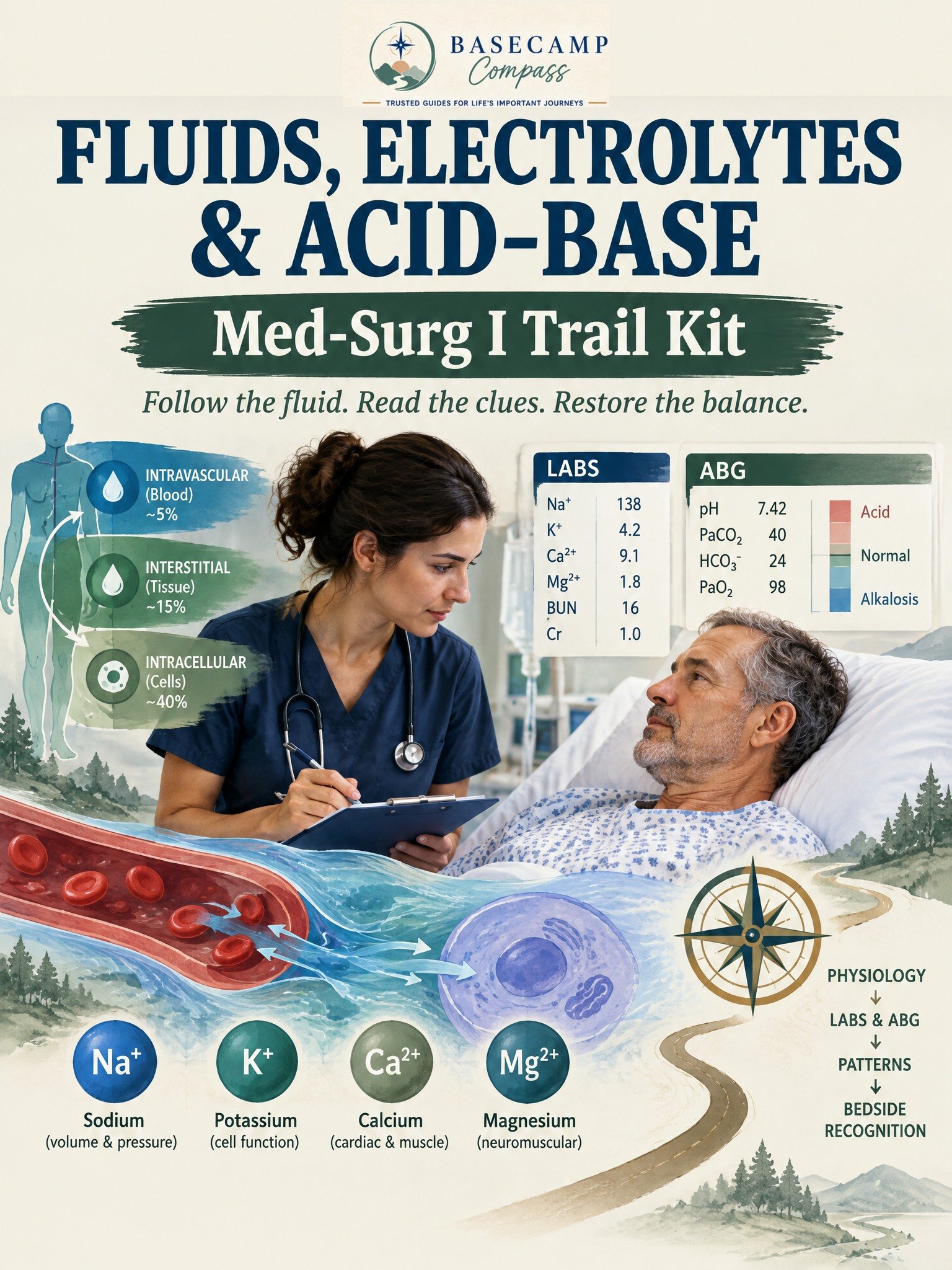
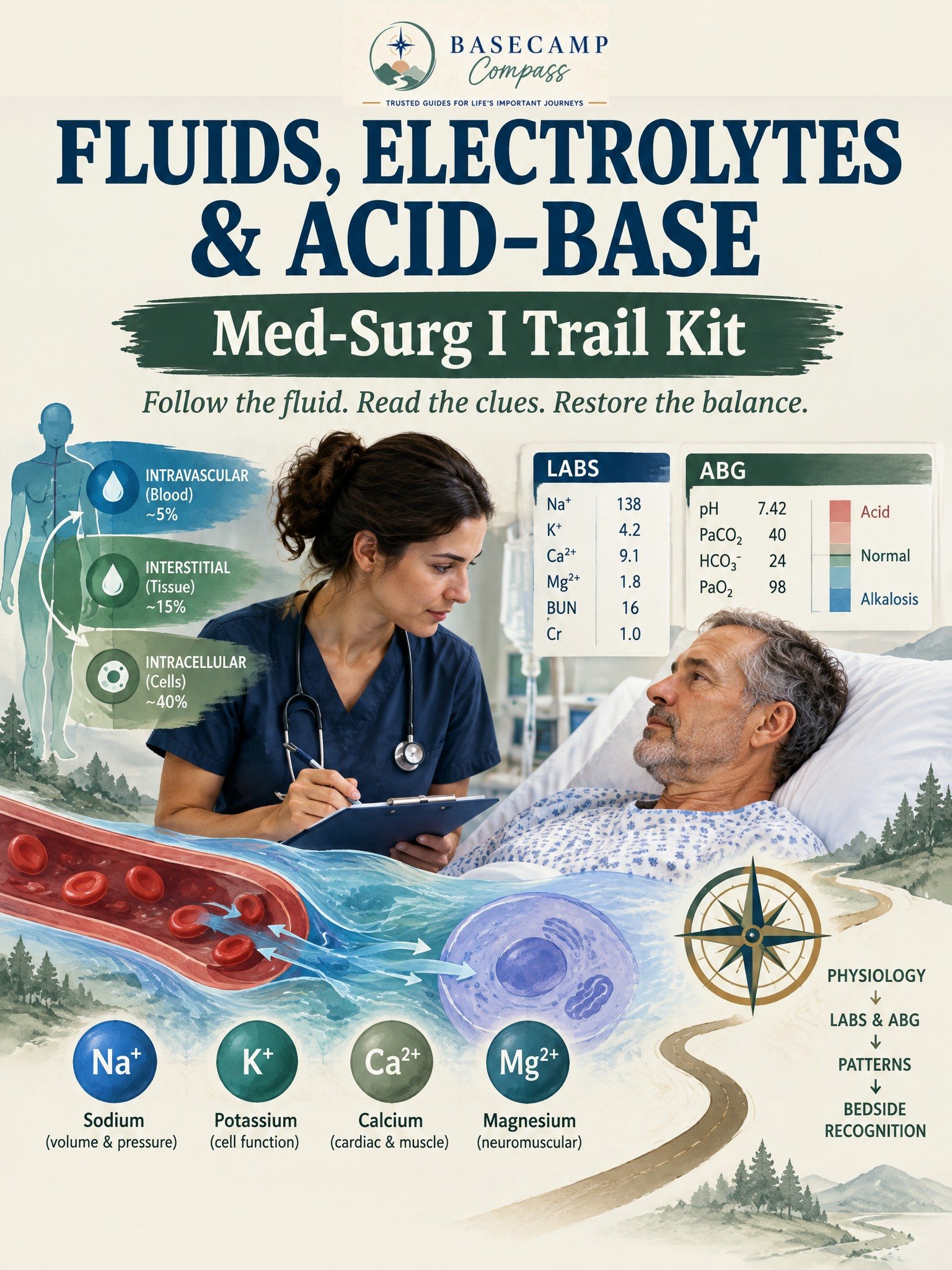
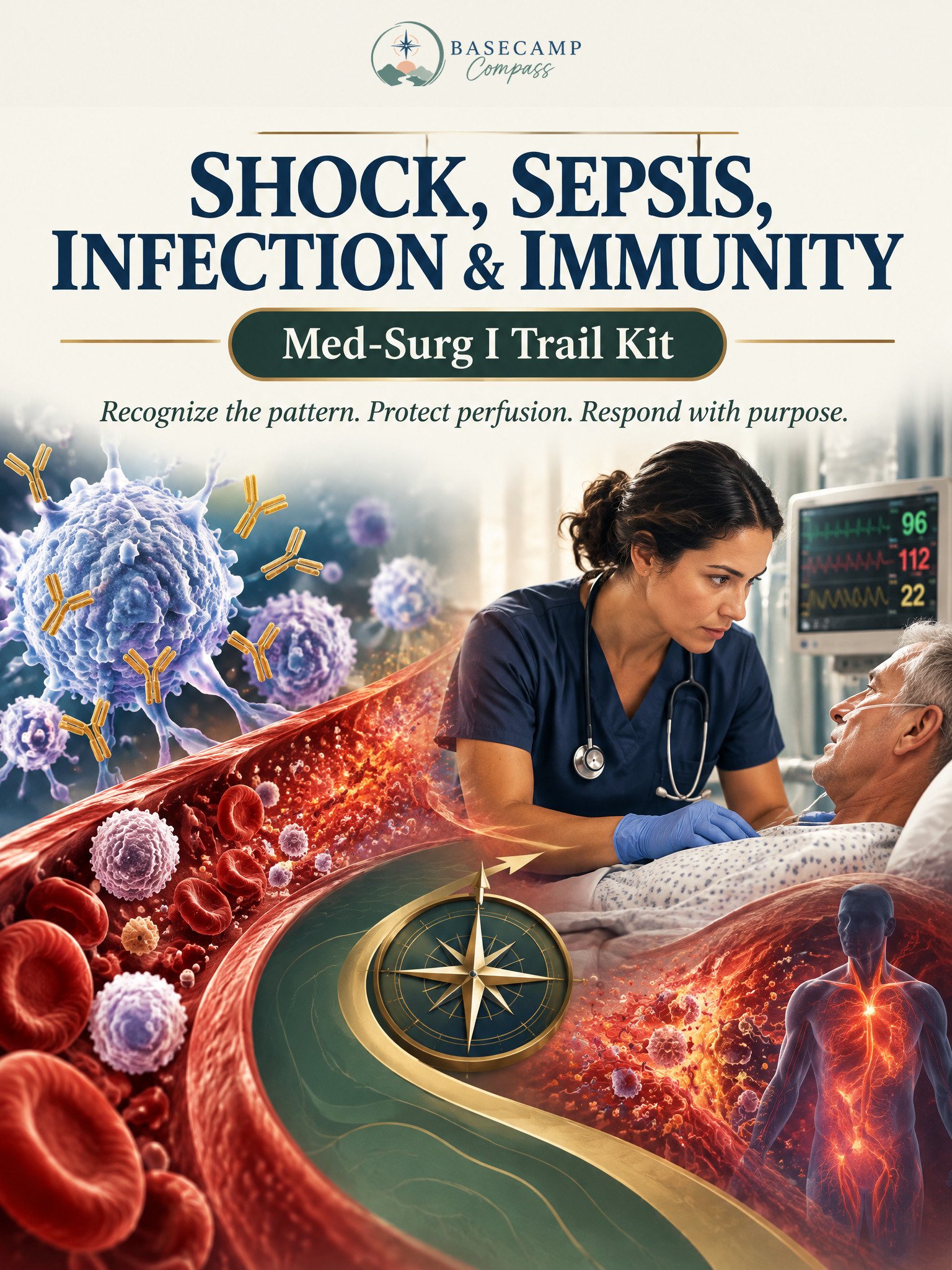
Fluid balance, electrolyte shifts, and acid-base disorders appear throughout Med-Surg nursing. The Basecamp Compass Med-Surg I Fluids, Electrolytes, and Acid-Base Trail Kit helps learners connect physiology, laboratory findings, ECG changes, bedside assessment, and nursing priorities instead of memorizing isolated numbers.
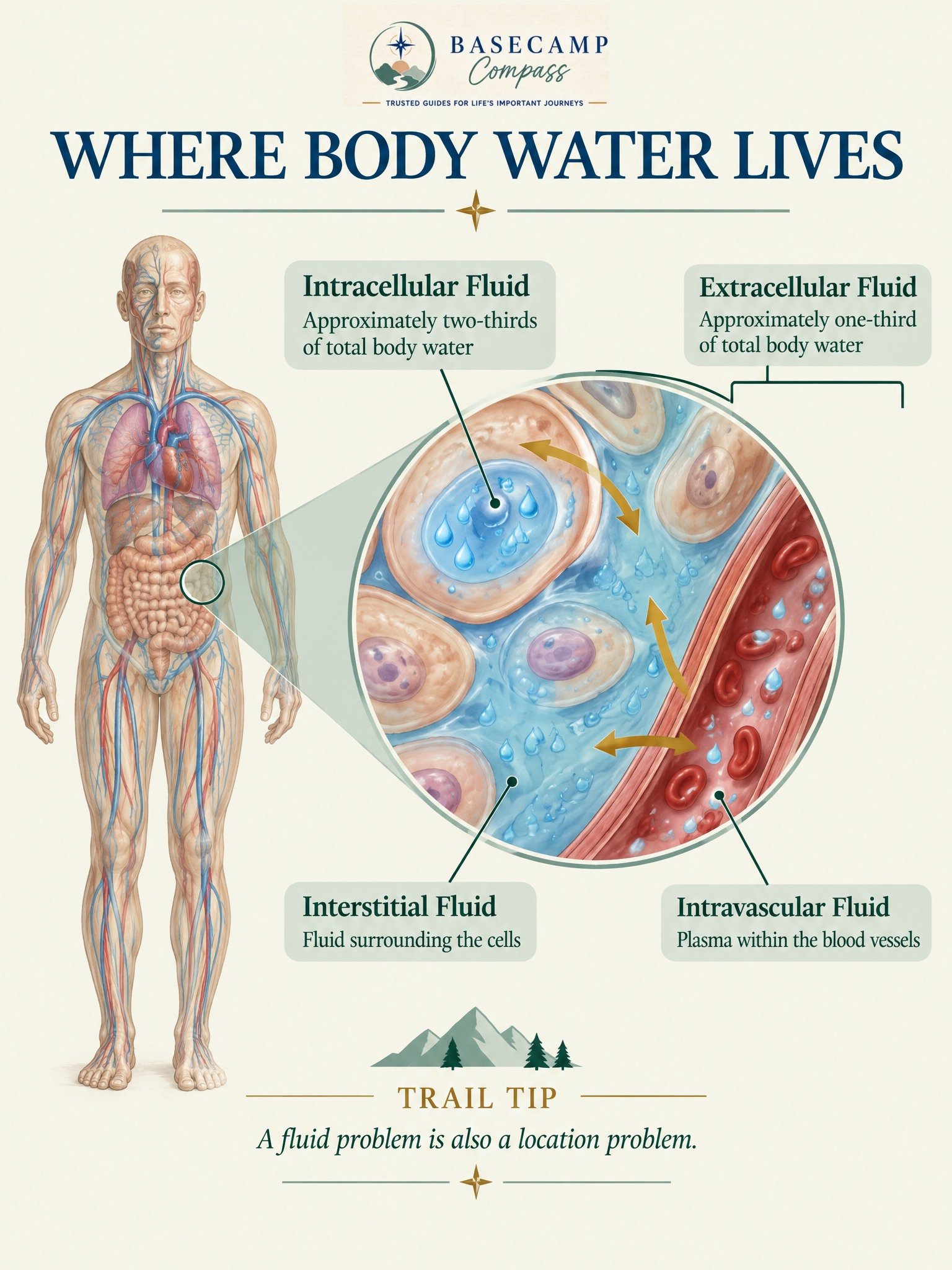
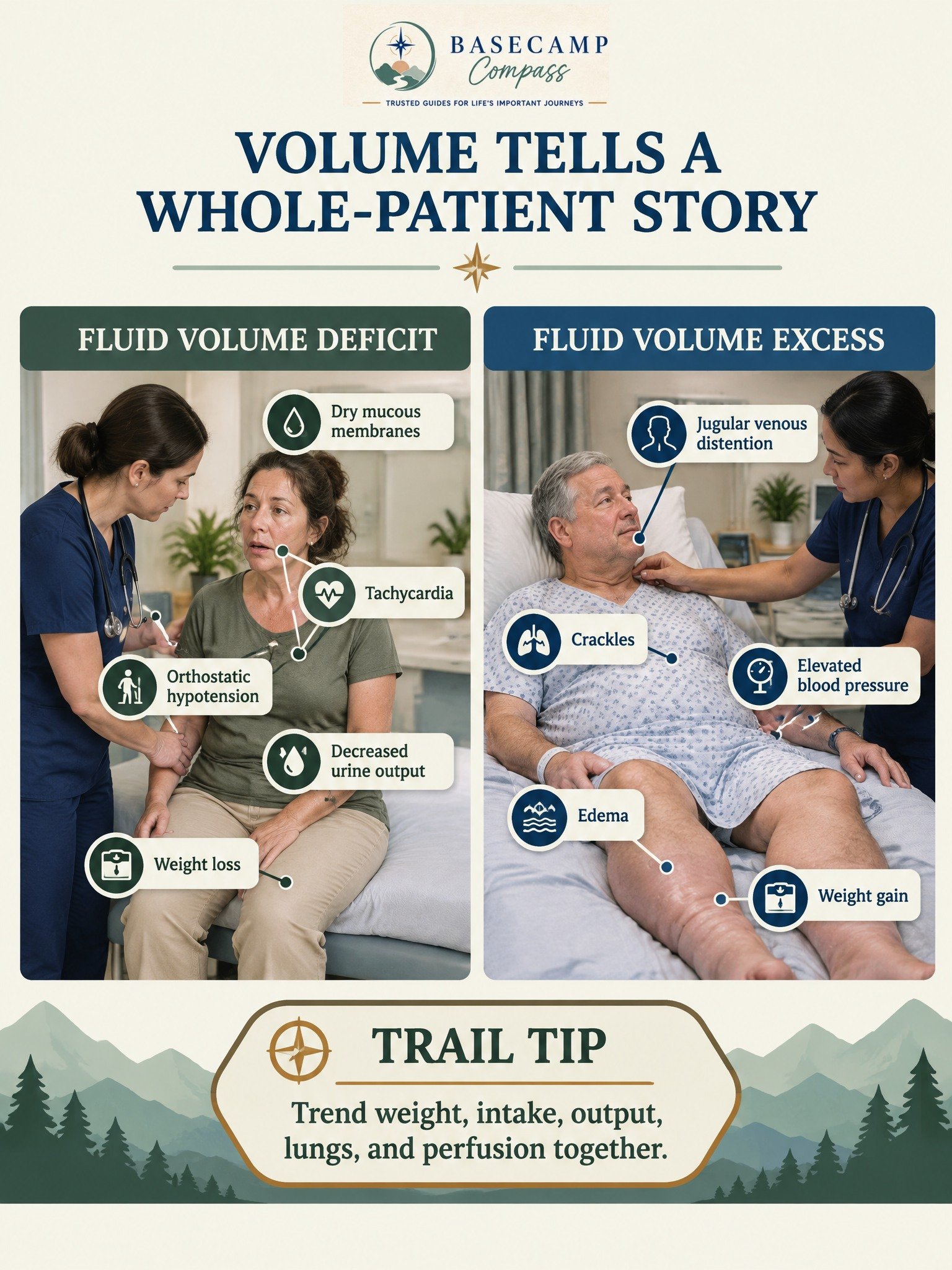
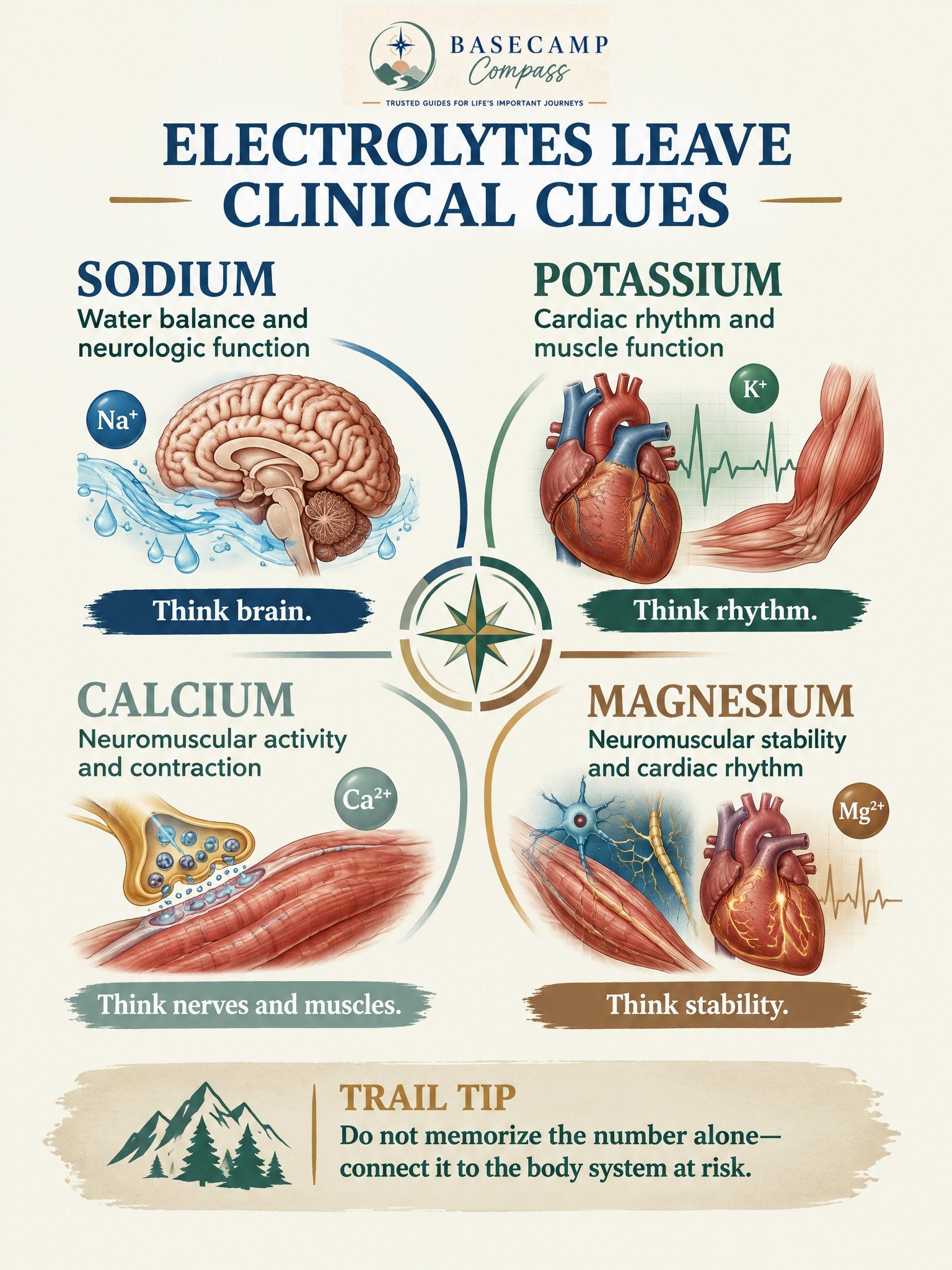
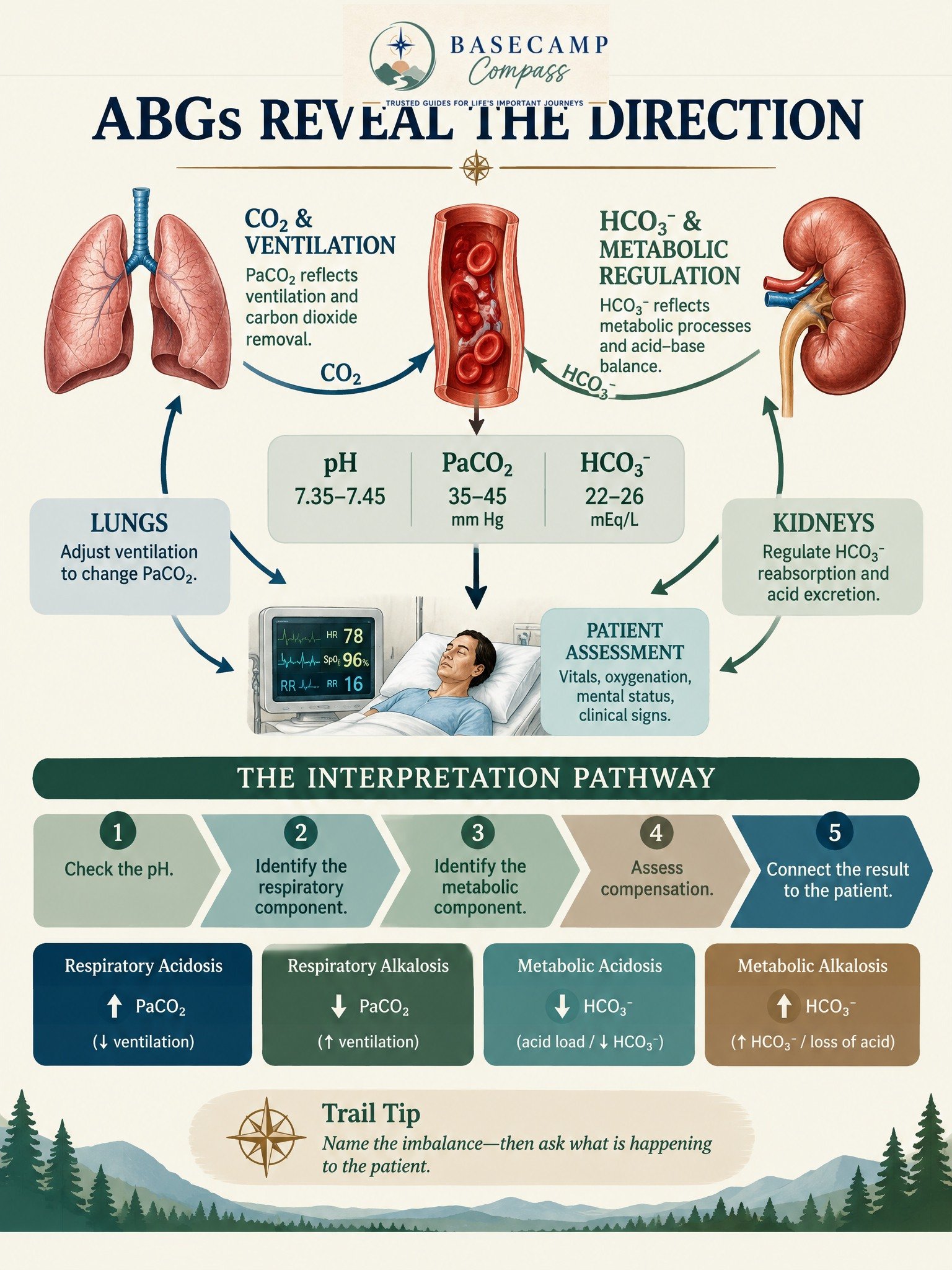
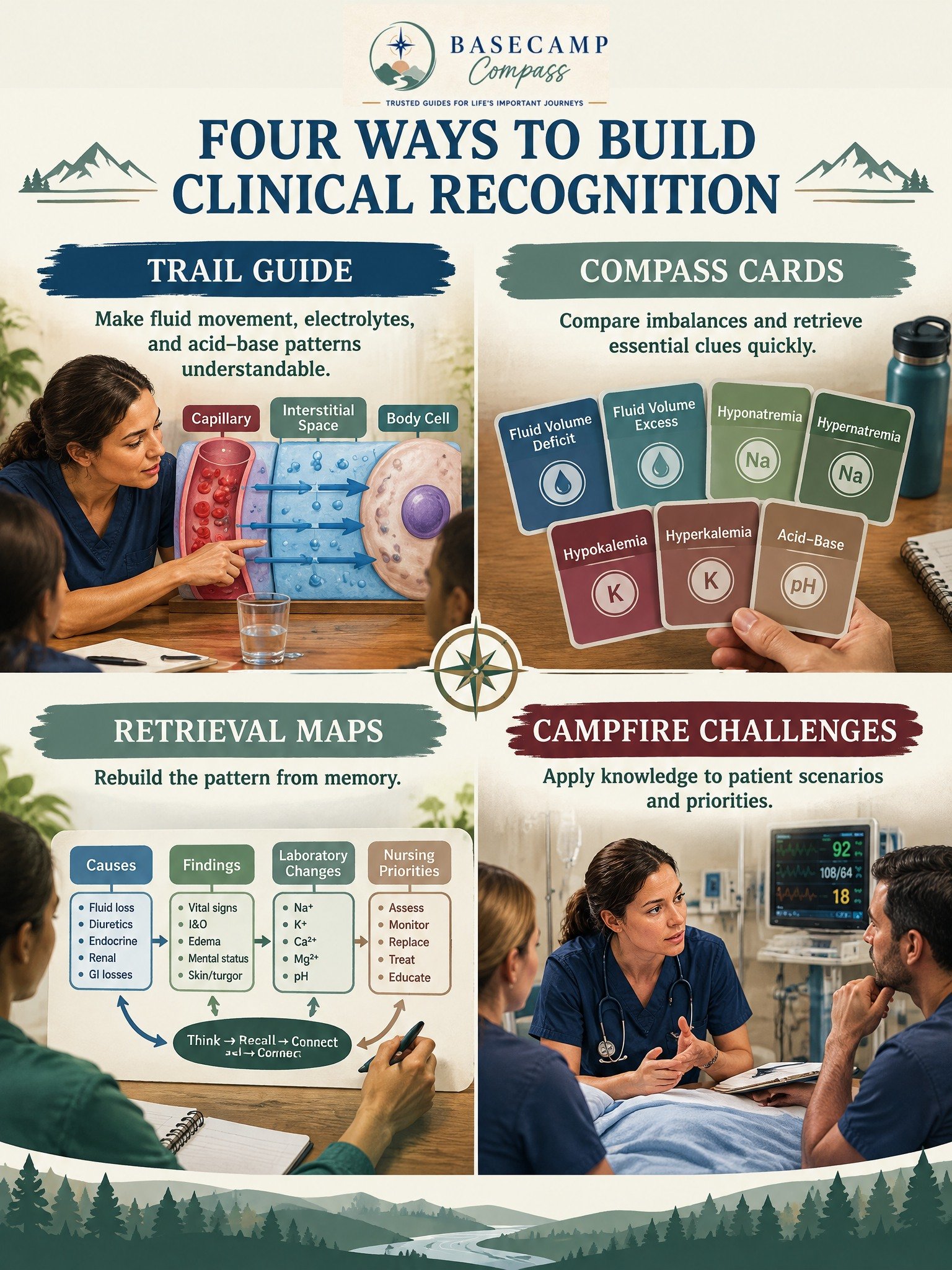
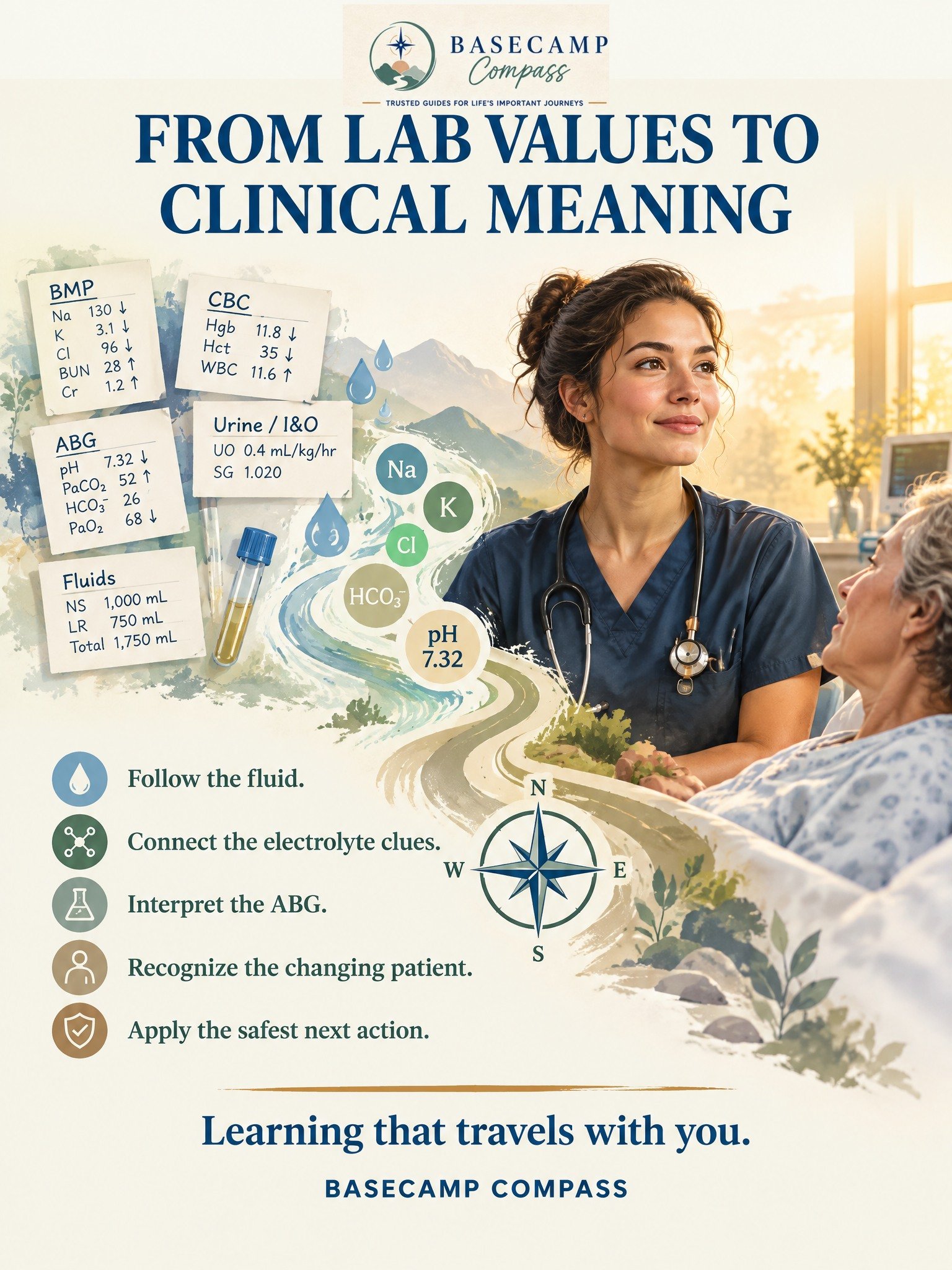
The Trail Guide begins with body-water compartments, osmosis, tonicity, fluid movement, and IV-fluid selection. It then builds pattern recognition for fluid-volume deficit and excess; sodium, potassium, calcium, magnesium, and phosphorus disorders; and the four primary acid-base disturbances. ABG interpretation is taught as a repeatable path: determine direction, identify the driver, recognize compensation, and return to the patient.
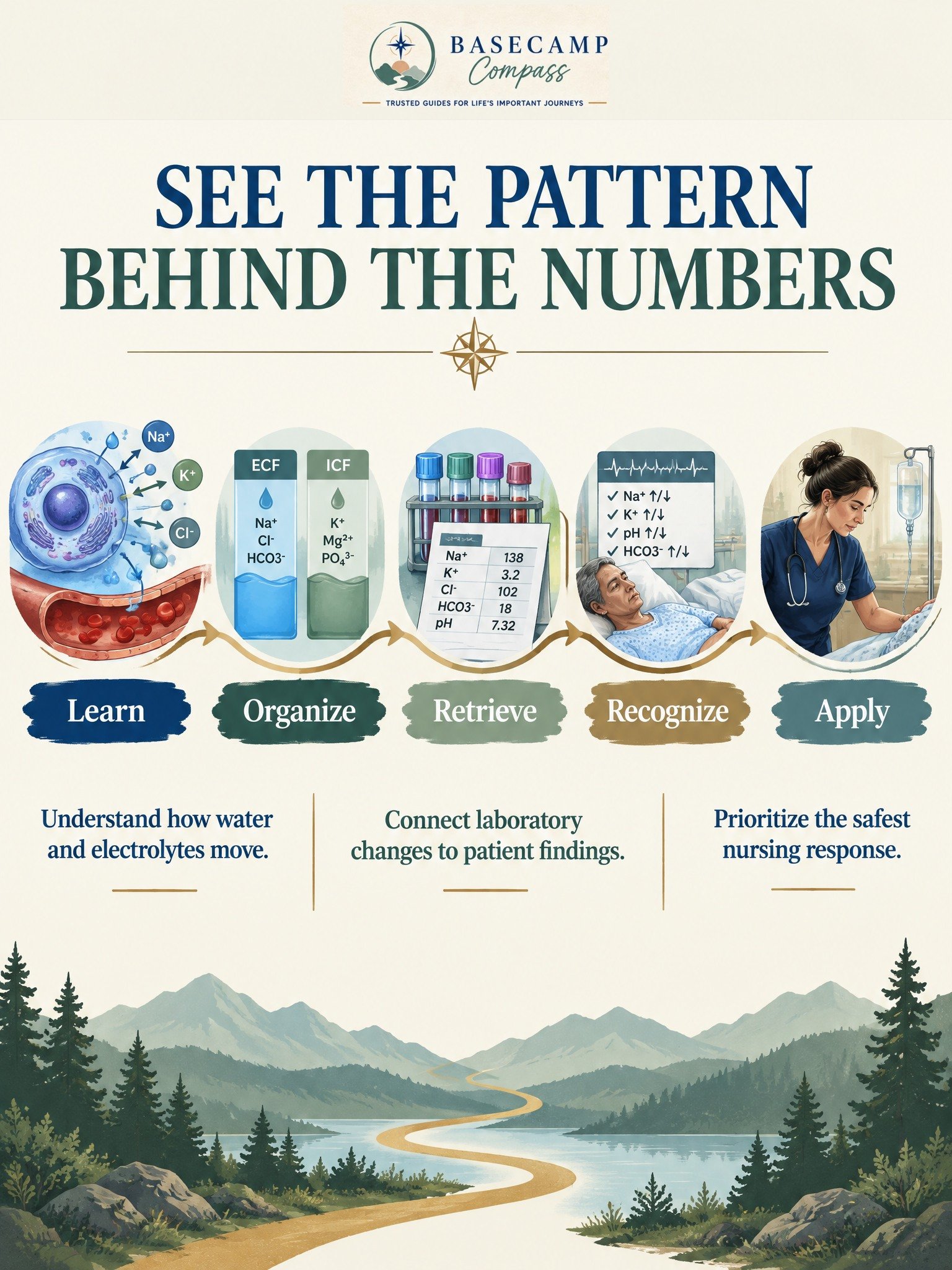
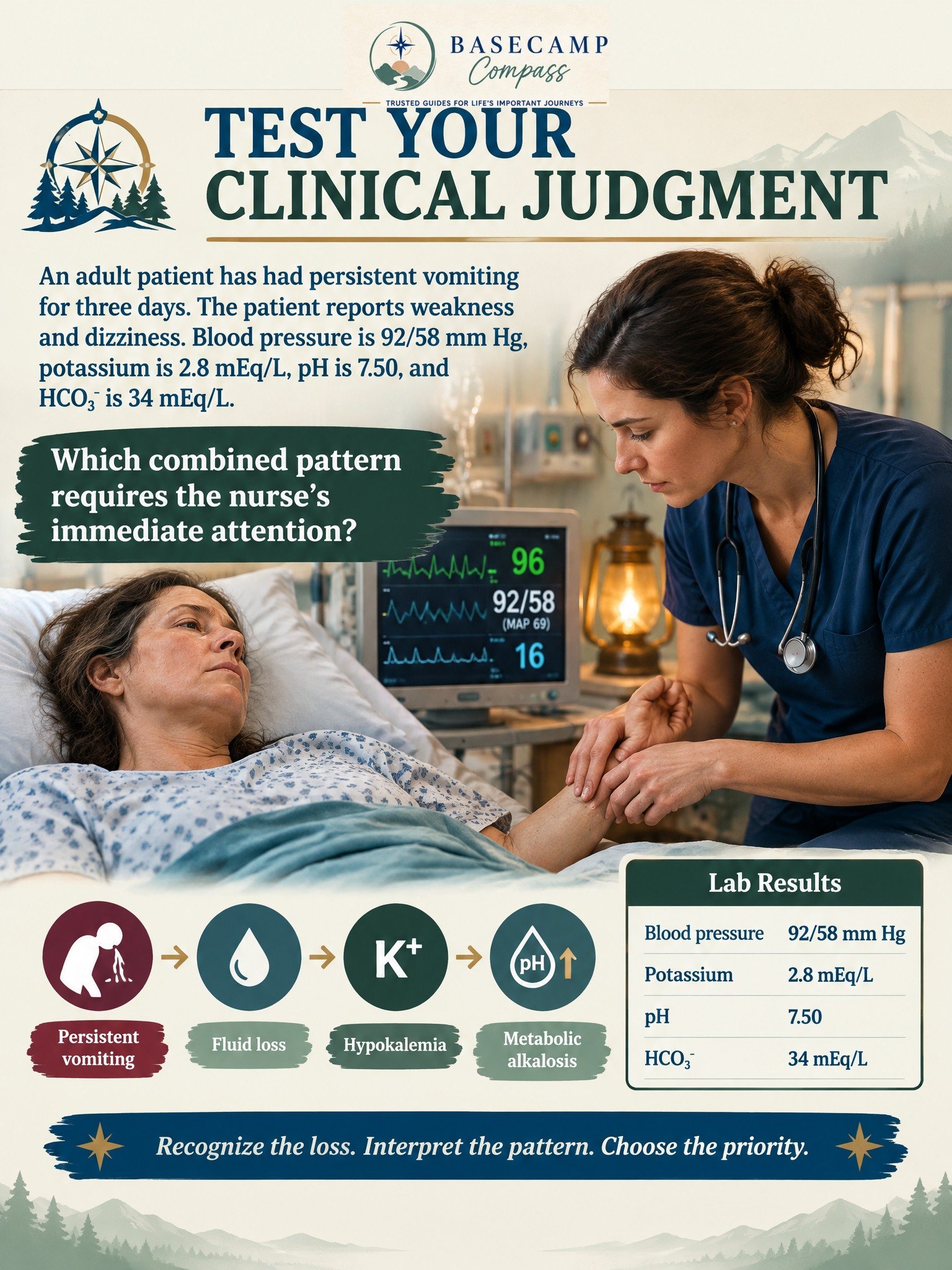
The remaining tools each serve a different part of the Basecamp Compass sequence. Compass Cards make high-value comparisons retrievable. Fillable Retrieval Maps require the learner to rebuild the patterns from memory before checking the paired answer page. Campfire Challenges apply the same knowledge to patient findings, laboratory values, IV-fluid choices, ECG clues, and priority decisions. Together they follow Learn → Organize → Retrieve → Recognize → Apply.
The Guide Teaches The Journey.
Reinforce important concepts.
Test your knowledge and build confidence.
Sample Challenge Questions
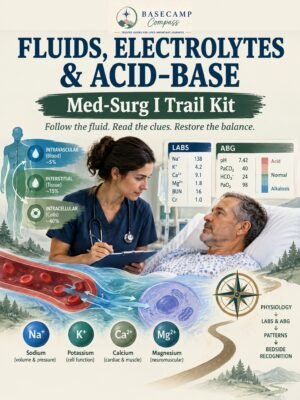 MedSurg I Fluids, Electrolytes & Acid-Base Trail Kit
Reviews
There are no reviews yet.