
Be the first to review “Emergency & Critical Care Drugs Trail Guide” Cancel reply
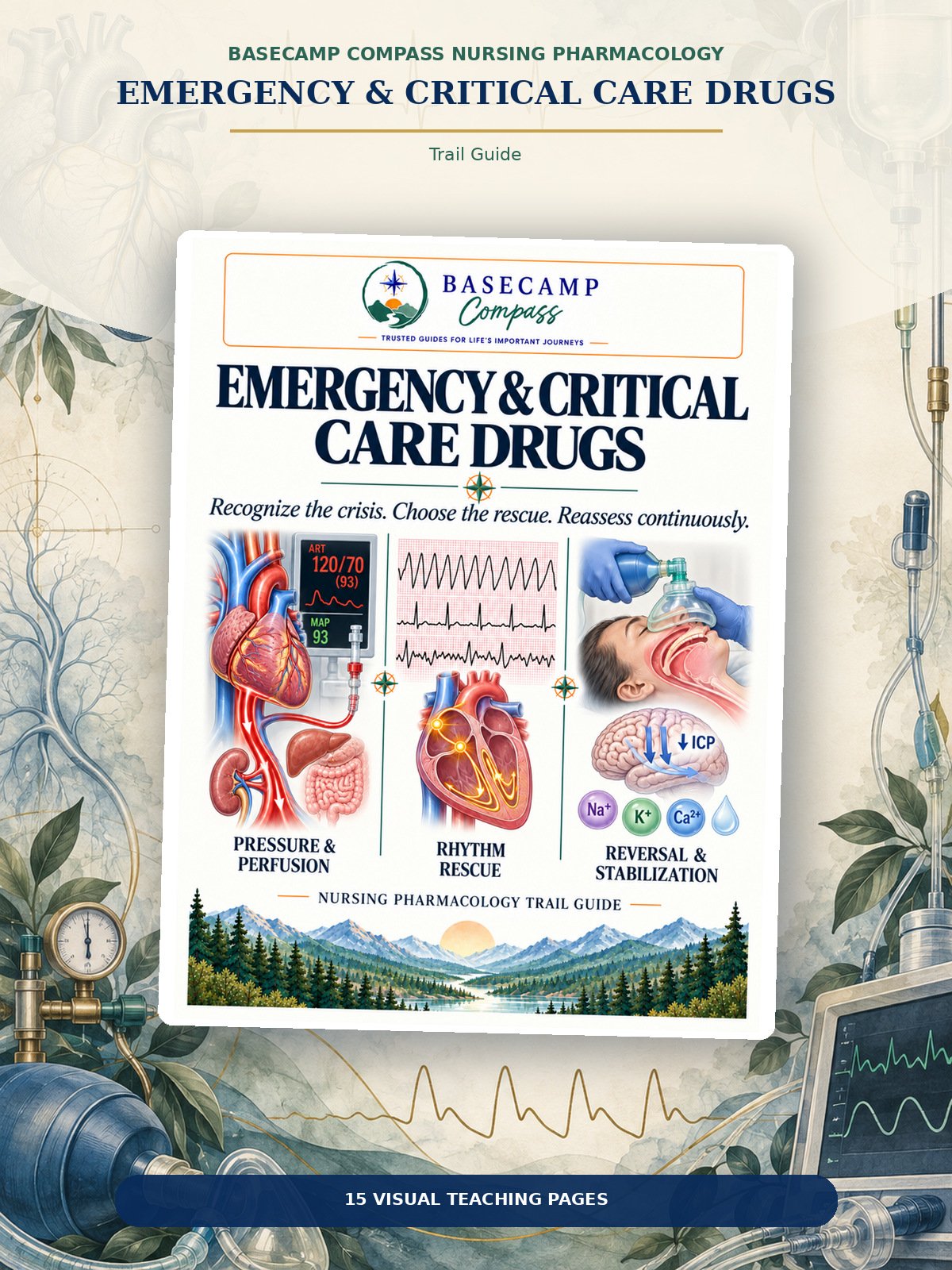
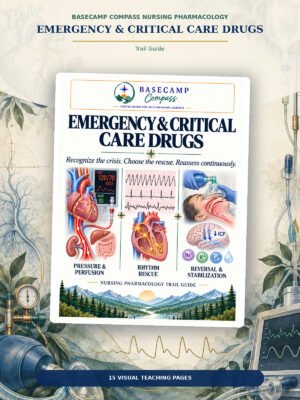
Emergency & Critical Care Drugs Trail Guide
A 15-page printable trail guide mapping emergency and critical care drug classes, key prototypes, and nursing priorities — built for exam review and clinical confidence.
- Estimated Reading Time: 30 minutes
- Pages: 15
- Skill Level: All Levels
- Format: Digital Download (PDF)
$4.99
PDF · Instant download
What You'll Learn
Match emergency medications to perfusion, rhythm, reversal, neurologic, and electrolyte emergencies.
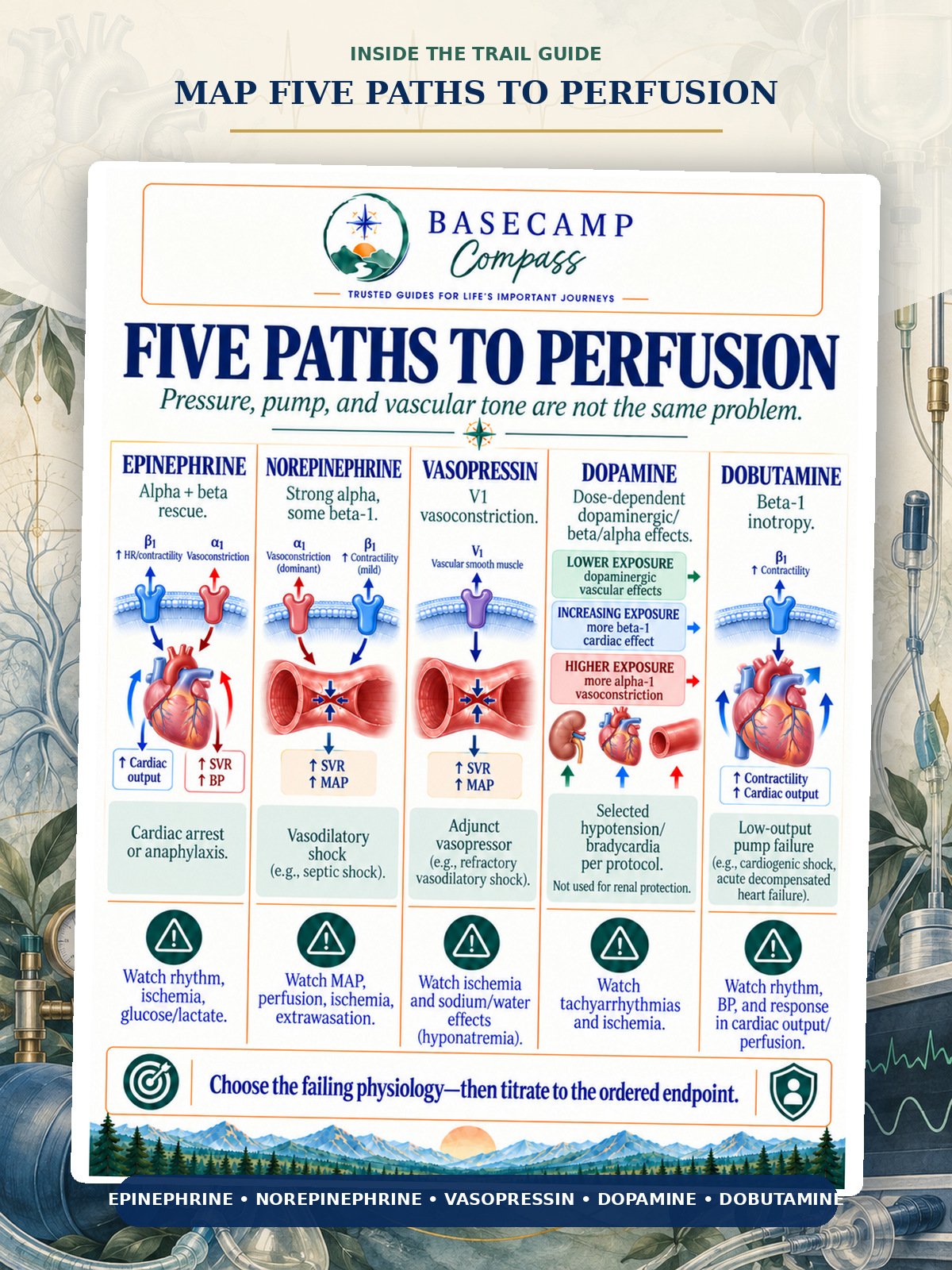
Compare vasopressors with inotropes and connect each effect to the required assessment.
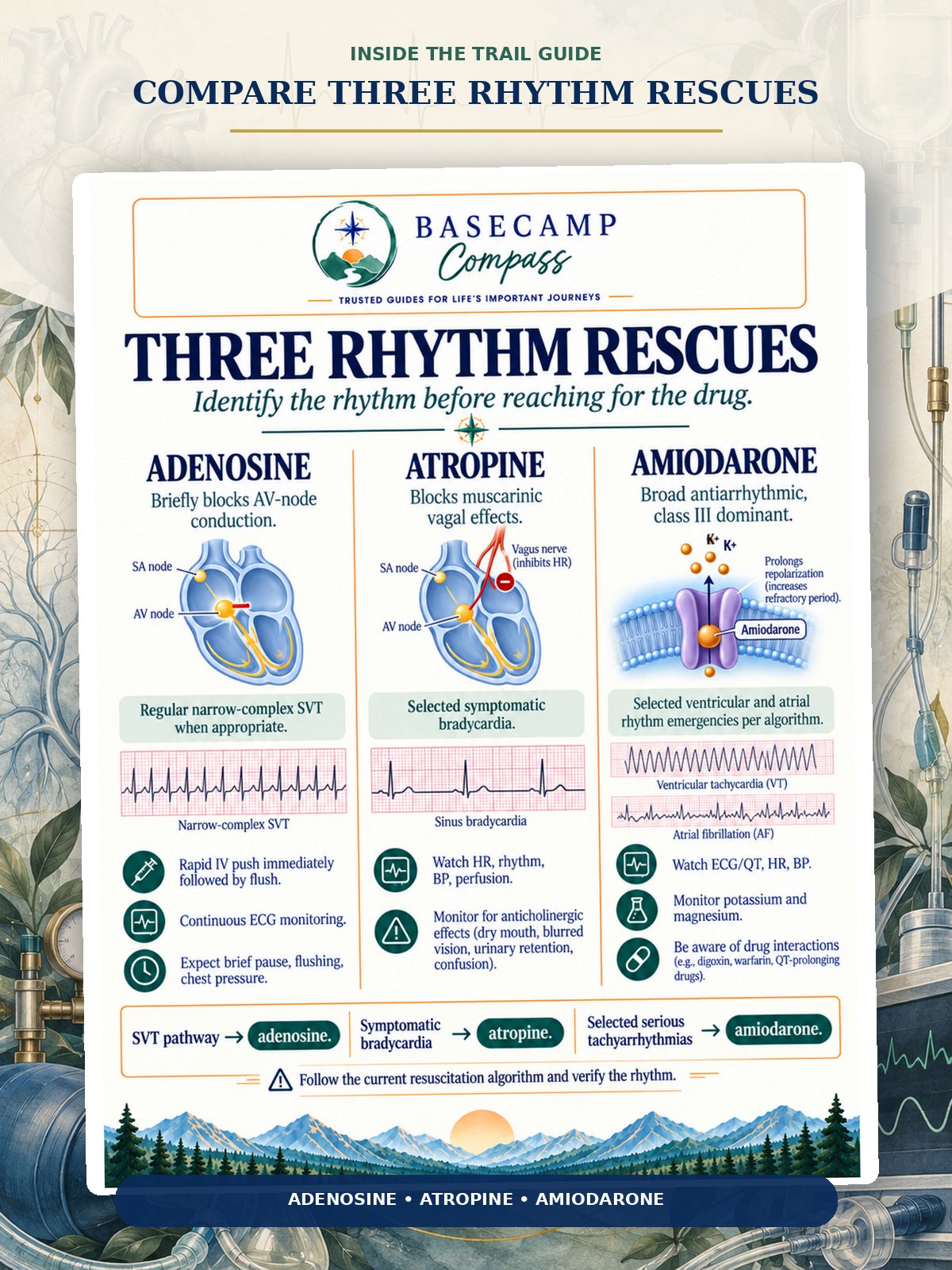
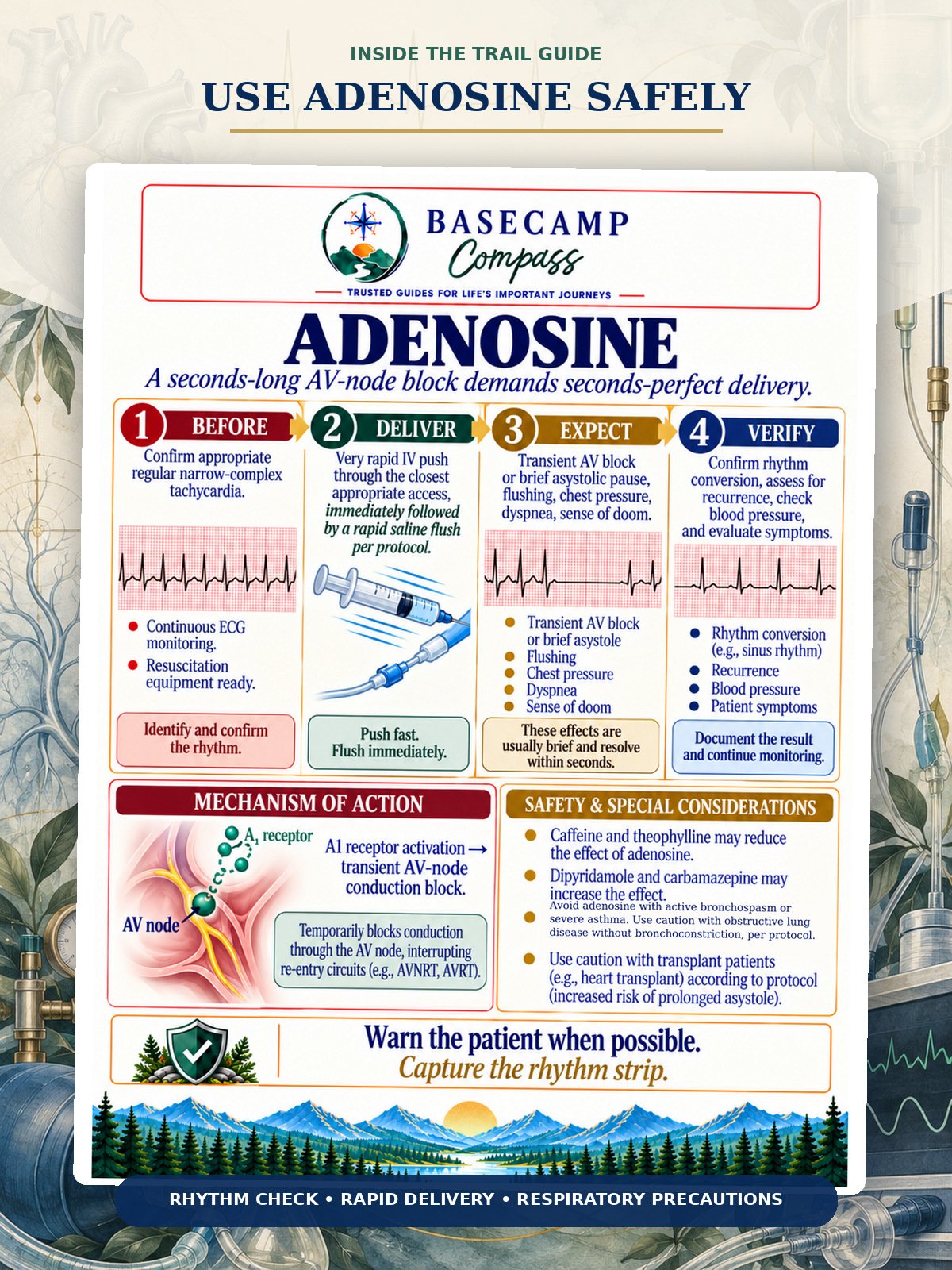
Distinguish adenosine, atropine, and amiodarone by the rhythm problem each medication targets.
Compare naloxone and flumazenil, including resedation and seizure-related safety concerns.
Recognize major complications such as dysrhythmias, ischemia, severe hypertension, and respiratory decline.
Identify the monitoring cues that show whether treatment is working or creating harm.
Table of contents
Map the Critical Rescue
Before the Rescue Drug
Five Paths to Perfusion
Epinephrine: One Drug, Multiple Rescue Roles
Norepinephrine Versus Vasopressin
Dopamine Versus Dobutamine
Rhythm Rescue: Adenosine, Atropine, and Amiodarone
Reversal Agents: Naloxone Versus Flumazenil
Mannitol Versus Magnesium Sulfate
When the Rescue Creates a New Crisis
The Emergency & Critical Care Drugs Trail Guide helps nursing students organize high-alert rescue medications by the crisis they are intended to treat. Instead of memorizing emergency drugs as an isolated list, learners build a practical map around perfusion, blood pressure, cardiac rhythm, toxic exposure, intracranial pressure, and life-threatening electrolyte problems.
Across 15 printable pages, the guide connects epinephrine, norepinephrine, vasopressin, dopamine, dobutamine, adenosine, atropine, amiodarone, naloxone, flumazenil, mannitol, and magnesium sulfate to their clinical purpose, mechanism, major risks, nursing assessments, and response cues. Side-by-side comparisons clarify commonly confused agents, including norepinephrine versus vasopressin, dopamine versus dobutamine, and naloxone versus flumazenil.
The guide emphasizes what must happen before and after an emergency medication is given: assess the problem, confirm the treatment pathway, monitor continuously, and recognize when the rescue itself creates a new crisis. It is designed as a focused study companion for nursing coursework, clinical preparation, and exam review—not as a replacement for facility protocols, a pharmacology textbook, or clinical judgment.
Digital product: Includes one 15-page printable PDF. No physical product will be shipped.
Complete the set: pair this Trail Guide with the Compass Cards + Audio Companion, or get everything together in the Trail Kit.
How It Works: Your Learning Journey
LEARN
The Guide Teaches The Journey.
REMEMBER
Reinforce important concepts.
CHALLENGE
Test your knowledge and build confidence.

Campfire Challenge Preview
Sample Challenge Questions
Is this a printable file?
Yes. Your download is a print-ready, high-resolution PDF licensed for your personal professional use.
How quickly do I get it?
Instantly. The download link appears on the confirmation screen and in your email receipt.
Reviews
There are no reviews yet.