
Be the first to review “Blood & Clotting Drugs Trail Guide” Cancel reply
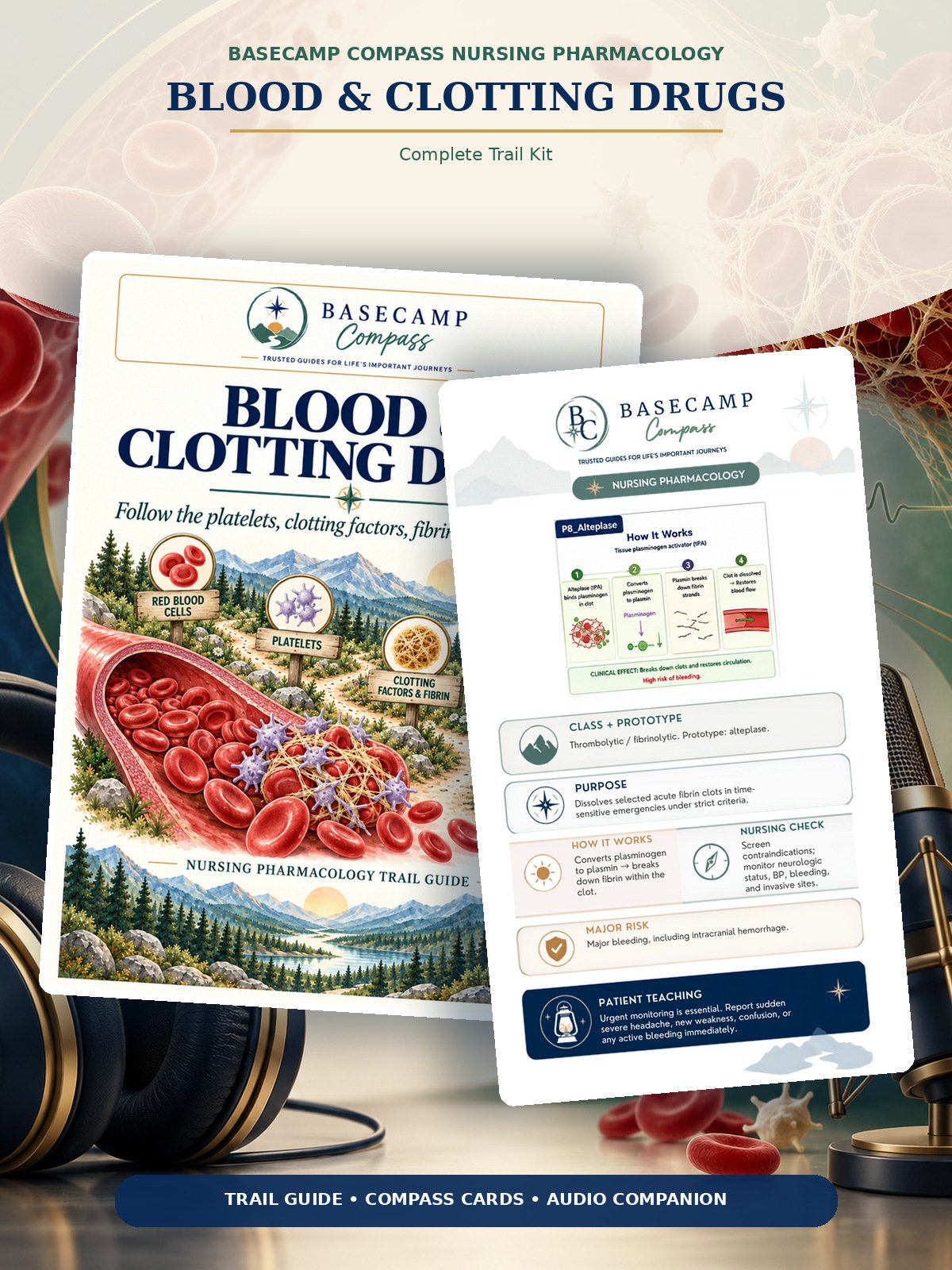
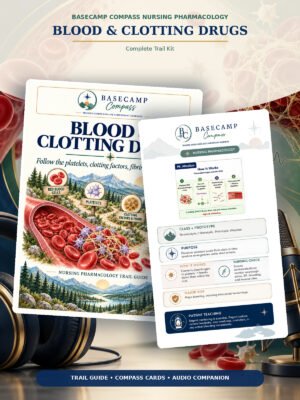
Blood & Clotting Drugs Trail Guide
A concise, printable pharmacology study companion for organizing medications affecting blood formation and clotting, key prototypes, bleeding risks, and nursing checks.
- Estimated Reading Time: 30 minutes
- Pages: 15
- Skill Level: All Levels
- Format: Digital Download (PDF)
$4.99
PDF · Instant download
What You'll Learn
How antiplatelet medications, anticoagulants, thrombolytics, and antifibrinolytics change different parts of the clotting process
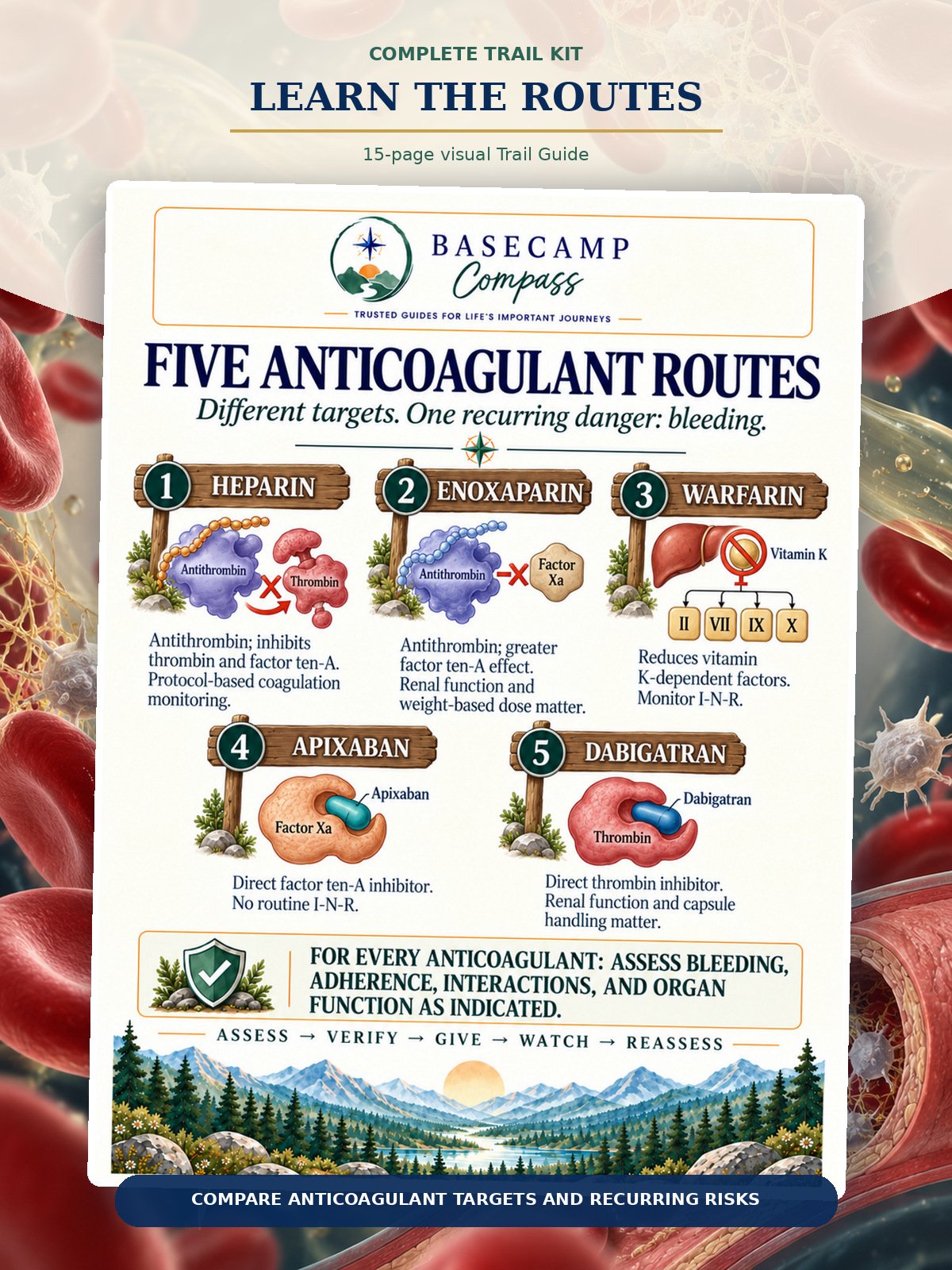
How to compare heparin, enoxaparin, warfarin, apixaban, and dabigatran by mechanism and monitoring needs
Why bleeding is the recurring safety concern and when thrombosis becomes the greater risk
Which laboratory values and assessments matter for anticoagulation, anemia treatment, and bone-marrow stimulation
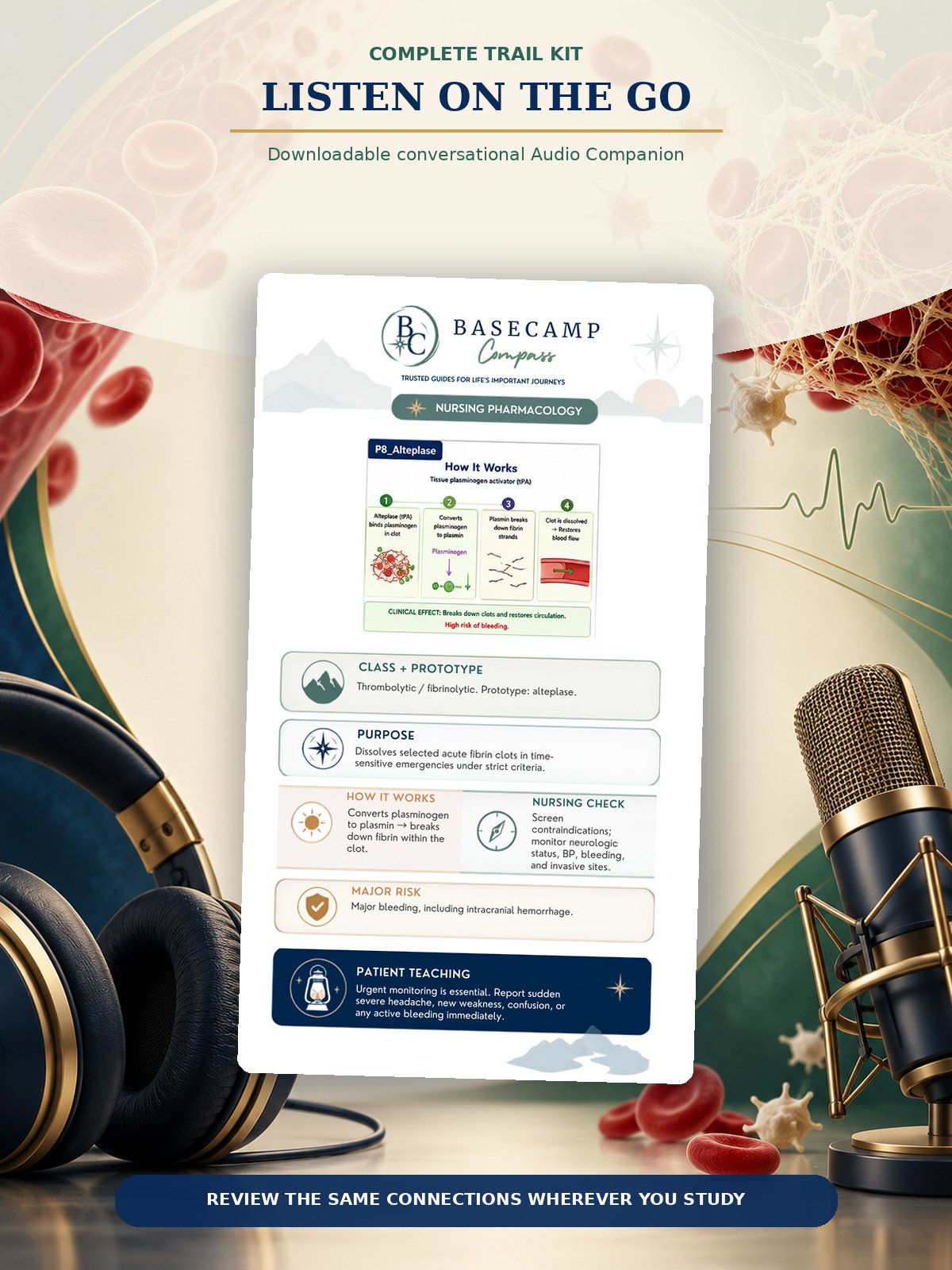
How alteplase breaks down a clot while tranexamic acid protects a formed clot from breakdown
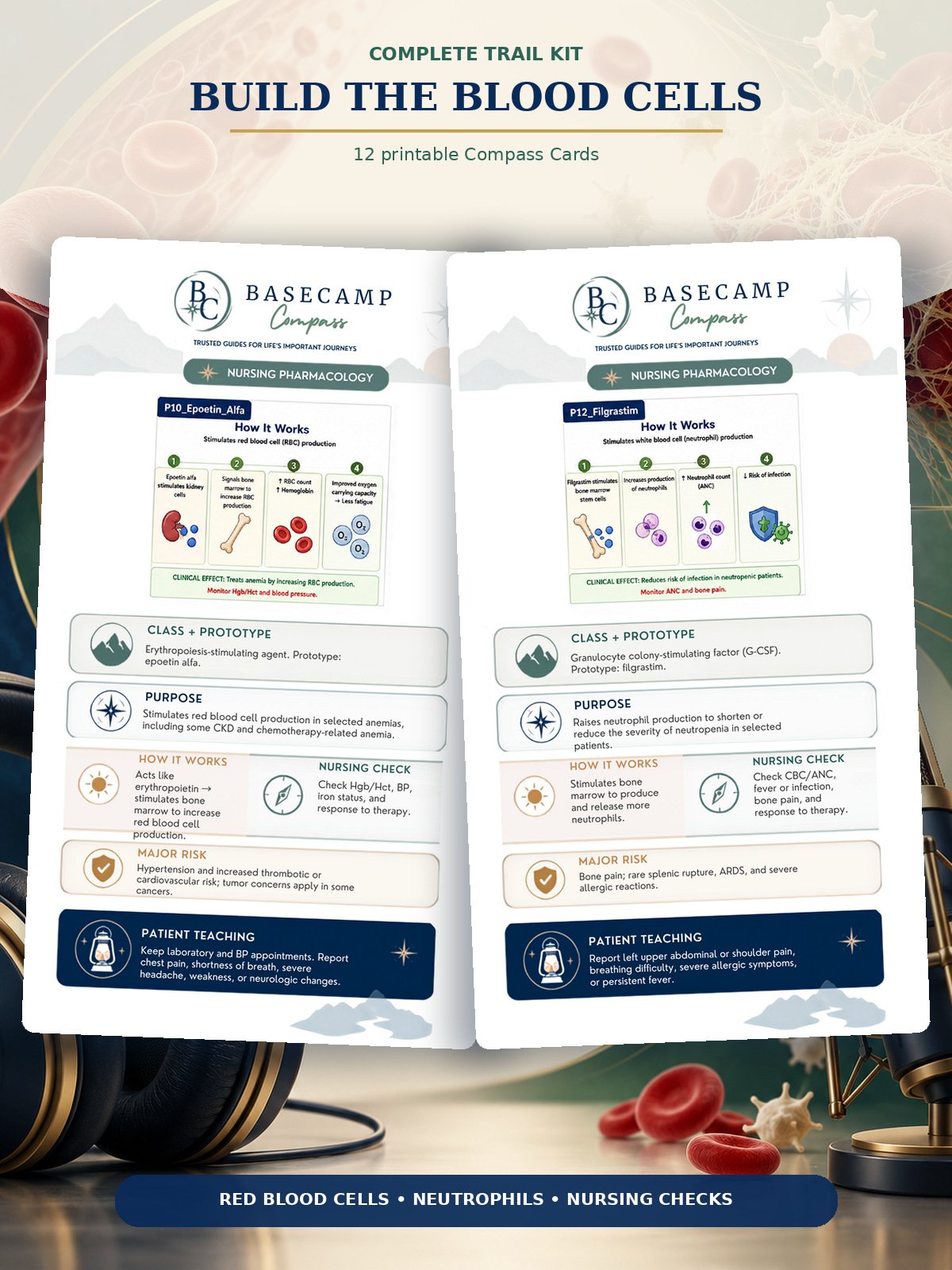
How epoetin alfa, ferrous sulfate, and filgrastim support red blood cells, hemoglobin production, and neutrophil defense
Table of contents
Map the Blood System
Before You Change Clotting
Heparin-Family Anticoagulation: Heparin and Enoxaparin
Direct Oral Anticoagulants: Apixaban and Dabigatran
Warfarin, INR Monitoring, and Vitamin K
Clot Breakdown and Protection: Alteplase and Tranexamic Acid
Building Blood Cells: Epoetin Alfa, Ferrous Sulfate, and Filgrastim
The Blood Clotting Drugs Trail Guide helps nursing students organize medications by the part of the blood system they change: platelets, clotting factors, fibrin breakdown, red blood cell production, or neutrophil production.
The 15 visual teaching pages cover aspirin, clopidogrel, heparin, enoxaparin, warfarin, apixaban, dabigatran, alteplase, tranexamic acid, epoetin alfa, ferrous sulfate, and filgrastim.
Learners compare antiplatelet medications, anticoagulant pathways, direct oral anticoagulants, thrombolytic therapy, antifibrinolytic therapy, and medications that support blood-cell production. The guide connects each mechanism with bleeding or thrombosis risks, nursing assessments, laboratory monitoring, administration safeguards, and patient teaching.
Special attention is given to heparin-induced thrombocytopenia, INR monitoring, renal function, intracranial bleeding, diet and medication interactions, thrombotic complications, anemia monitoring, and infection risk during neutropenia.
Use this printable digital guide for class preparation, medication comparison, clinical reinforcement, or exam review. It is designed to supplement nursing textbooks, lectures, clinical instruction, and facility policies—not replace them.
This product includes one downloadable 15-page PDF. No physical product will be shipped.
How It Works: Your Learning Journey
LEARN
The Guide Teaches The Journey.
REMEMBER
Reinforce important concepts.
CHALLENGE
Test your knowledge and build confidence.

Campfire Challenge Preview
Sample Challenge Questions
Is this a printable file?
Yes. Your download is a print-ready, high-resolution PDF licensed for your personal professional use.
How quickly do I get it?
Instantly. The download link appears on the confirmation screen and in your email receipt.
Reviews
There are no reviews yet.