
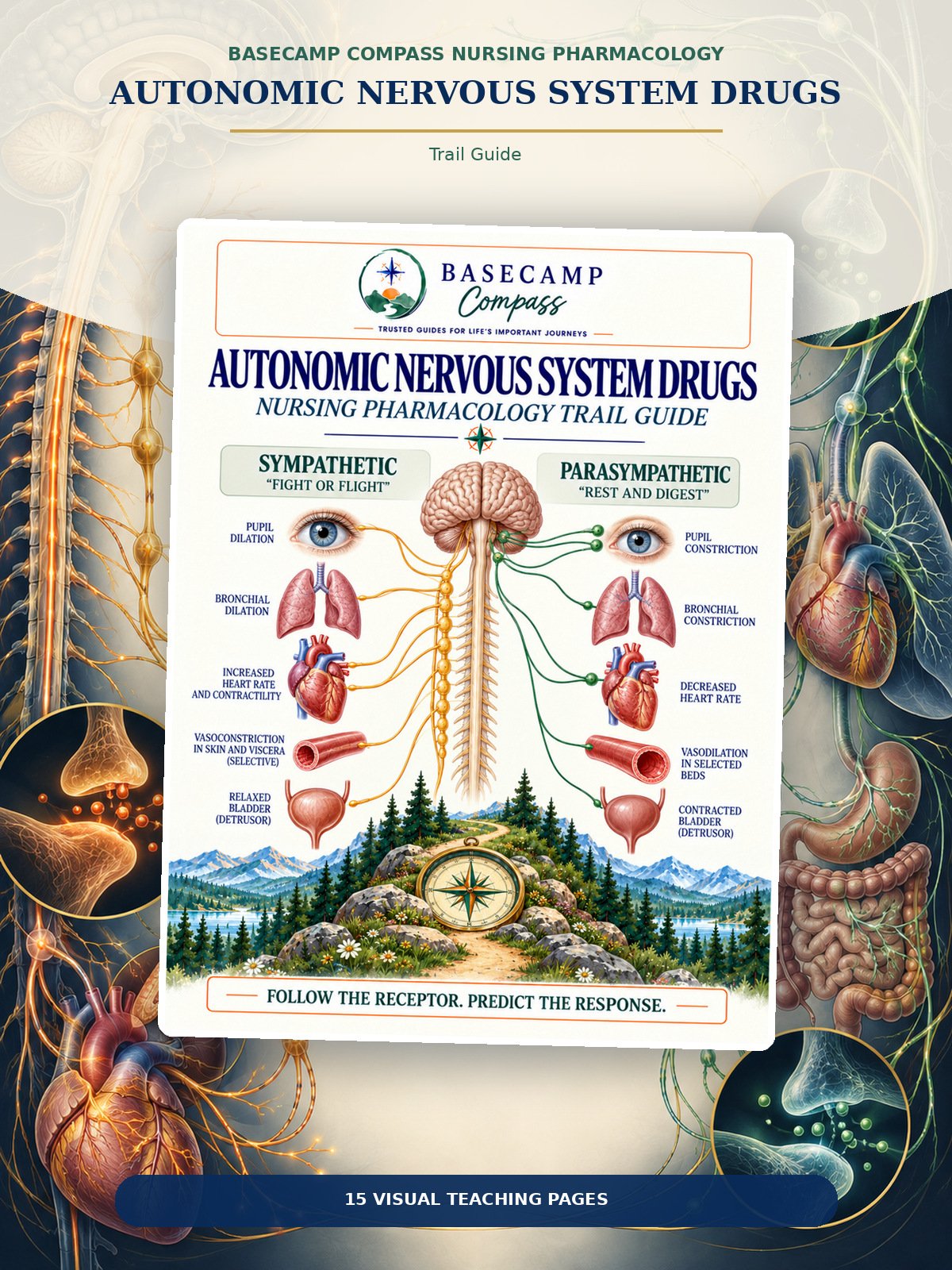
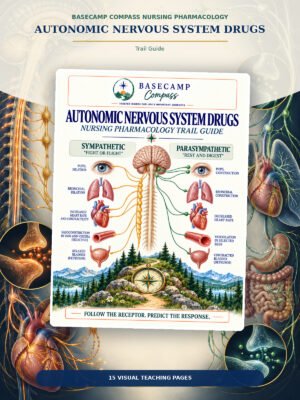
Autonomic Nervous System Drugs Trail Guide
A concise, printable pharmacology study companion for organizing autonomic drug patterns, sympathetic and parasympathetic effects, key prototypes, and safety priorities.
- Estimated Reading Time: 30 minutes
- Pages: 15
- Skill Level: All Levels
- Format: Digital Download (PDF)
$4.99
PDF · Instant download
What You'll Learn
How sympathetic and parasympathetic medications change signals throughout the body
How to connect muscarinic, alpha, and beta receptor effects with expected organ responses
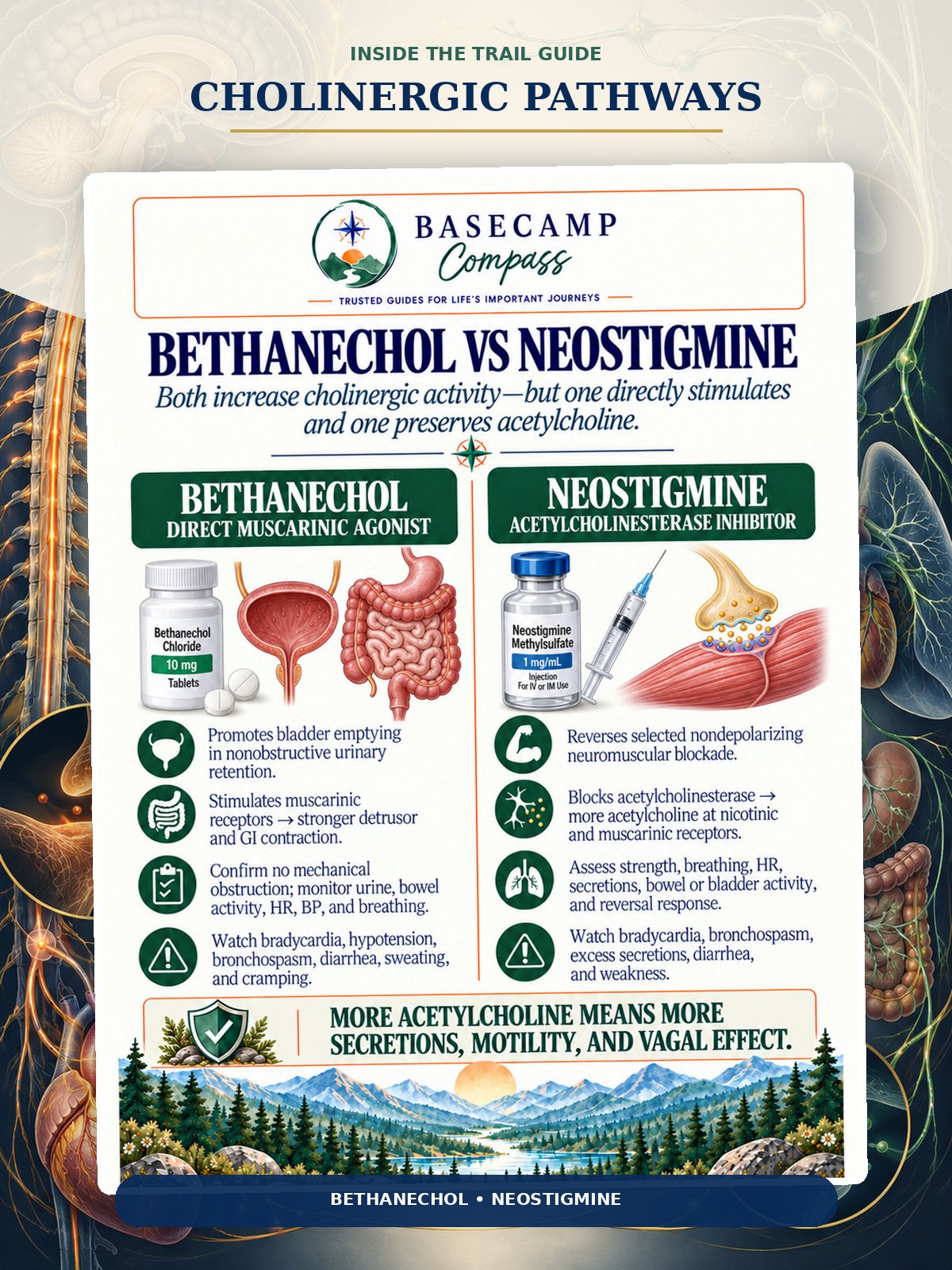
How to compare medications that increase cholinergic activity with medications that block muscarinic signals
Which assessments matter before administering autonomic medications, vasopressors, and inotropes
How indication, concentration, dose, route, titration, and treatment response affect medication safety
How to recognize cholinergic excess, anticholinergic toxicity, hemodynamic instability, poor perfusion, and other dangerous reactions
Table of contents
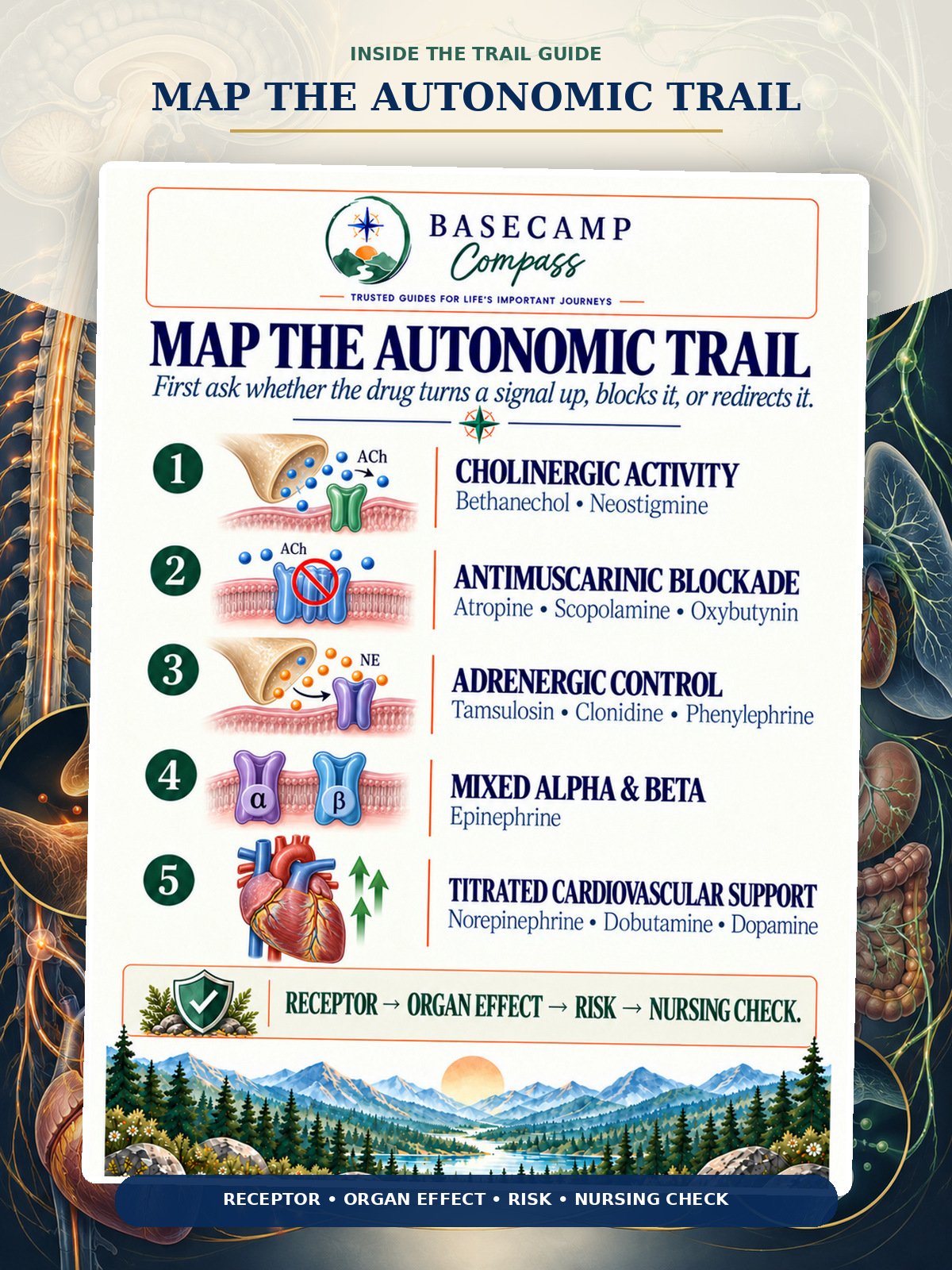
Map the Autonomic Trail
Before You Give the Autonomic Drug
Cholinergic Activity: Bethanechol and Neostigmine
Antimuscarinic Blockade: Atropine, Scopolamine, and Oxybutynin
Urinary and Sympathetic Control: Tamsulosin and Clonidine
Alpha-Receptor Effects: Phenylephrine, Epinephrine, and Norepinephrine
Cardiac Support and Dose-Dependent Effects: Dobutamine and Dopamine
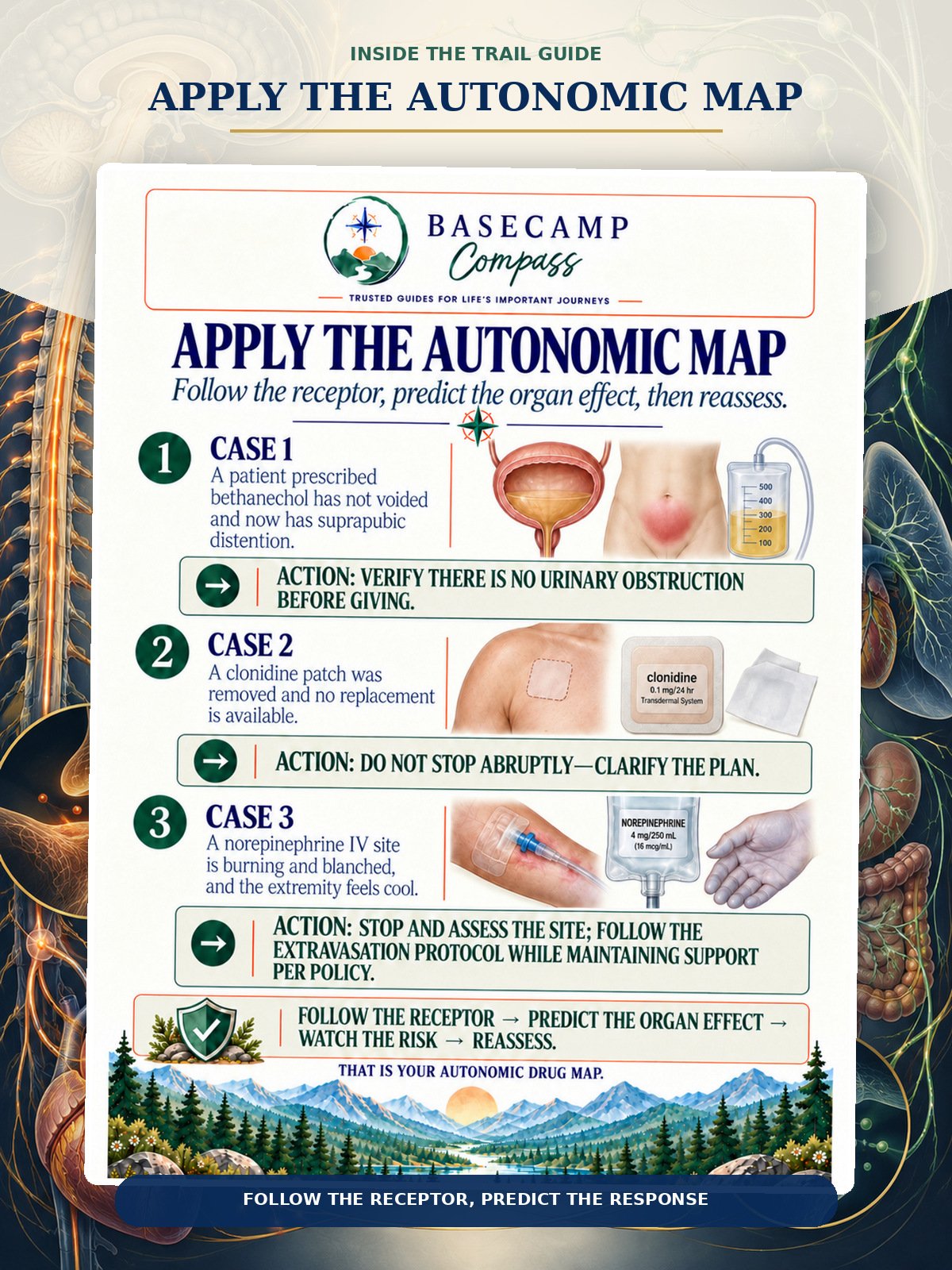
Danger Signs and Application of the Autonomic Map
The Autonomic Nervous System Drugs Trail Guide helps nursing students understand medications that activate, preserve, block, or redirect sympathetic and parasympathetic signals. Instead of memorizing isolated drug facts, learners follow the receptor, predict the organ response, and connect that response with nursing assessment and patient safety.
The 15 visual teaching pages cover bethanechol, neostigmine, atropine, scopolamine, oxybutynin, tamsulosin, clonidine, phenylephrine, epinephrine, norepinephrine, dobutamine, and dopamine.
Learners review cholinergic activity, antimuscarinic blockade, alpha and beta receptor effects, urinary medications, vasopressors, inotropes, medication administration safeguards, titration priorities, and dangerous autonomic reactions. The guide also reinforces assessment of heart rate, rhythm, blood pressure, perfusion, respiratory status, secretions, urinary function, neurologic status, and treatment response.
Use this printable digital guide for class preparation, medication comparison, clinical reinforcement, or exam review. It is designed to supplement nursing textbooks, lectures, clinical instruction, and facility policies—not replace them.
This product includes one downloadable 15-page PDF. No physical product will be shipped.
Complete the set: pair this Trail Guide with the Compass Cards + Audio Companion, or get everything together in the Trail Kit.
How It Works: Your Learning Journey
LEARN
The Guide Teaches The Journey.
REMEMBER
Reinforce important concepts.
CHALLENGE
Test your knowledge and build confidence.

Campfire Challenge Preview
Sample Challenge Questions
Is this a printable file?
Yes. Your download is a print-ready, high-resolution PDF licensed for your personal professional use.
How quickly do I get it?
Instantly. The download link appears on the confirmation screen and in your email receipt.
Reviews
There are no reviews yet.