
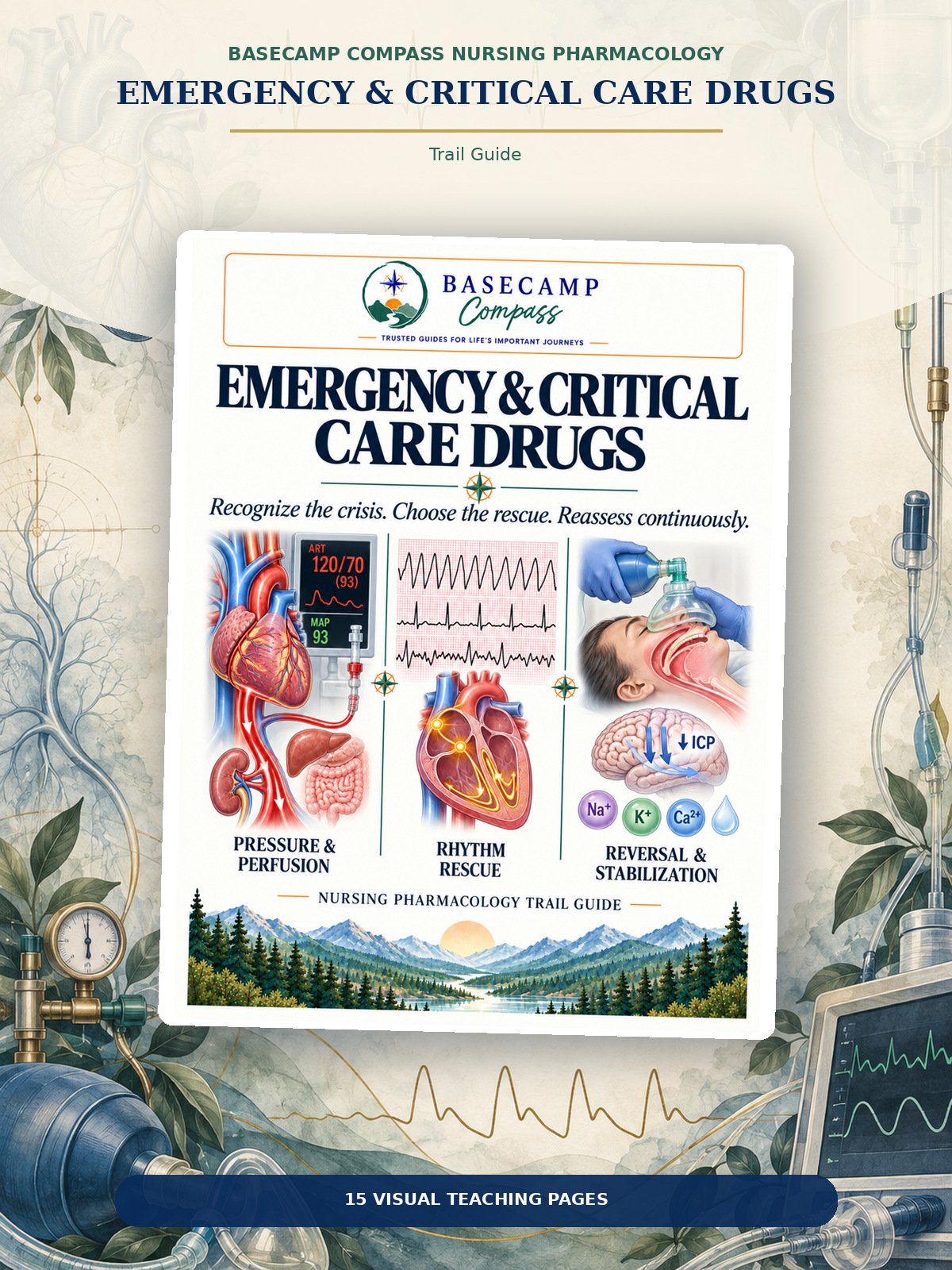
The Emergency & Critical Care Drugs Trail Guide helps nursing students organize high-alert rescue medications by the crisis they are intended to treat. Instead of memorizing emergency drugs as an isolated list, learners build a practical map around perfusion, blood pressure, cardiac rhythm, toxic exposure, intracranial pressure, and life-threatening electrolyte problems.
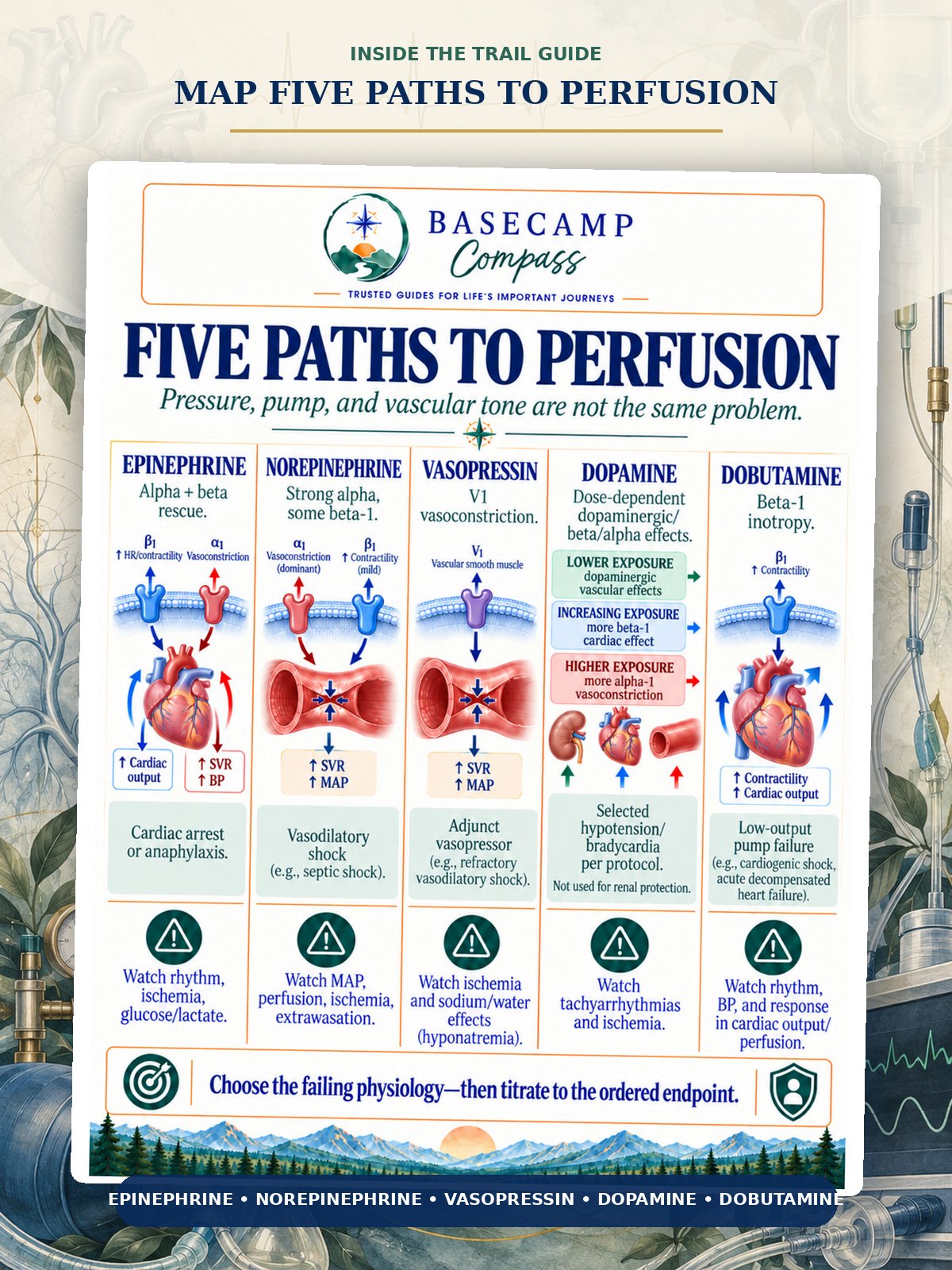
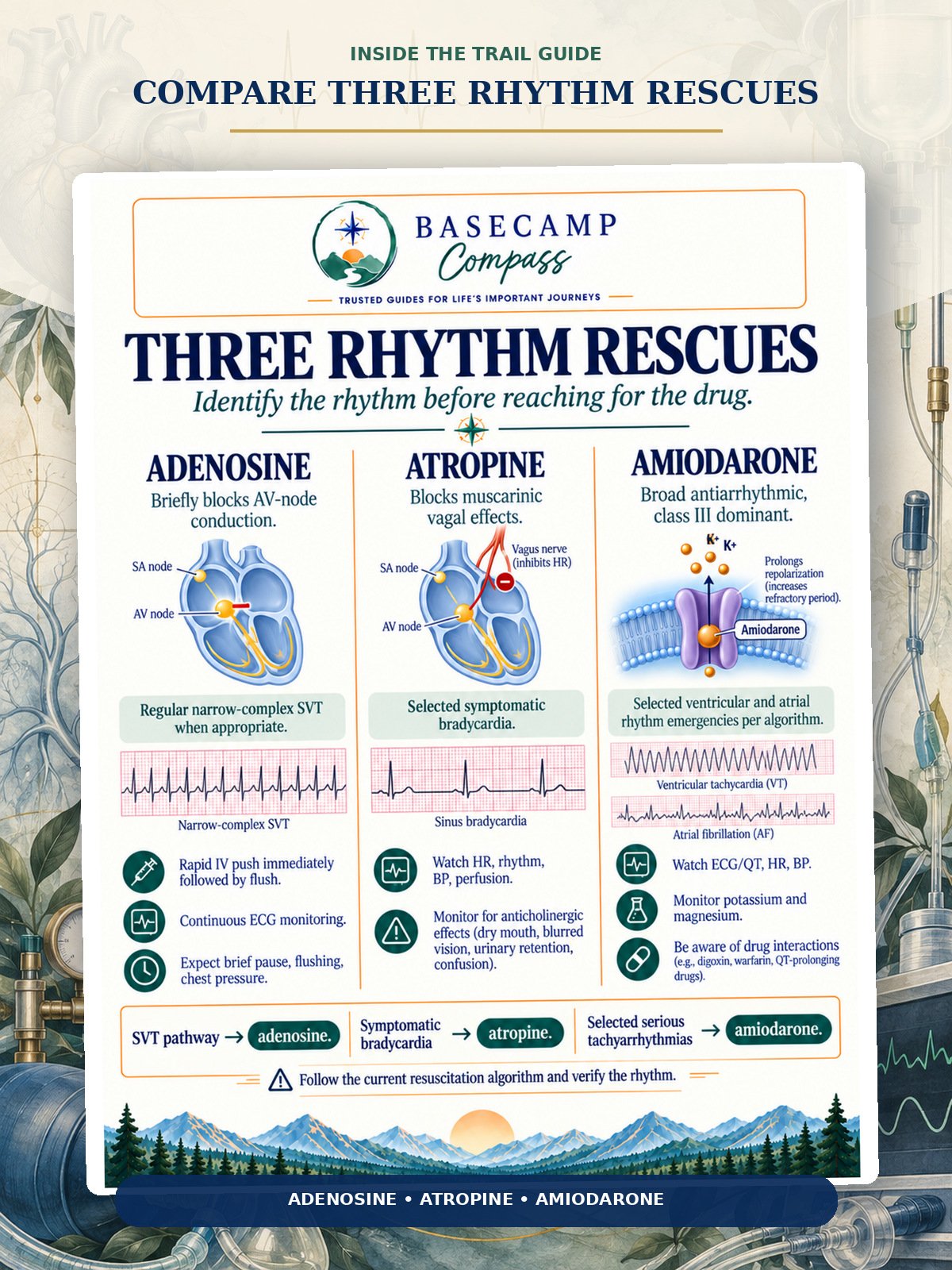
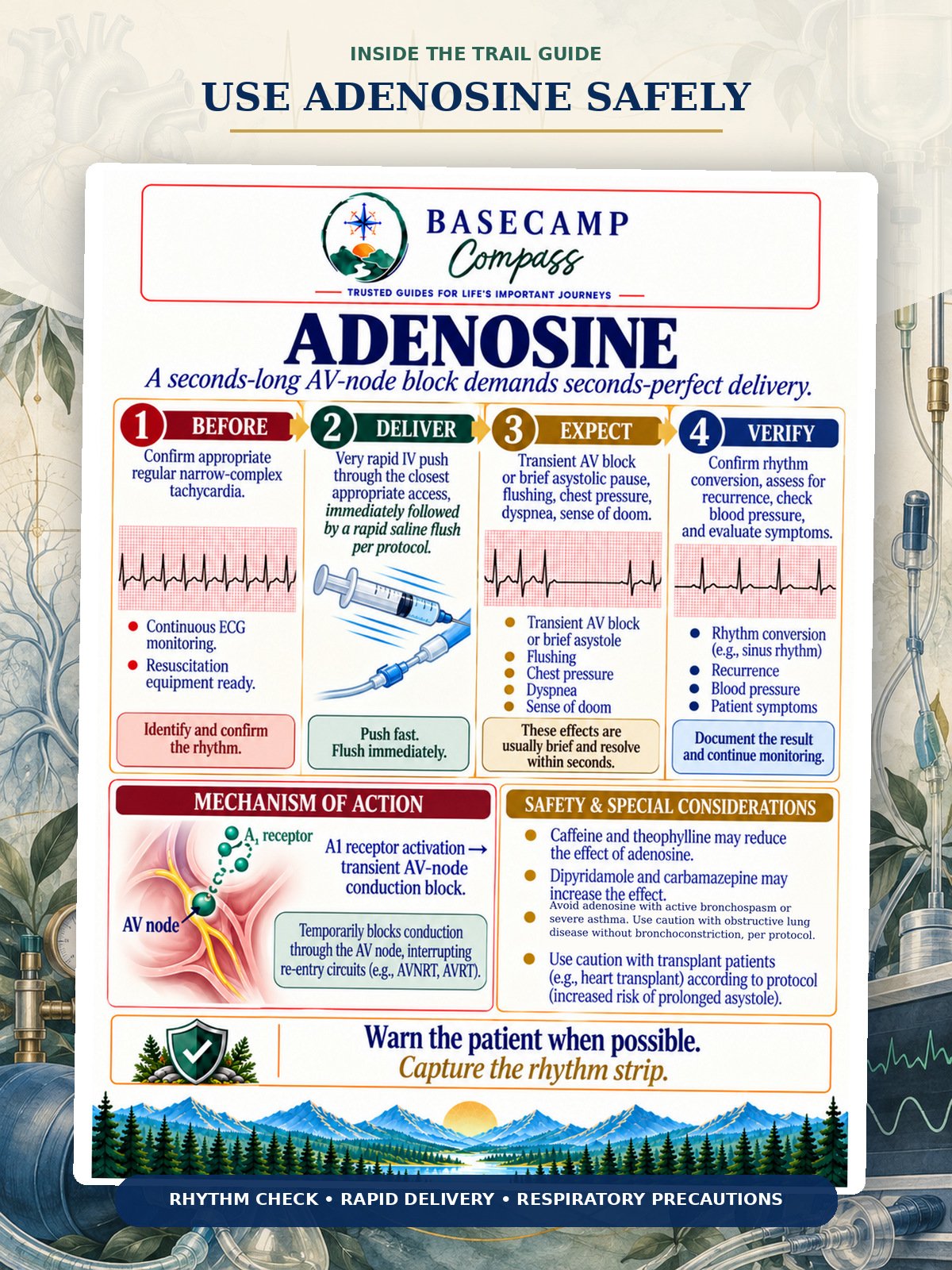
Across 15 printable pages, the guide connects epinephrine, norepinephrine, vasopressin, dopamine, dobutamine, adenosine, atropine, amiodarone, naloxone, flumazenil, mannitol, and magnesium sulfate to their clinical purpose, mechanism, major risks, nursing assessments, and response cues. Side-by-side comparisons clarify commonly confused agents, including norepinephrine versus vasopressin, dopamine versus dobutamine, and naloxone versus flumazenil.
The guide emphasizes what must happen before and after an emergency medication is given: assess the problem, confirm the treatment pathway, monitor continuously, and recognize when the rescue itself creates a new crisis. It is designed as a focused study companion for nursing coursework, clinical preparation, and exam review—not as a replacement for facility protocols, a pharmacology textbook, or clinical judgment.
Digital product: Includes one 15-page printable PDF. No physical product will be shipped.
Complete the set: pair this Trail Guide with the Compass Cards + Audio Companion, or get everything together in the Trail Kit.

Reviews
There are no reviews yet.