
The complete Bipolar Disorders Trail Kit combines visual learning, quick review, active retrieval, and clinical application in one coordinated bipolar nursing bundle. Begin with the 36-page Trail Guide, reinforce key concepts with 12 Compass Cards, test recall with four fillable Retrieval Maps and answer keys, then apply what you know with three Campfire Challenges and answer keys. The fillable maps can be completed on a phone, tablet, or computer and cleared for repeated practice—making this bipolar nursing bundle easy to reuse all the way to exam day.
Sale!


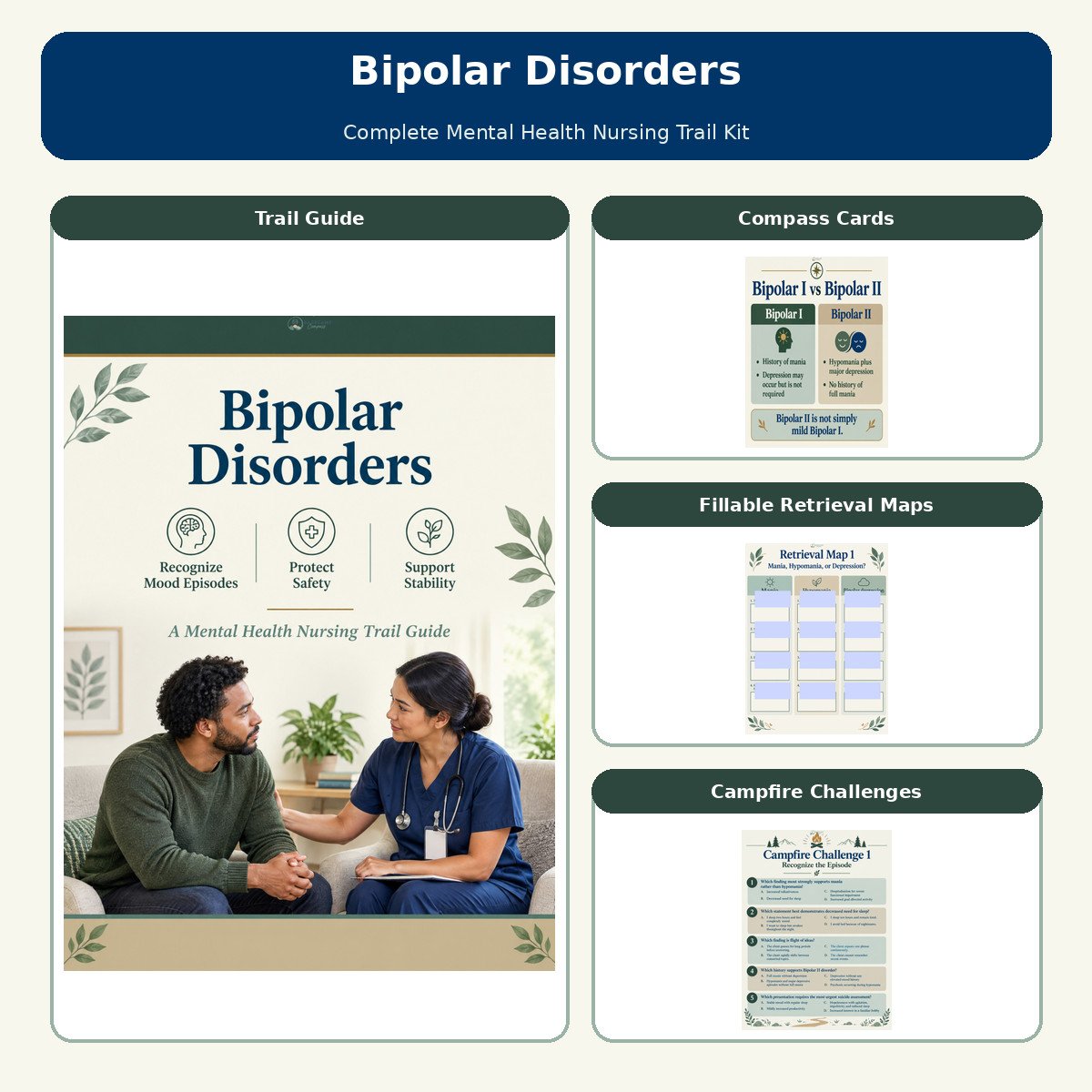
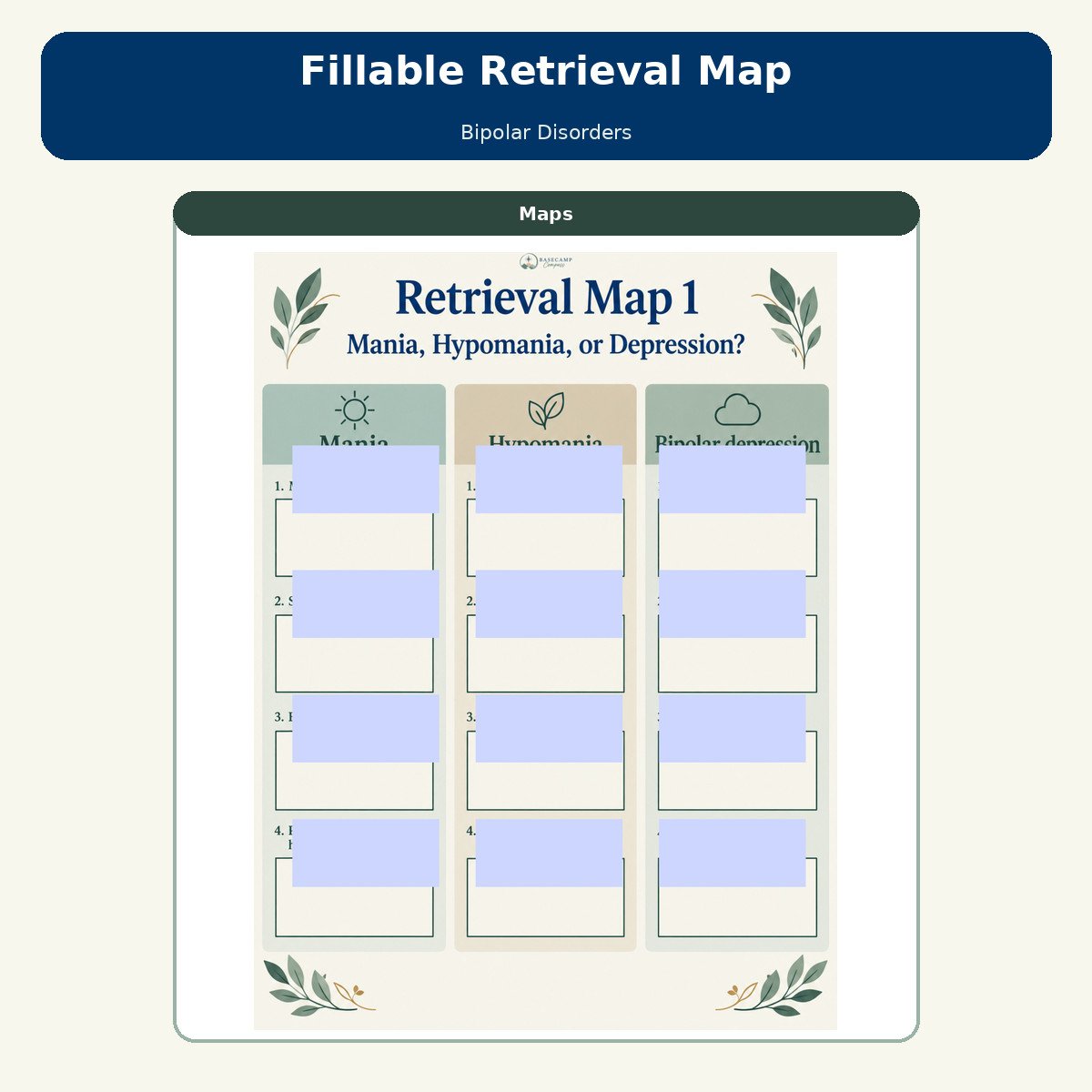
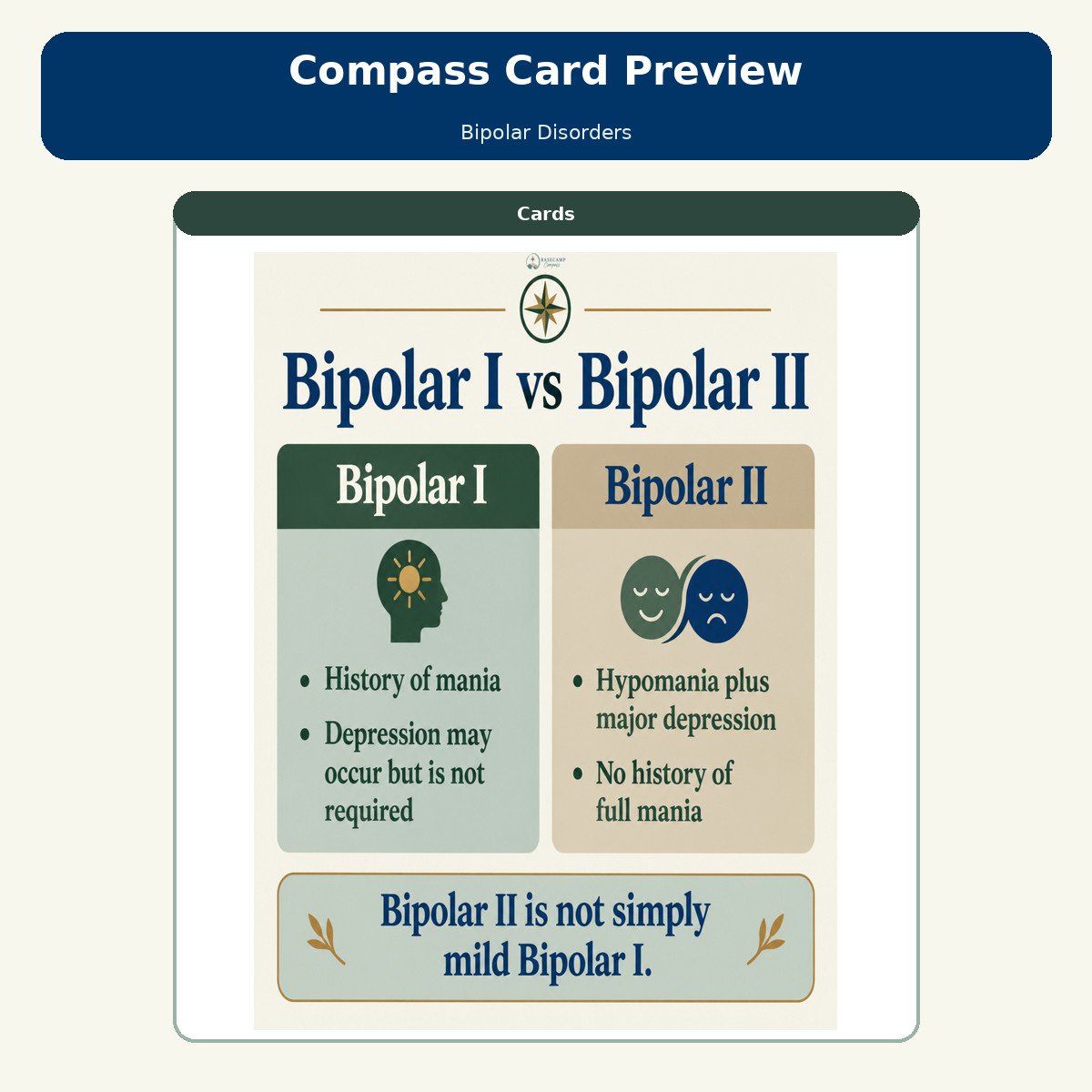
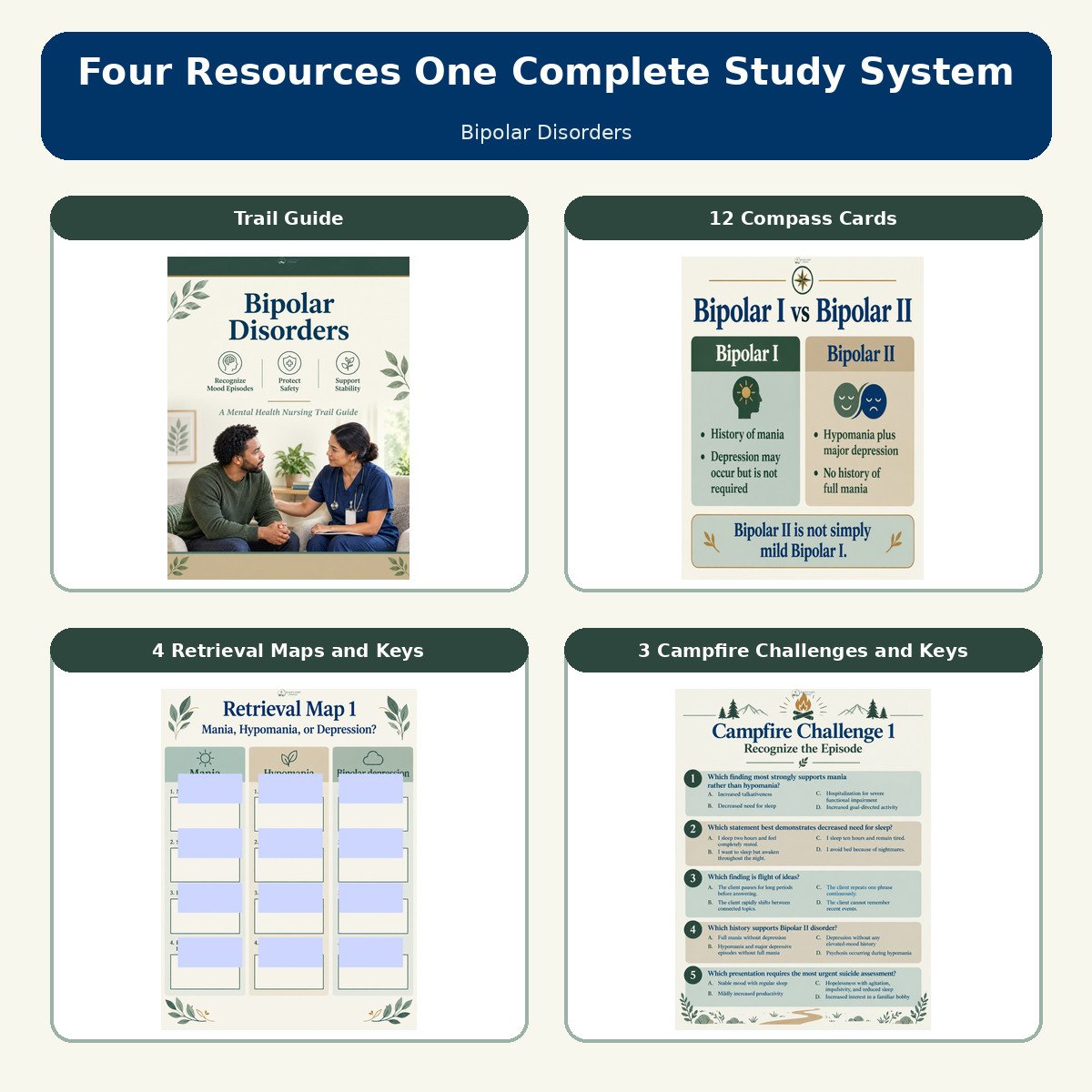
Bipolar Disorders Complete Trail Kit
A complete digital study system with a Trail Guide, 12 Compass Cards, four fillable Retrieval Maps, and three Campfire Challenges.
- Estimated Reading Time: 1 hour
- Pages: 63
- Skill Level: All Levels
- Format: Digital Download (PDF + Audio)
$15.00 Original price was: $15.00.$9.99Current price is: $9.99.
DIGITAL · INSTANT ACCESS
What You'll Learn
Differentiate bipolar I, bipolar II, mania, hypomania, and bipolar depression
Recognize mania using changes in mood, sleep, speech, activity, judgment, and function
Prioritize safety, reduced stimulation, hydration, nutrition, sleep, and structured activity
Use calm communication and therapeutic limit setting during mania
Review core monitoring concepts for lithium, anticonvulsants, and antipsychotics
Assess suicide risk, aggression, relapse warning signs, adherence barriers, and recovery needs
Table of contents
Mood Exists on a Spectrum
What This Guide Covers
Bipolar Disorders Are Episodic
Bipolar I vs Bipolar II
Mania Recognize the Pattern
Hypomania
Mania vs Hypomania
DIG FAST
Speech and Thought During Mania
Behavior May Become Dangerous
Irritable Mania
Psychosis During Mania
Bipolar Depression
Ask About Past Elevated Mood
Mixed Features
Rapid Cycling
Part 1 Trail Check
Rule Out Other Causes
The Mania Nursing Priority Ladder
Communicate Calmly and Concretely
Set Limits Without Punishment
Reduce Environmental Stimulation
Sleep Is a Clinical Priority
Nutrition and Hydration During Mania
Activity Needs Structure
Medication Treatment Overview
Lithium Core Nursing Concepts
Anticonvulsant Mood Stabilizers
Antipsychotic Monitoring
Adherence Without Judgment
Suicide and Self-Harm Safety
Aggression and Vulnerability
Relapse Warning Signs
Discharge and Recovery Plan
The Bipolar Nursing Compass
How It Works: Your Learning Journey
LEARN
The Guide Teaches The Journey.
REMEMBER
Reinforce important concepts.
CHALLENGE
Test your knowledge and build confidence.

Campfire Challenge Preview
Take a look inside
Sample 1 — Treatment and Recovery
Which statement by a client taking lithium requires immediate follow-up? A. I keep my fluid intake consistent. B. I have vomiting, a worsening tremor, and trouble walking. C. I attend my laboratory appointments. D. I take my medication as prescribed.
Sample 2 — Stopping Medication
A stable client says, “I stop medication when I feel well.” What is the best response? A. That proves you do not care about recovery. B. You must take it because I said so. C. Tell me what makes continuing medication difficult when you feel better. D. There is no reason to discuss it.
Sample 3 — Discharge Plan
Which discharge plan best supports relapse prevention? A. Depend only on family members to recognize relapse. B. Avoid discussing early symptoms because it may cause anxiety. C. Identify personal warning signs, protect sleep, confirm treatment follow-up, and establish crisis contacts. D. Resume all previous activities immediately.
Reviews
There are no reviews yet.