
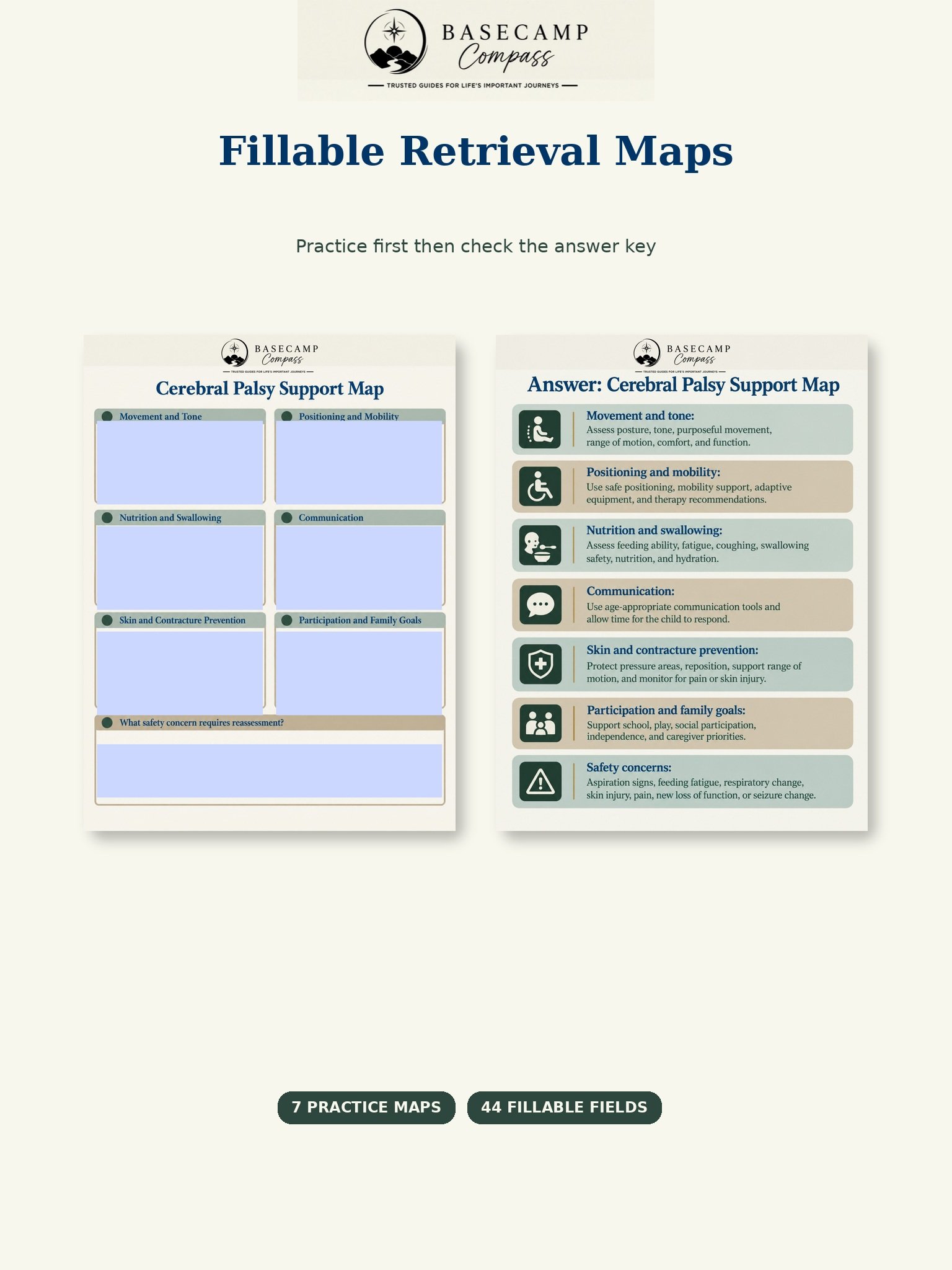
Move from visual review to retrieval practice to clinical reasoning in one cohesive pediatric neuro bundle. The Pediatric Neurologic Disorders Trail Kit combines a visual Trail Guide, quick-reference Compass Cards, 7 fillable Retrieval Maps, and 8 Campfire Challenge cases. Inside this pediatric neuro bundle, each Retrieval Map student page is followed immediately by its answer key, and every Campfire Challenge is followed by its answer and rationale for instant feedback. The maps include 44 interactive fields that can be cleared and reused. This pediatric neuro bundle is a study companion and does not replace assigned course materials, current clinical guidance, facility policy, or clinical judgment.
Sale!


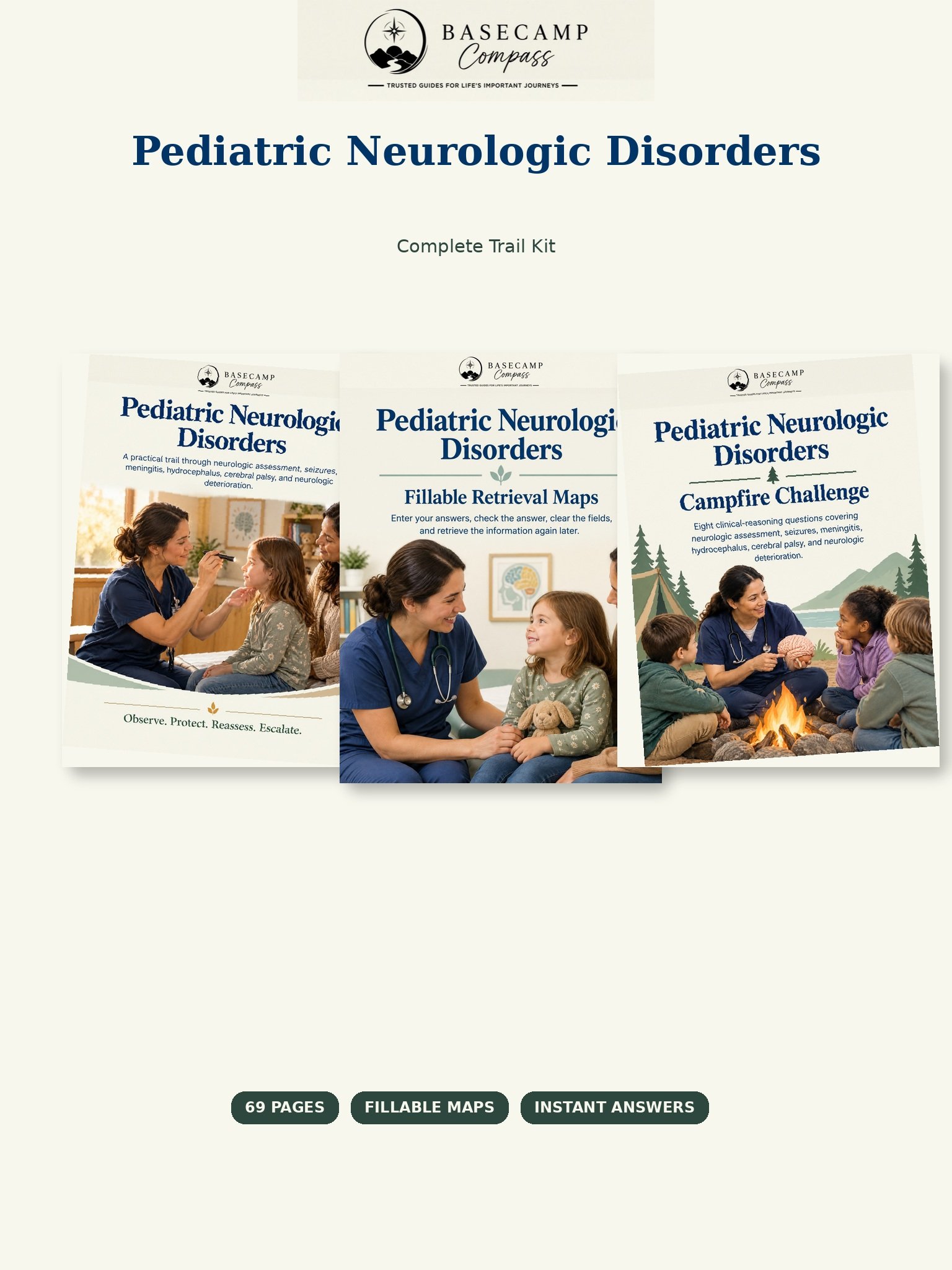
Pediatric Neurologic Disorders Trail Kit
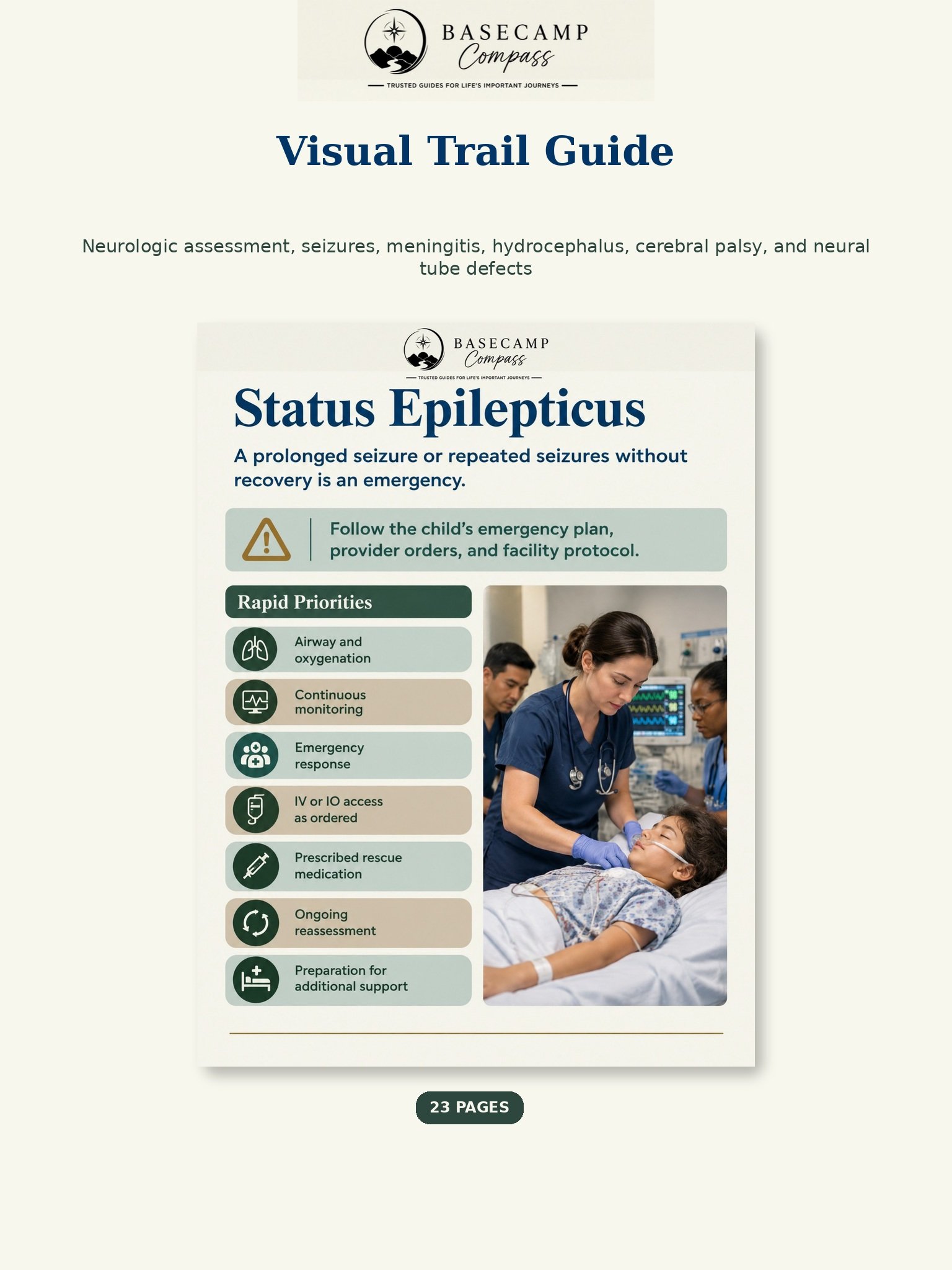
A complete 69-page pediatric nursing study kit with a 23-page Trail Guide, 12 Compass Cards, 7 fillable Retrieval Maps with answer keys, and 8 Campfire Challenges with immediate answers.
- Estimated Reading Time: 1 hour
- Pages: 50
- Skill Level: All Levels
- Format: Digital Download (PDF + Audio)
$15.00 Original price was: $15.00.$9.99Current price is: $9.99.
DIGITAL · INSTANT ACCESS
What You'll Learn
Build an age appropriate pediatric neurologic assessment from baseline findings.
Recognize increased intracranial pressure and time sensitive deterioration.
Protect the child during a seizure and reassess the recovery period.
Compare meningitis hydrocephalus and shunt concern patterns.
Support function feeding mobility skin protection and family goals in cerebral palsy and neural tube defects.
Practice recall with 7 fillable maps and immediate answer keys.
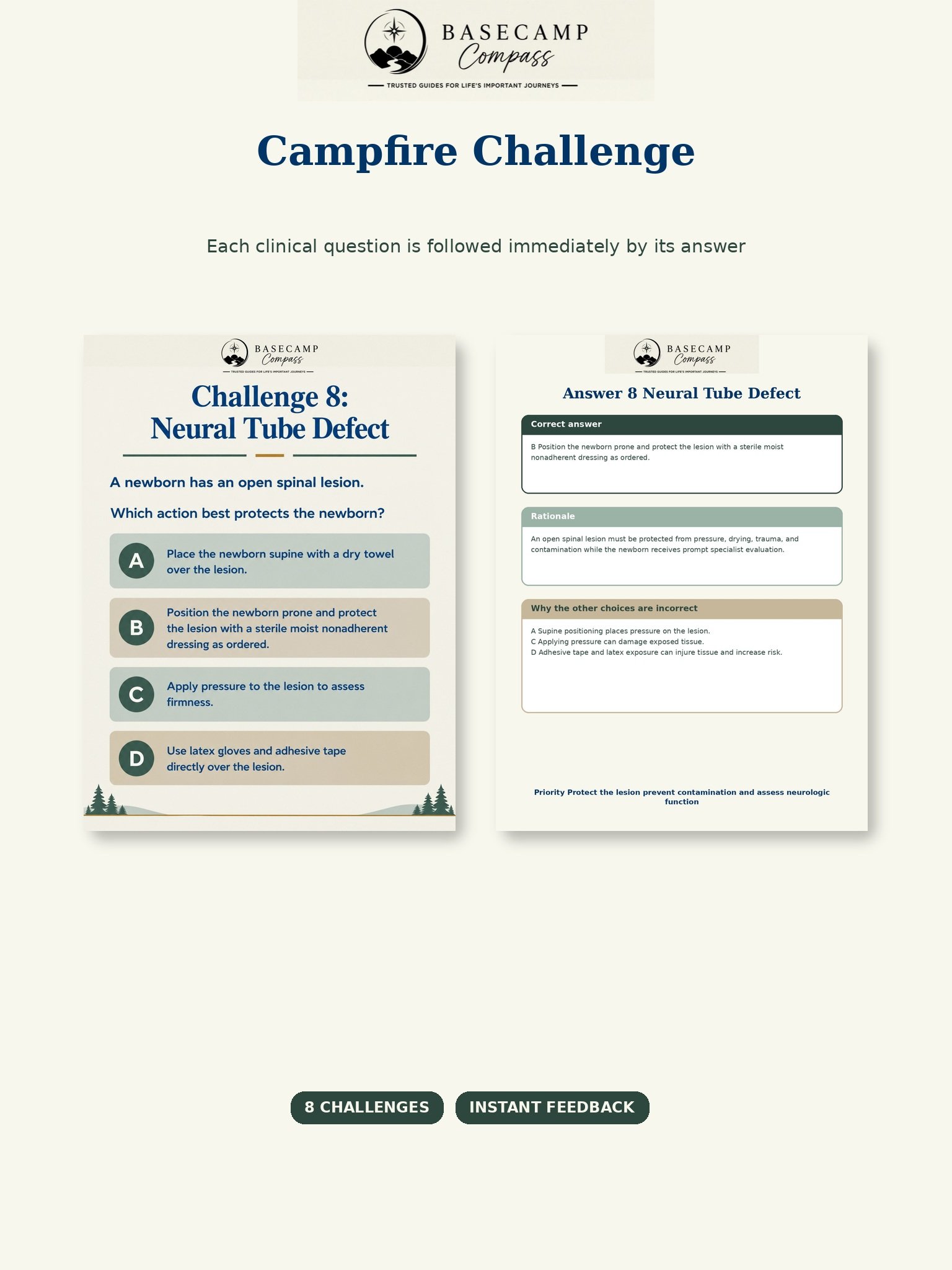
Apply clinical reasoning through 8 Campfire Challenges with immediate feedback.
Table of contents
23-page visual Trail Guide
12-page Compass Card set
7 fillable Retrieval Maps with 7 immediate answer keys
8 Campfire Challenges with immediate answer pages
Neurologic assessment, seizures, meningitis, hydrocephalus, cerebral palsy, and neural tube defects.
Be the first to review “Pediatric Neurologic Disorders Trail Kit” Cancel reply
How It Works: Your Learning Journey
LEARN
The Guide Teaches The Journey.
REMEMBER
Reinforce important concepts.
CHALLENGE
Test your knowledge and build confidence.
Campfire Challenge Preview
Take a look inside
Sample 1 — Quiet After a Seizure
A child had a generalized seizure. The movements have stopped, but the child remains difficult to arouse and has shallow respirations. What is the nurse’s priority? A Document the seizure and allow the child to sleep. B Support airway and breathing while escalating. C Offer oral fluids. D Ask the child to stand and walk.
Sample 2 — Meningitis Pattern
A toddler has fever, marked irritability, poor intake, and increasing lethargy. What is the best nursing interpretation? A The child is improving because the child is quieter. B This is a concerning change requiring rapid assessment and escalation. C This is expected fatigue after normal play. D This represents an isolated feeding preference.
Sample 3 — Neural Tube Defect
A newborn has an open spinal lesion. Which action best protects the newborn? A Place the newborn supine with a dry towel over the lesion. B Position the newborn prone and protect the lesion with a sterile moist nonadherent dressing as ordered. C Apply pressure to the lesion to assess firmness. D Use latex gloves and adhesive tape directly over the lesion.
Reviews
There are no reviews yet.