
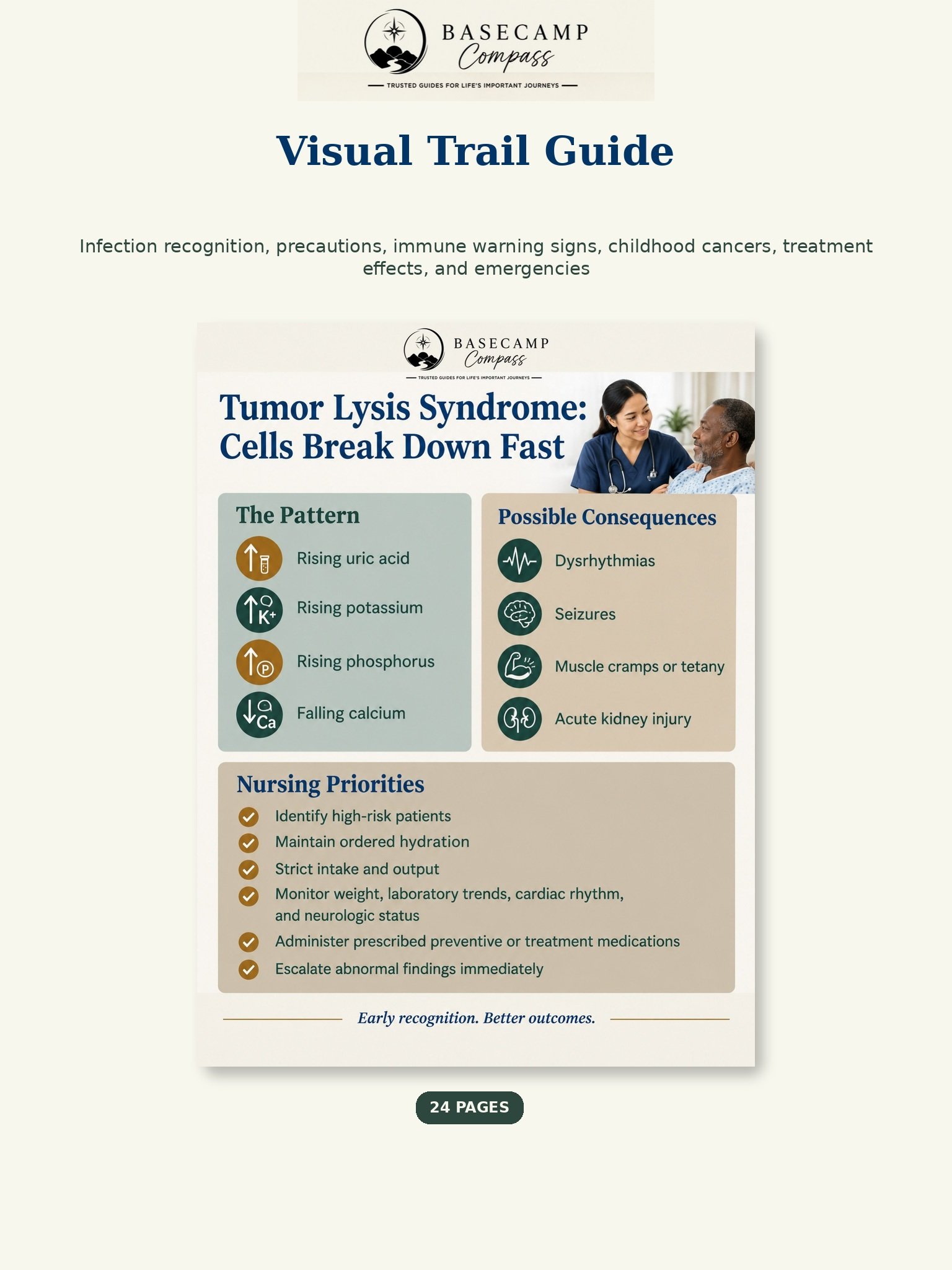
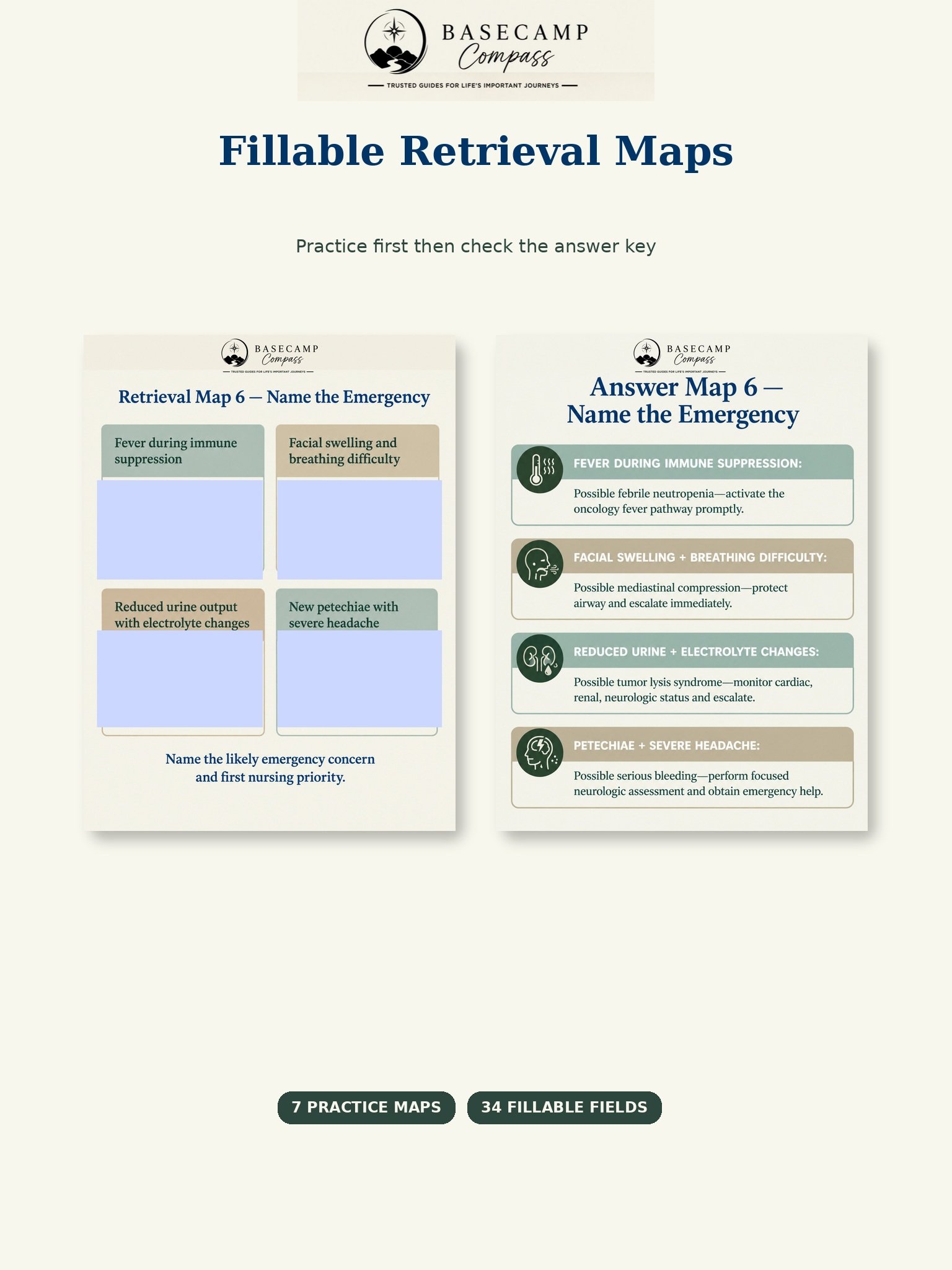
Move from visual review to retrieval practice to clinical reasoning in one cohesive pediatric oncology bundle. The Pediatric Infectious Immune and Oncology Disorders Trail Kit combines a visual Trail Guide, quick-reference Compass Cards, 7 fillable Retrieval Maps, and 9 Campfire Challenge cases. Each Retrieval Map student page is followed immediately by its answer key, and every Campfire Challenge is followed by its answer and rationale for instant feedback. The maps include 34 interactive fields that can be cleared and reused. This pediatric oncology bundle is a study companion and does not replace assigned course materials, current clinical guidance, facility policy, or clinical judgment.
Sale!


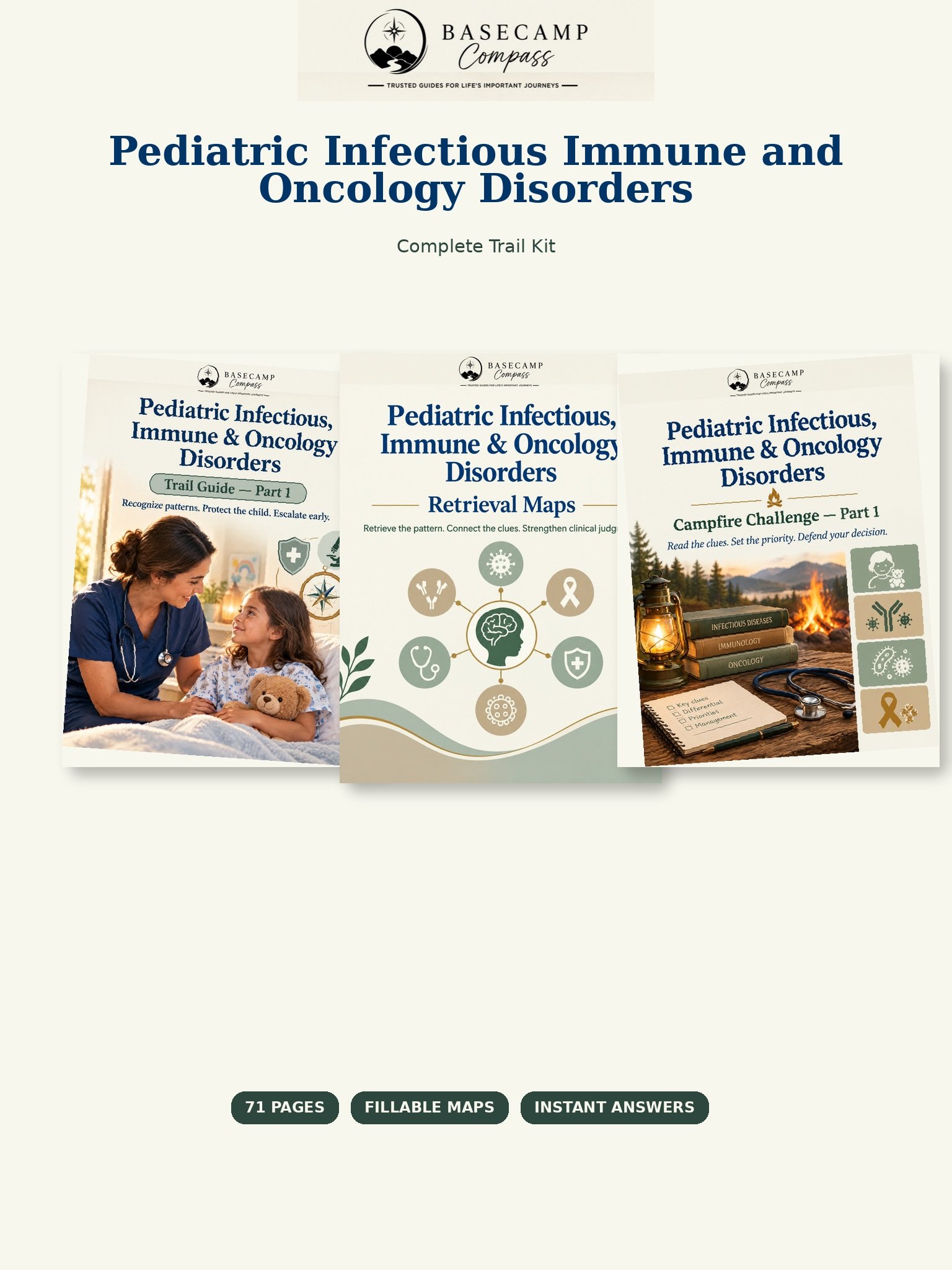
Pediatric Infectious Immune and Oncology Disorders Trail Kit
A complete 71-page pediatric nursing study kit with a 24-page Trail Guide, 12 Compass Cards, 7 fillable Retrieval Maps with answer keys, and 9 Campfire Challenges with immediate answers.
- Estimated Reading Time: 1 hour
- Pages: 51
- Skill Level: All Levels
- Format: Digital Download (PDF + Audio)
$15.00 Original price was: $15.00.$9.99Current price is: $9.99.
DIGITAL · INSTANT ACCESS
What You'll Learn
Connect infection transmission patterns with appropriate precautions.
Recognize fever rash sepsis and time critical infection findings.
Identify immune warning signs and protect immunocompromised children.
Compare leukemia lymphoma solid tumor and treatment effect patterns.
Respond to neutropenia bleeding anaphylaxis tumor lysis and mass related emergencies.
Practice recall with 7 fillable maps and immediate answer keys.
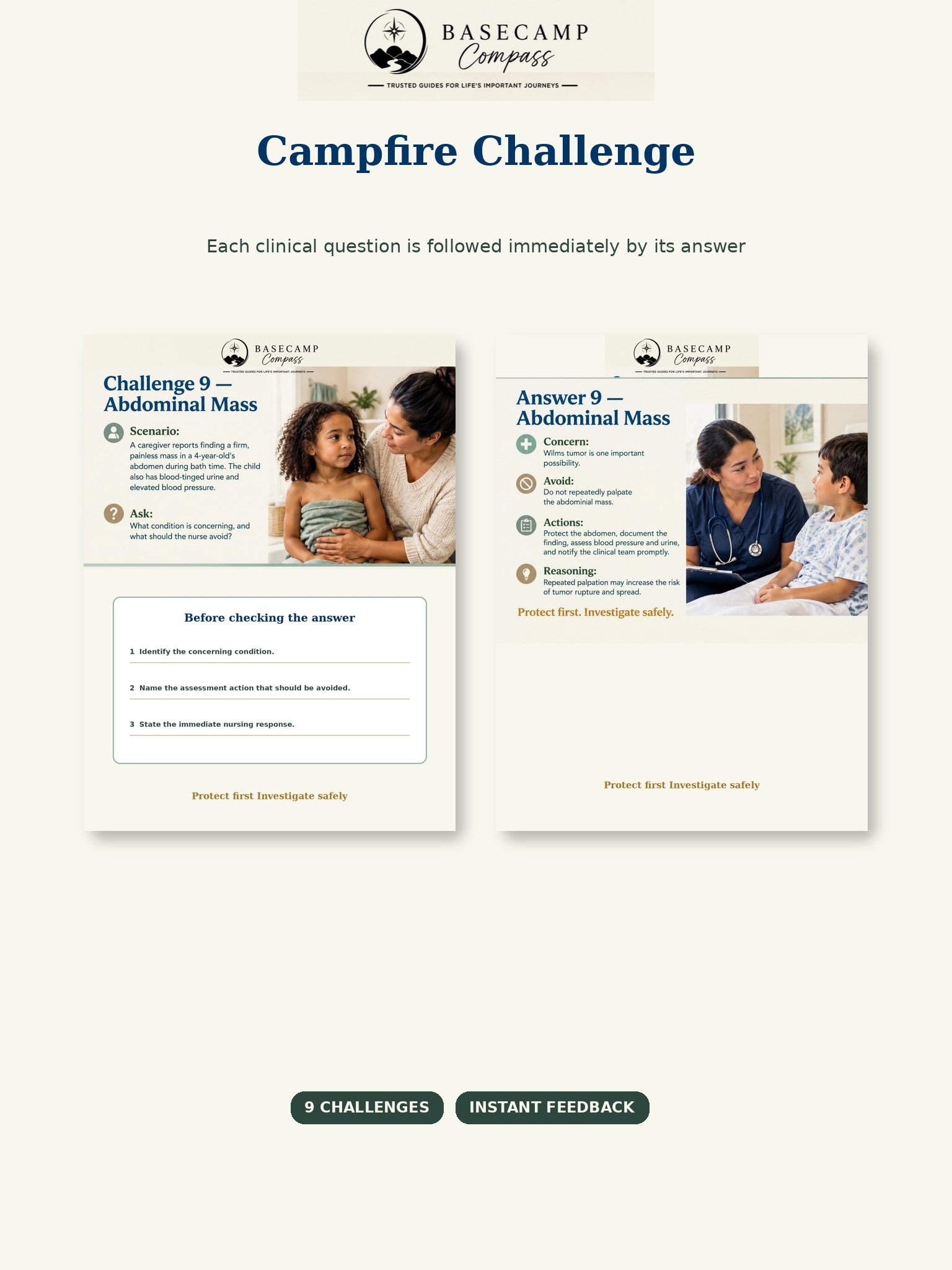
Apply clinical reasoning through 9 Campfire Challenges with immediate feedback.
Table of contents
24-page visual Trail Guide
12-page Compass Card set
7 fillable Retrieval Maps with 7 immediate answer keys
9 Campfire Challenges with immediate answer pages
Infection recognition, precautions, immune warning signs, childhood cancers, treatment effects, and emergencies
Be the first to review “Pediatric Infectious Immune and Oncology Disorders Trail Kit” Cancel reply
How It Works: Your Learning Journey
LEARN
The Guide Teaches The Journey.
REMEMBER
Reinforce important concepts.
CHALLENGE
Test your knowledge and build confidence.

Campfire Challenge Preview
Take a look inside
Sample 1 — The Feverish Infant
A 7-week-old infant has a rectal temperature of 38.1°C (100.6°F), decreased feeding, and is sleepier than usual. Respirations are mildly elevated. The infant has no obvious rash. 1 What finding makes this situation high priority? 2 What focused assessments come first? 3 What should the nurse do next?
Sample 2 — Possible Immune Deficiency
A toddler has poor growth, persistent oral thrush, two hospitalizations for pneumonia, and a family history of an infant who died after a severe infection. Which findings are concerning? What additional history is important? What should the nurse anticipate?
Sample 3 — Abdominal Mass
A caregiver reports finding a firm, painless mass in a 4-year-old’s abdomen during bath time. The child also has blood-tinged urine and elevated blood pressure. Ask: What condition is concerning, and what should the nurse avoid? 1 Identify the concerning condition. 2 Name the assessment action that should be avoided. 3 State the immediate nursing response. Protect first. Investigate safely.
Reviews
There are no reviews yet.