
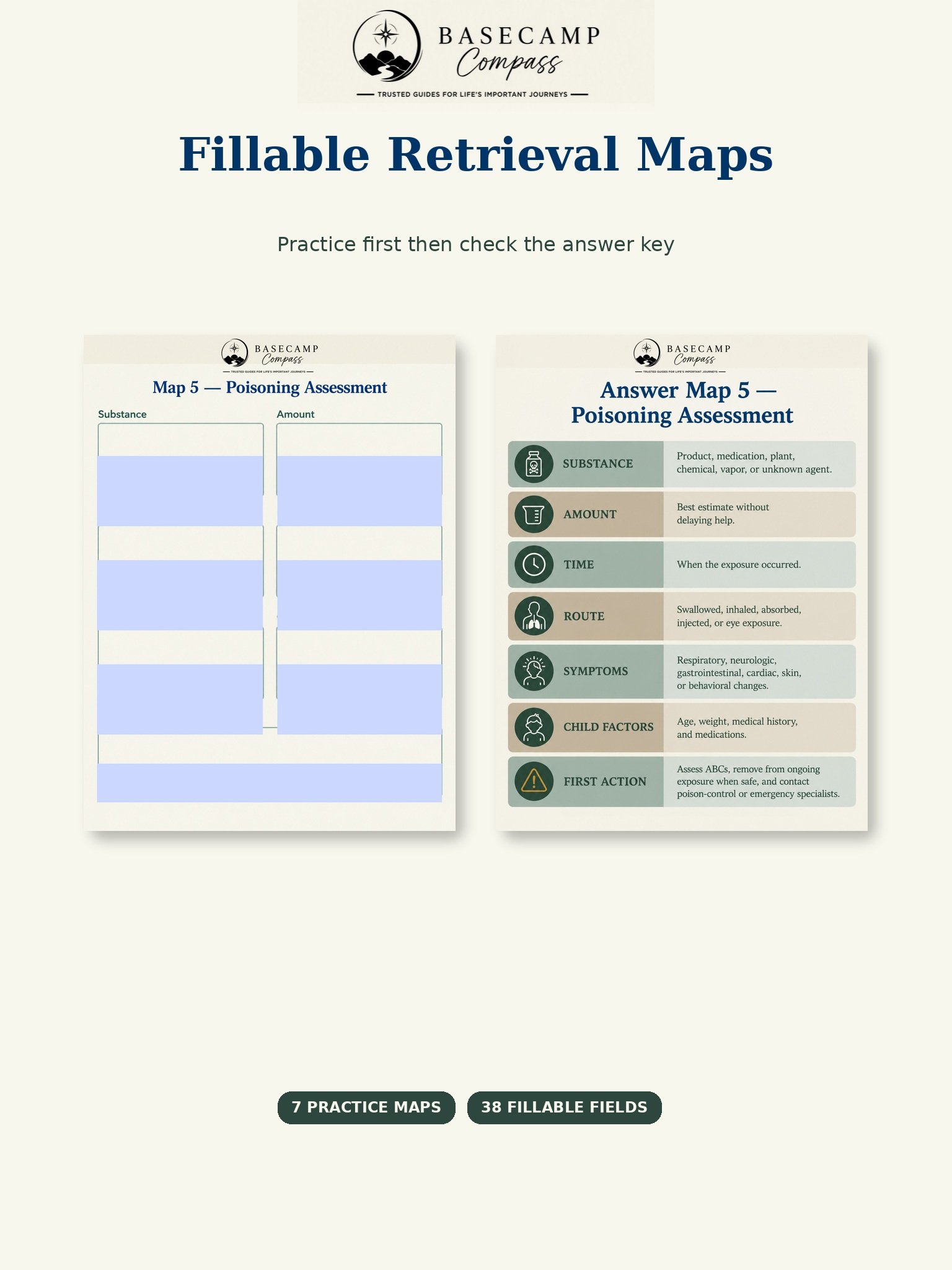
Move from recognition to retrieval practice to emergency clinical reasoning with this pediatric emergencies bundle, all in one cohesive kit. The Pediatric Emergencies and High Risk Situations Trail Kit combines a visual Trail Guide, quick-reference Compass Cards, fillable Retrieval Maps, and Campfire Challenge cases. Each Retrieval Map student page is followed immediately by its answer key, and every Campfire Challenge is followed by its answer and rationale for instant feedback. The maps include 38 interactive fields that can be cleared and reused. This pediatric emergencies bundle is a study companion and does not replace assigned course materials, current BLS or PALS guidance, poison-control instructions, facility policy, or clinical judgment.
Sale!


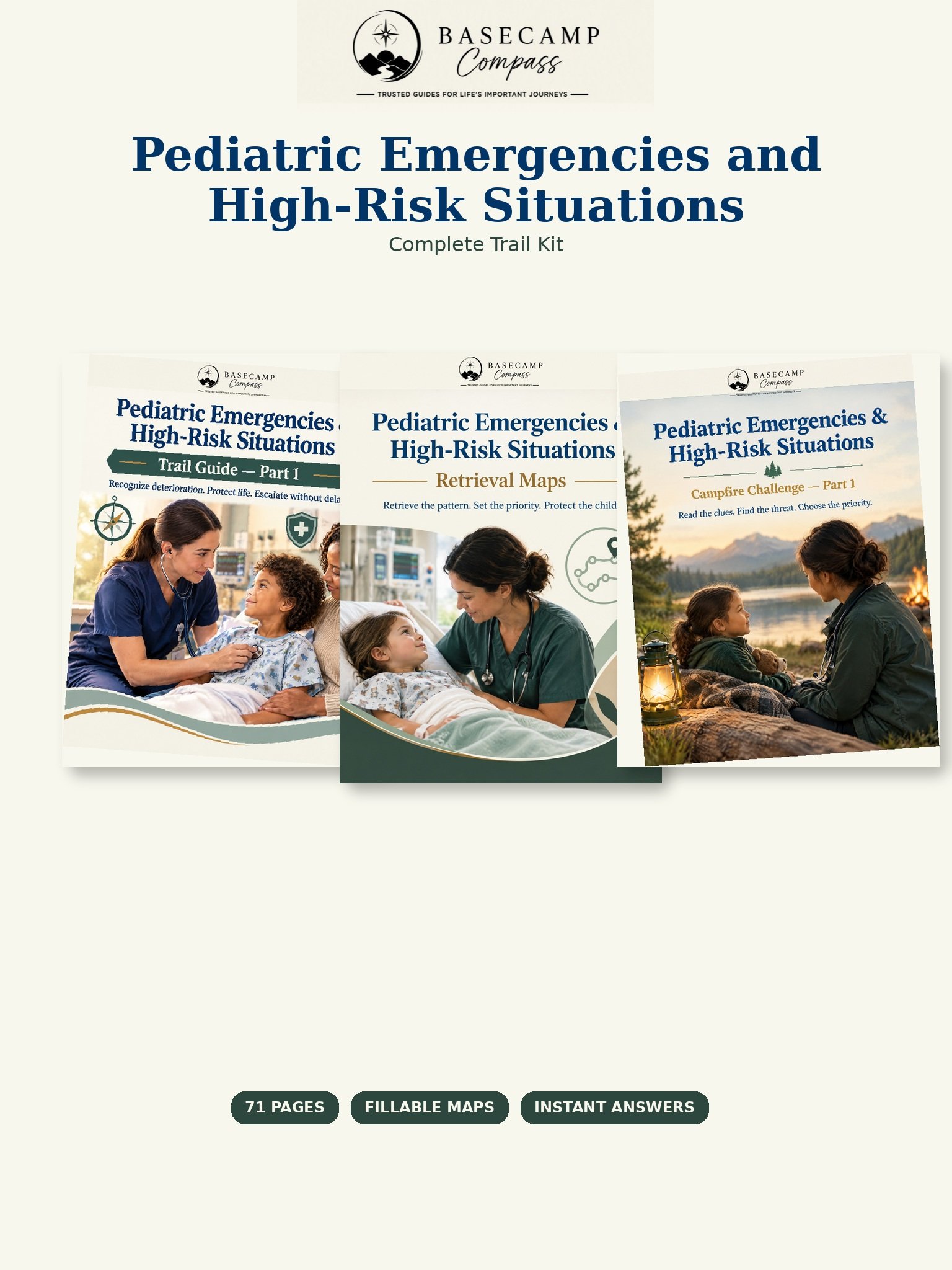
Pediatric Emergencies and High-Risk Situations Trail Kit
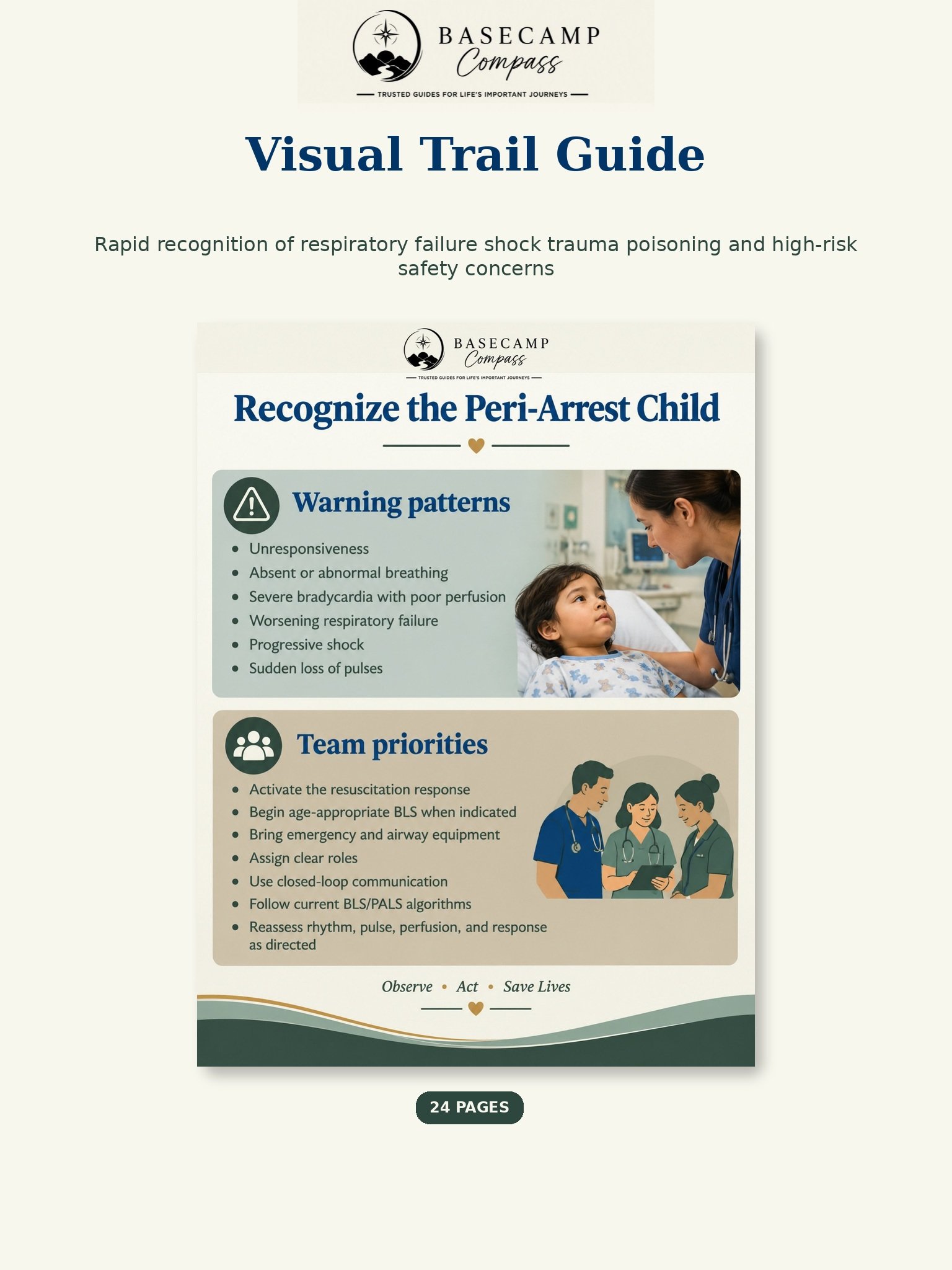
A complete 71-page pediatric nursing study kit with a 24-page Trail Guide, 12 Compass Cards, seven fillable Retrieval Maps with answer keys, and nine Campfire Challenges with immediate answers.
- Estimated Reading Time: 1 hour
- Pages: 51
- Skill Level: All Levels
- Format: Digital Download (PDF + Audio)
$15.00 Original price was: $15.00.$9.99Current price is: $9.99.
DIGITAL · INSTANT ACCESS
What You'll Learn
Recognize respiratory failure, shock, neurologic deterioration, and other time-sensitive pediatric patterns.
Prioritize airway, breathing, circulation, trauma, exposure, and safety concerns.
Practice recall with seven fillable student maps and immediate answer keys.
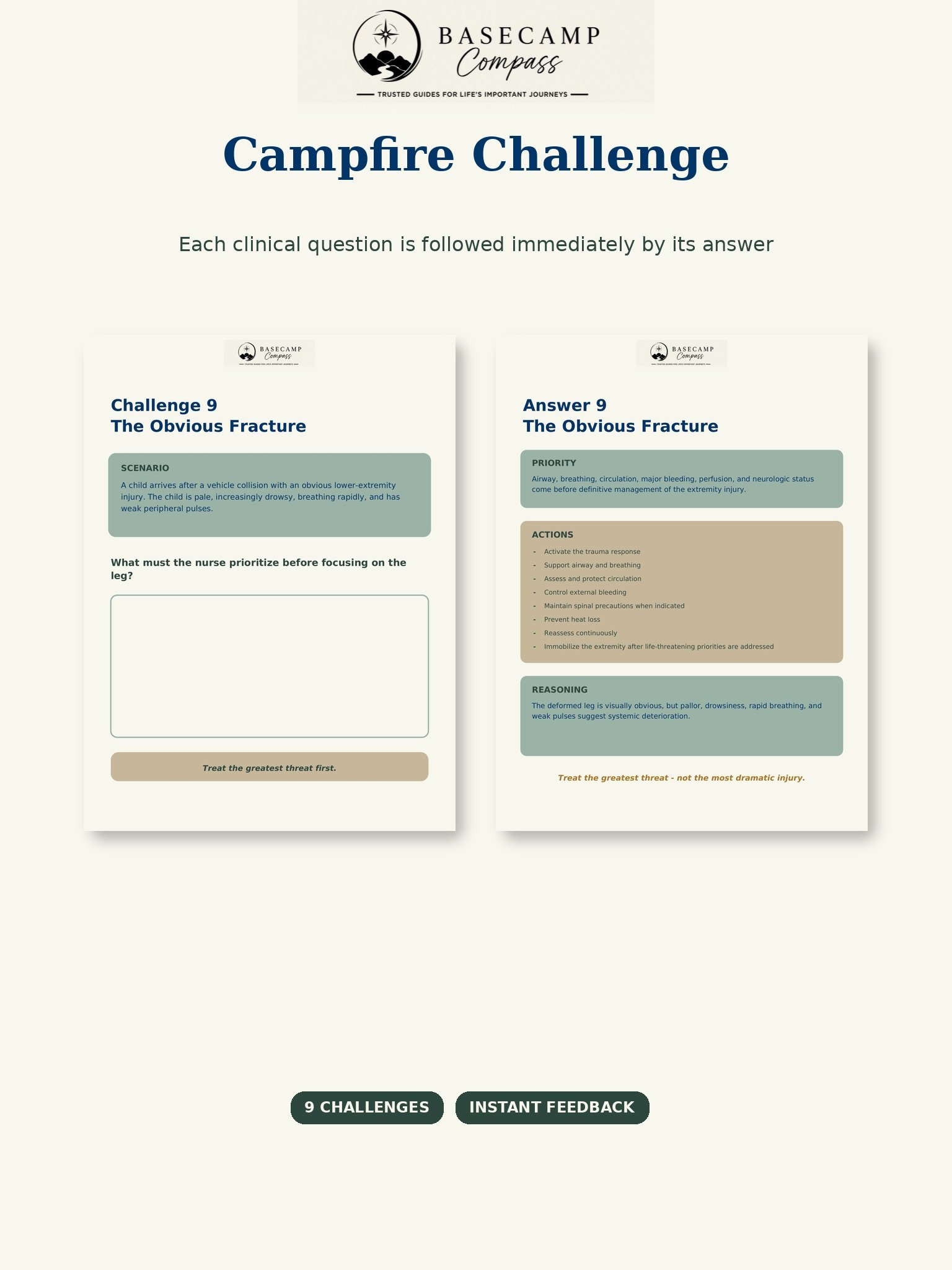
Apply emergency priorities through nine clinical Campfire Challenges with immediate rationales.
Review quickly with twelve visual Compass Cards.
Table of contents
24-page visual Trail Guide
12-page Compass Card set
Seven fillable Retrieval Maps with seven answer keys
Nine Campfire Challenge cases with nine immediate answer pages
Respiratory failure, shock, anaphylaxis, seizures, trauma, burns, drowning, poisoning, child protection, exploitation concerns, and suicide risk
Be the first to review “Pediatric Emergencies and High-Risk Situations Trail Kit” Cancel reply
How It Works: Your Learning Journey
LEARN
The Guide Teaches The Journey.
REMEMBER
Reinforce important concepts.
CHALLENGE
Test your knowledge and build confidence.

Campfire Challenge Preview
Take a look inside
Sample 1 — The Child Who Became Quiet
A 3-year-old with respiratory illness initially had loud wheezing, marked retractions, and agitation. The child is now quiet and drowsy. Respiratory effort appears less dramatic, but air movement is barely audible. 1. Is the child improving or deteriorating? 2. Which findings are most concerning? 3. What is the immediate priority?
Sample 2 — Unknown Ingestion
A toddler is found beside an open medication container. The amount swallowed is unknown. The child is sleepy, and a caregiver wants to make the child vomit. What should the caregiver not do? What information should be gathered? What is the immediate response?
Sample 3 — The Obvious Fracture
A child arrives after a vehicle collision with an obvious lower-extremity injury. The child is pale, increasingly drowsy, breathing rapidly, and has weak peripheral pulses. What must the nurse prioritize before focusing on the leg? Treat the greatest threat first.
Reviews
There are no reviews yet.