
Sale!

Maternal Newborn Newborn Complications Trail Kit

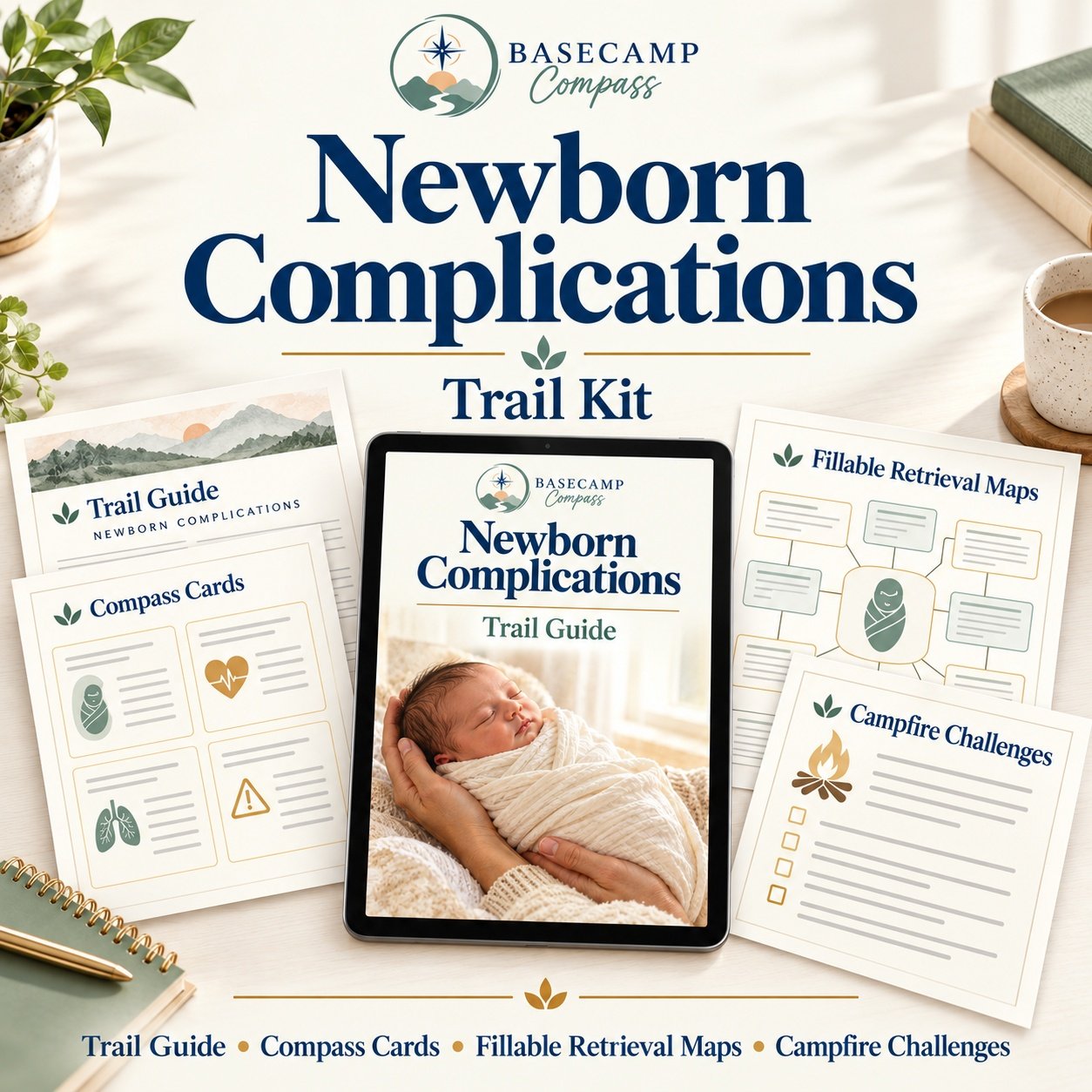
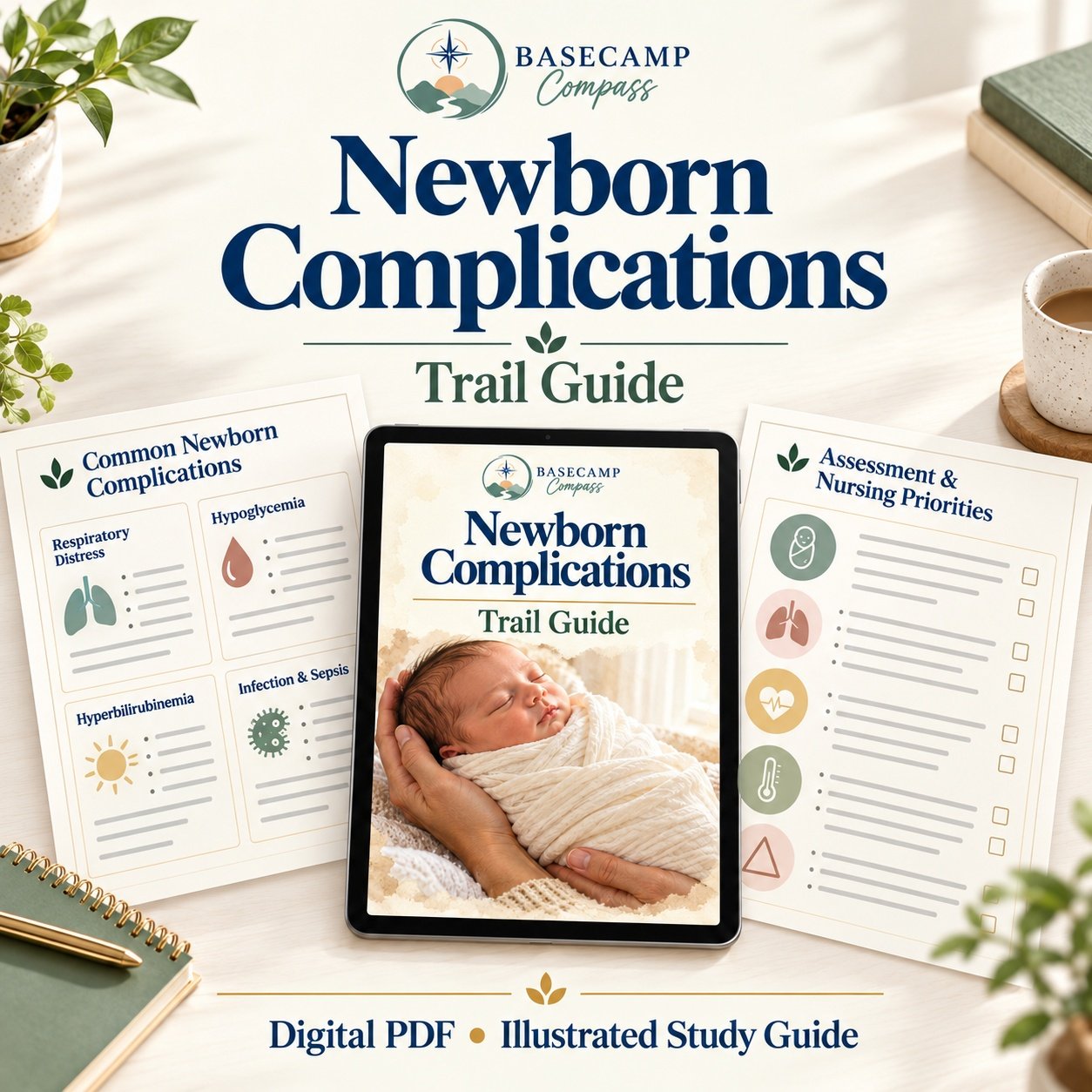
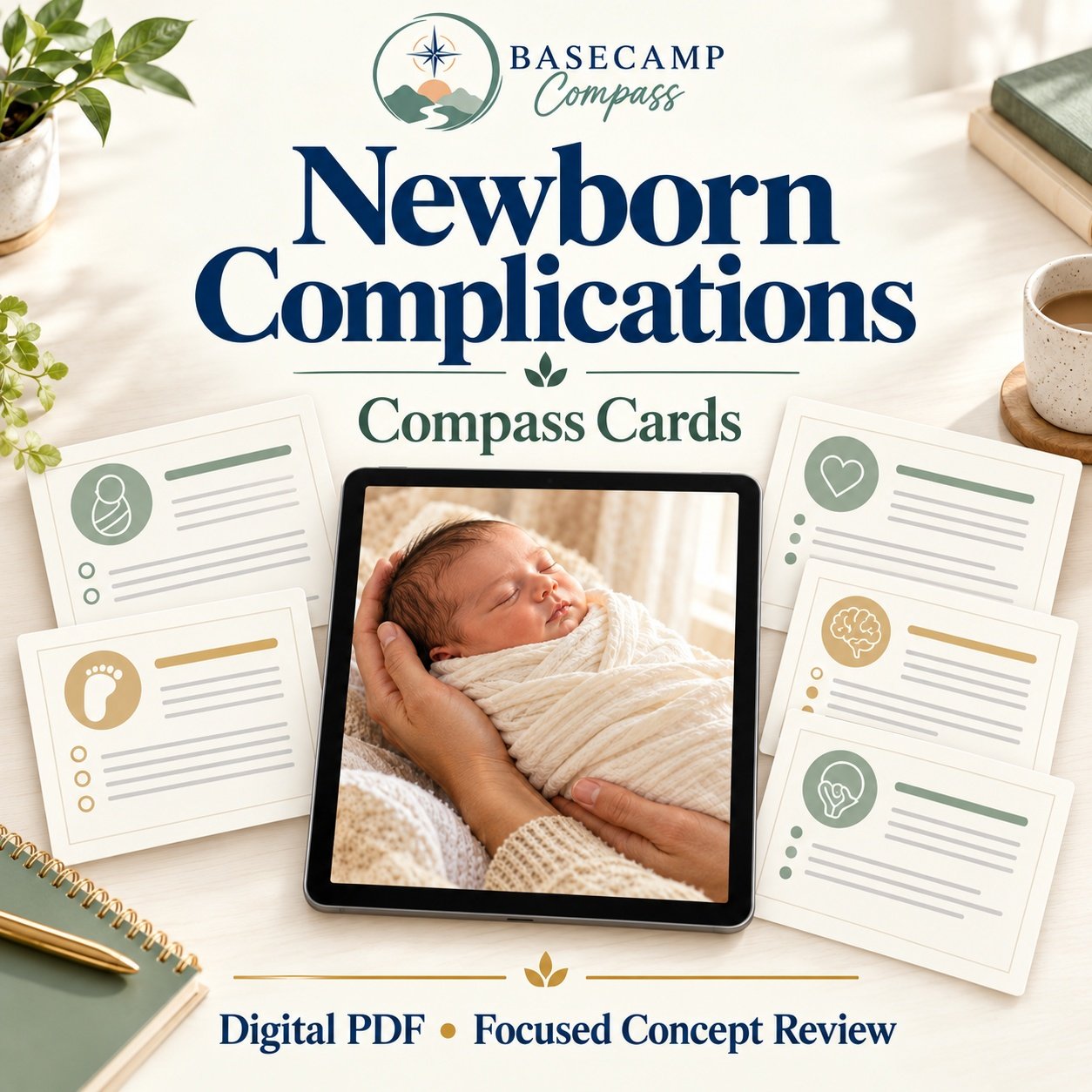
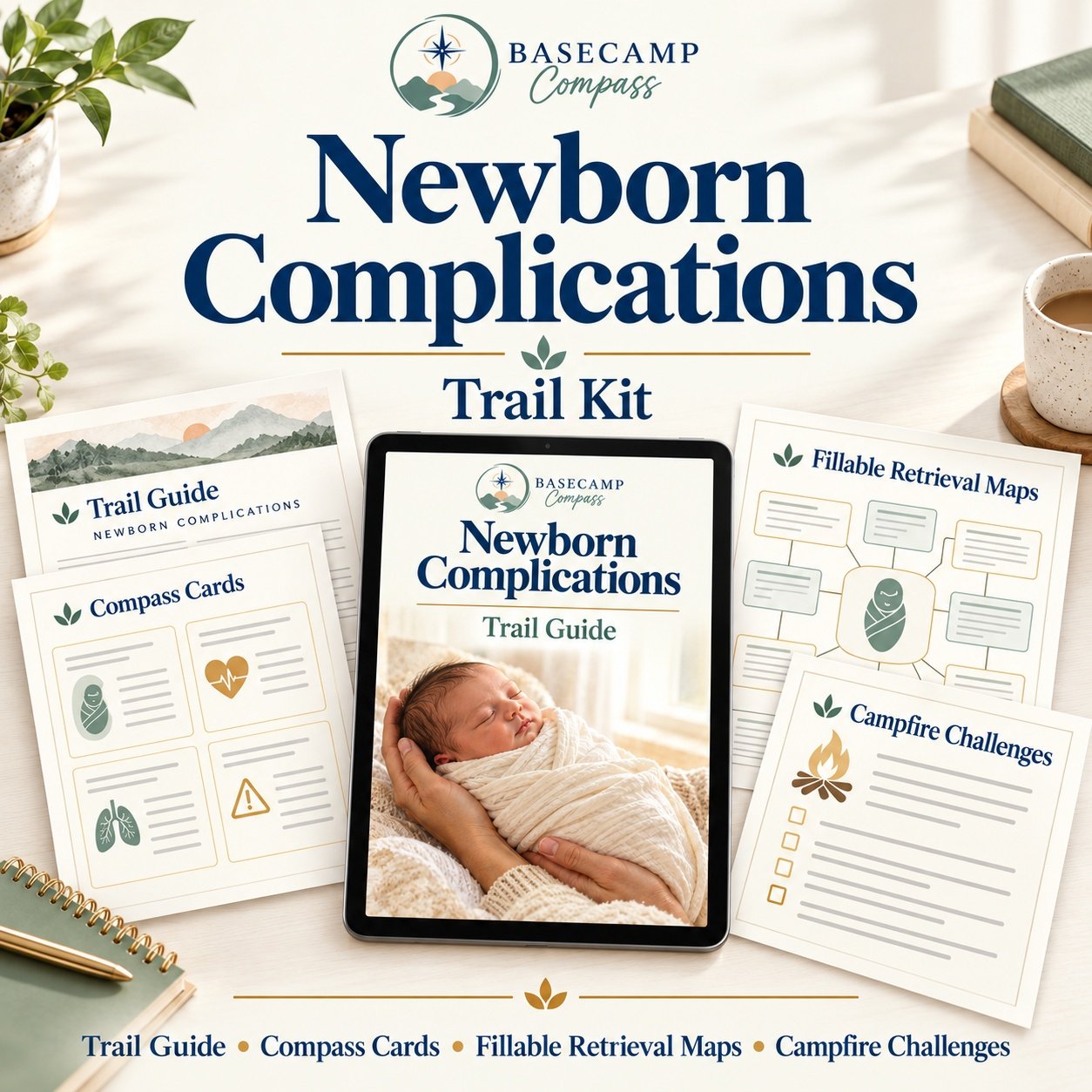
Bring concept learning, focused review, active recall, and clinical reasoning together in the Newborn Complications Trail Kit — a coordinated Maternal–Newborn Nursing collection with a 30-page Trail Guide, 18 Compass Cards, 8 fillable Retrieval Maps, and 8 fillable Campfire Challenges.

Original price was: $15.00.Current price is: $9.99.

DIGITAL · INSTANT ACCESS

What You'll Learn

Connect prematurity with respiratory, thermal, glucose, immune, and feeding risks.
Differentiate RDS, TTN, meconium-related distress, apnea, and bradycardia.
Assess hypoglycemia, cold stress, jaundice, phototherapy, and subtle infection cues.
Recognize birth injury, congenital, GI, neurologic, and withdrawal concerns.
Prioritize stabilization, feeding safety, family partnership, and early escalation.

Table of contents

Trail Guide — 30 pages
Compass Cards — 18 concept pages
Retrieval Maps — 8 student/answer pairs
Campfire Challenges — 8 student/answer pairs
Bring concept learning, focused review, active recall, and clinical reasoning together in the Newborn Complications Trail Kit. This coordinated Maternal–Newborn Nursing collection includes a 30-page Trail Guide, 18 Compass Cards, 8 fillable Retrieval Maps, and 8 fillable Campfire Challenges. Read the guide to build the framework, use the cards for focused review, retrieve the connections in the maps, and apply them to the clinical scenarios. Student and answer pages alternate within both practice PDFs. Connect prematurity with respiratory, thermal, glucose, immune, and feeding risks. Differentiate RDS, TTN, meconium-related distress, apnea, and bradycardia. Assess hypoglycemia, cold stress, jaundice, phototherapy, and subtle infection cues. Designed for nursing-school study, the material can be used independently or alongside your course and clinical learning.

What You Will Learn

  • Connect prematurity with respiratory, thermal, glucose, immune, and feeding risks.
  • Differentiate RDS, TTN, meconium-related distress, apnea, and bradycardia.
  • Assess hypoglycemia, cold stress, jaundice, phototherapy, and subtle infection cues.
  • Recognize birth injury, congenital, GI, neurologic, and withdrawal concerns.
  • Prioritize stabilization, feeding safety, family partnership, and early escalation.

Included

  • Trail Guide — 30 pages
  • Compass Cards — 18 concept pages
  • Retrieval Maps — 8 student/answer pairs
  • Campfire Challenges — 8 student/answer pairs

Reviews

There are no reviews yet.

Be the first to review “Maternal Newborn Newborn Complications Trail Kit”

Your email address will not be published. Required fields are marked *

How It Works: Your Learning Journey

LEARN

The Guide Teaches The Journey.

REMEMBER

Reinforce important concepts.

CHALLENGE

Test your knowledge and build confidence.

dashed arrow set vector doodle dot line thin pointer arrows | Basecamp Compass, LLC

Campfire Challenge Preview

Take a look inside

Sample 1 — The Work of Breathing Is Rising
A preterm newborn develops increasing grunting, nasal flaring, intercostal retractions, and fatigue during the first hours after birth. The infant is becoming less interested in feeding. Which findings show that this is more than a routine transition? How does prematurity connect the respiratory, temperature, glucose, and feeding risks? What should the nurse prioritize and communicate now?
Sample 2 — Something Has Changed
A preterm newborn who was previously stable is now less interested in feeding, has temperature instability, and has brief pauses in breathing. The changes are subtle but new. Why is the change from baseline clinically important? Which additional subtle signs should the nurse assess? What response protects the newborn while evaluation begins?
Sample 3 — Overstimulated and Hard to Settle
A substance-exposed newborn has tremors, increased tone, frequent waking, feeding difficulty, and sensitivity to light and sound. The parent appears anxious and hesitant to participate. Which observations belong in a consistent withdrawal assessment? Which nonpharmacologic supports may improve regulation? How can the nurse involve the parent without judgment?
Scroll to Top