
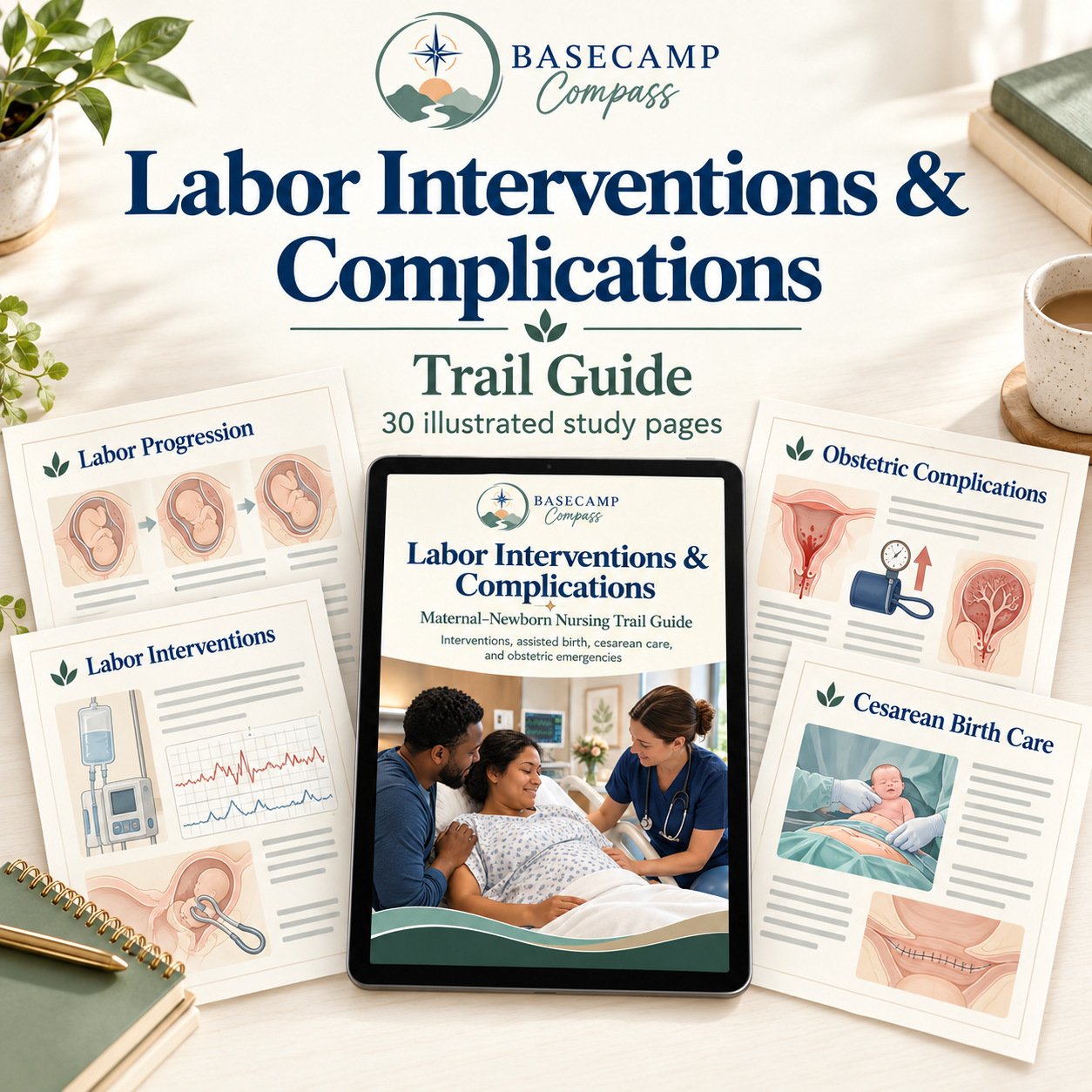
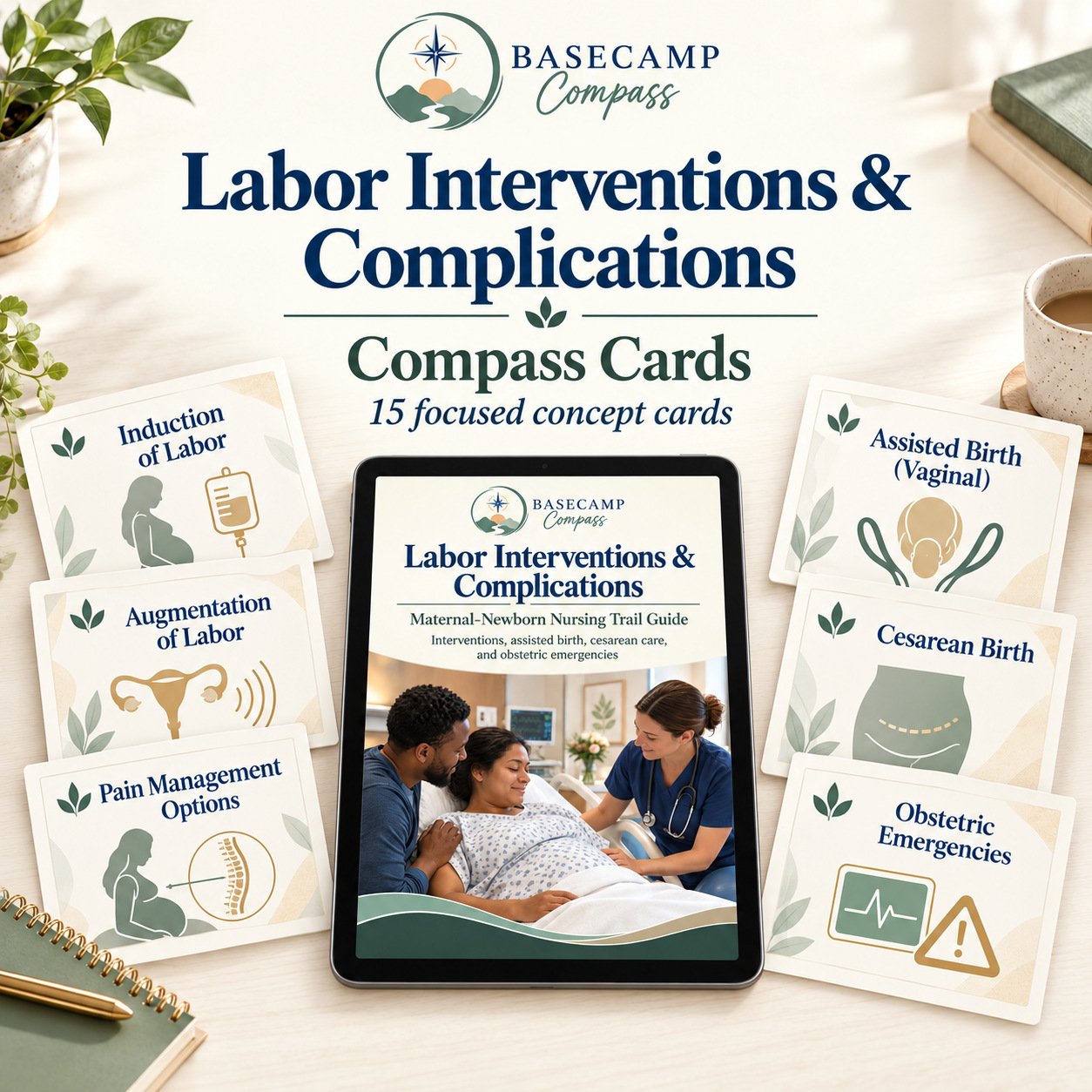
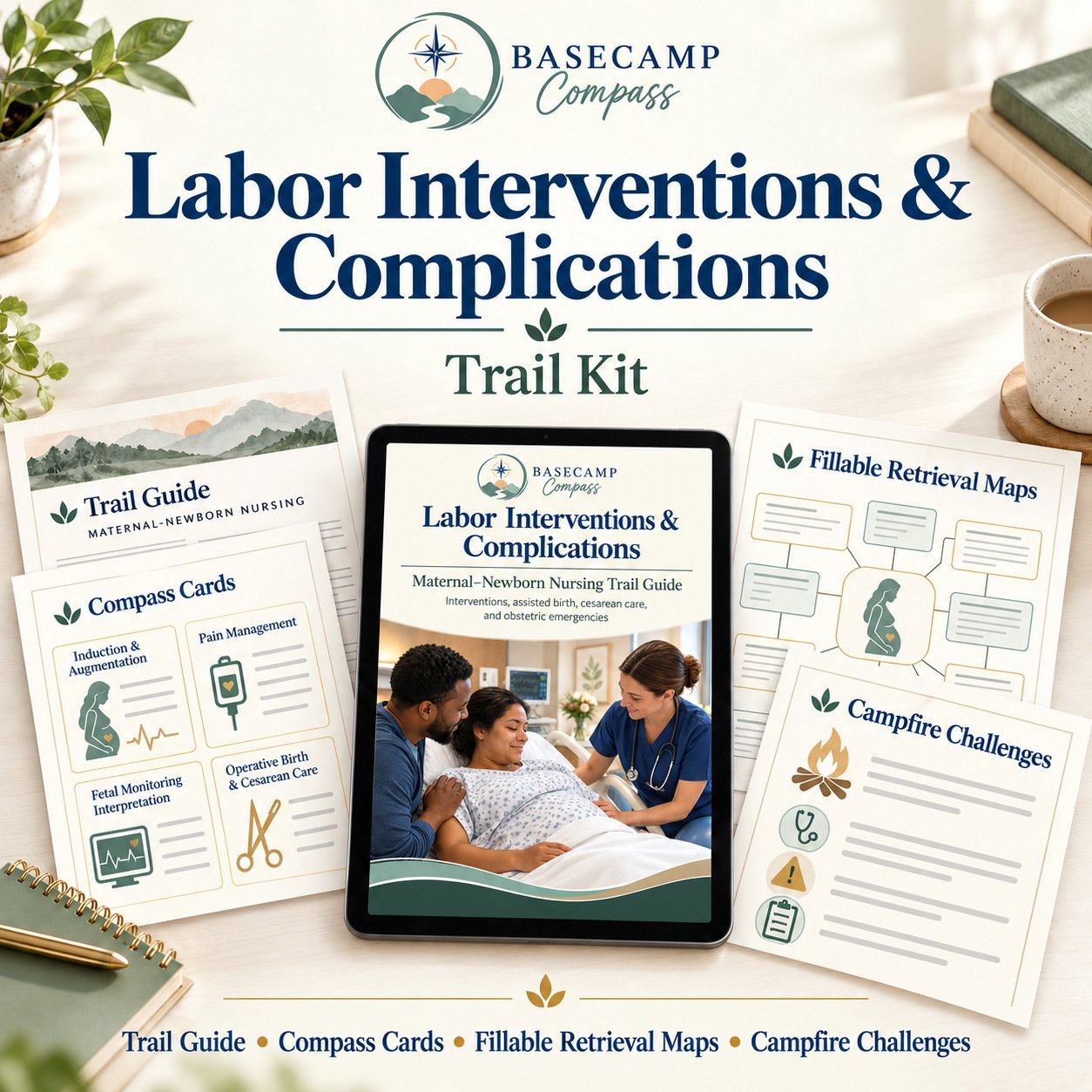
Build a clear route through labor interventions & complications with this 30-page Maternal–Newborn Nursing Trail Guide. The illustrated pages organize the subject in a purposeful reading sequence, connecting core concepts with assessment findings, nursing priorities, patient teaching, and escalation cues. Use it to prepare for class, organize a lecture, or revisit a difficult topic before clinical practice. Distinguish induction, augmentation, cervical ripening, and readiness assessment. Connect amniotomy and oxytocin with maternal and fetal surveillance. Recognize tachysystole and organize a prompt assessment and response. Designed for nursing-school study, the material can be used independently or alongside your course and clinical learning.
What You Will Learn
- Distinguish induction, augmentation, cervical ripening, and readiness assessment.
- Connect amniotomy and oxytocin with maternal and fetal surveillance.
- Recognize tachysystole and organize a prompt assessment and response.
- Identify assisted-birth prerequisites, cesarean preparation, and recovery needs.
- Assess slow progress without prematurely diagnosing active-phase arrest.
- Recognize obstetric emergencies and support coordinated team activation, documentation, and reassessment.
Table of Contents
- Complete collection cover
- Why Labor Interventions Are Used
- Induction vs. Augmentation
- Pre-Intervention Readiness
- Bishop Score: Readiness for Induction
- Cervical Ripening Methods
- Amniotomy
- Oxytocin for Induction or Augmentation
- Nursing Surveillance During Induction
- Uterine Tachysystole
- When Progress Is Slower Than Expected
- Operative Vaginal Birth
- Vacuum-Assisted Birth
- Forceps-Assisted Birth
- Cesarean Birth Foundations
- Clinical Application: Dystocia, Obstetric Emergencies, and Team Response
- Cesarean Birth: Intraoperative Nursing Priorities
- Immediate Cesarean Recovery
- TOLAC and VBAC Concepts
- Dystocia: The Whole Clinical Picture
- Slow Progress and Active-Phase Arrest
- Malposition and Malpresentation
- Shoulder Dystocia: Recognition
- Shoulder Dystocia: Team Response
- Umbilical Cord Prolapse: Recognition
- Umbilical Cord Prolapse: Immediate Priorities
- Uterine Rupture
- Amniotic Fluid Embolism
- Maternal Collapse in Labor: Team Response
- Summit Case: Look Beyond Slow Progress

Reviews
There are no reviews yet.