
Sale!

Maternal Newborn Labor & Birth Trail Kit

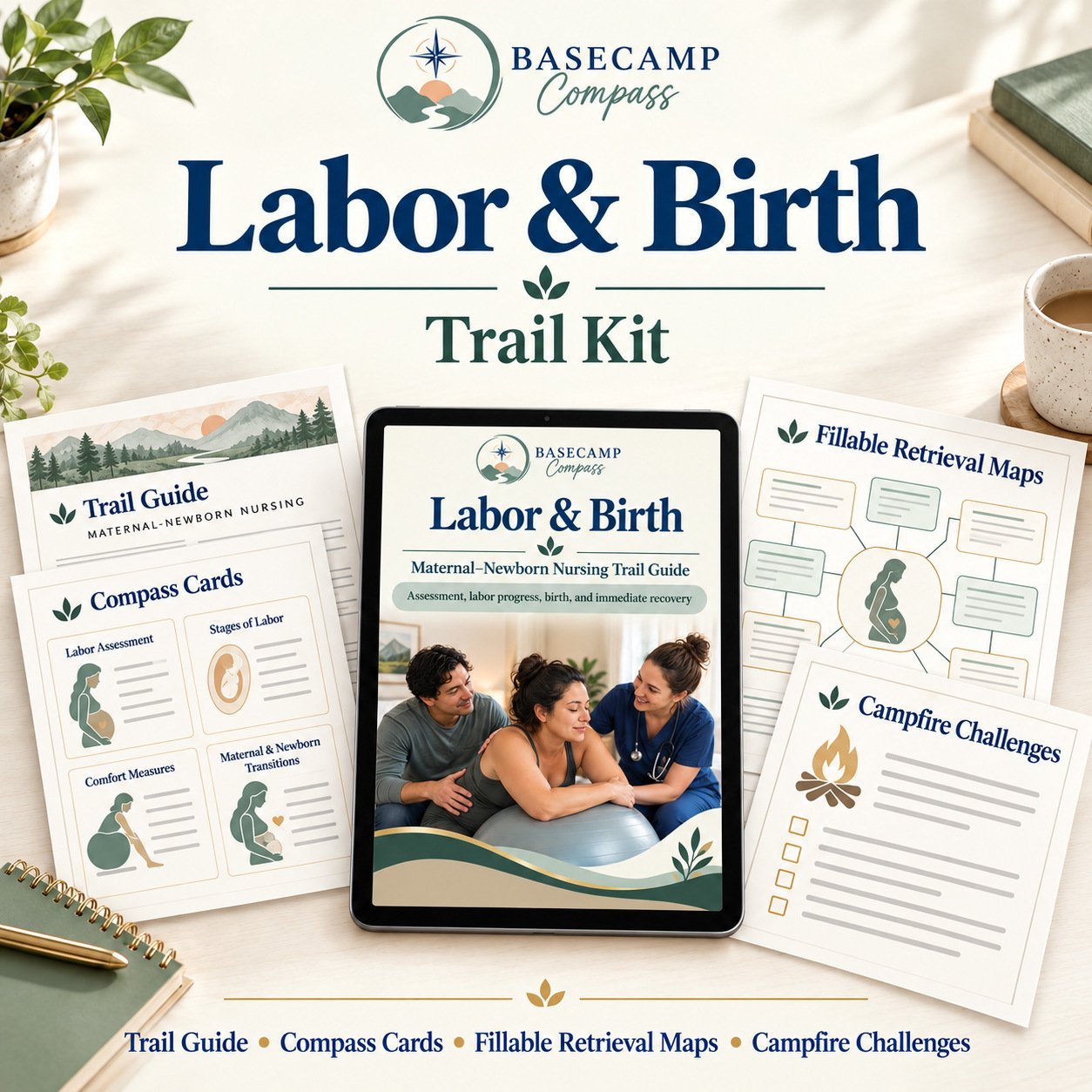
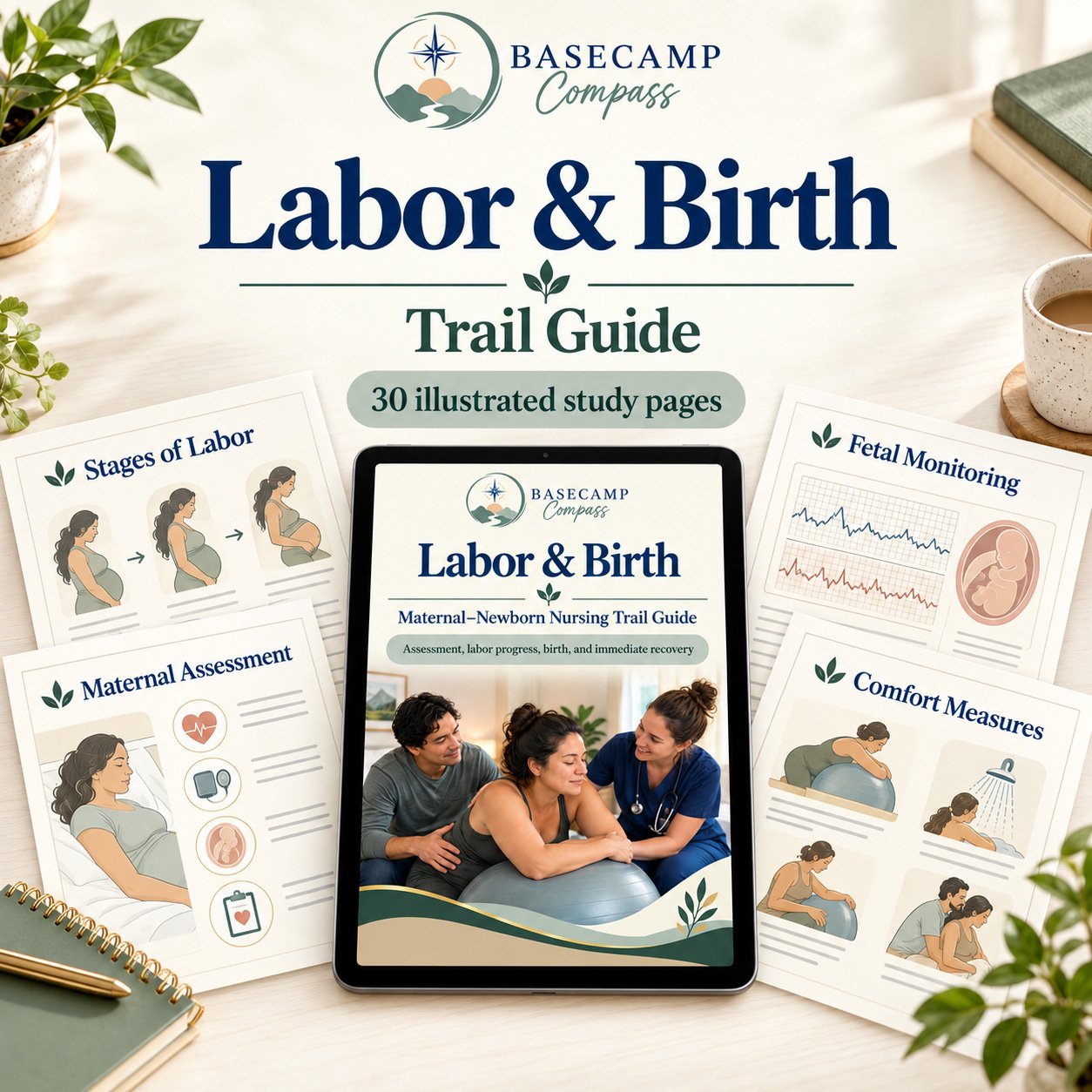
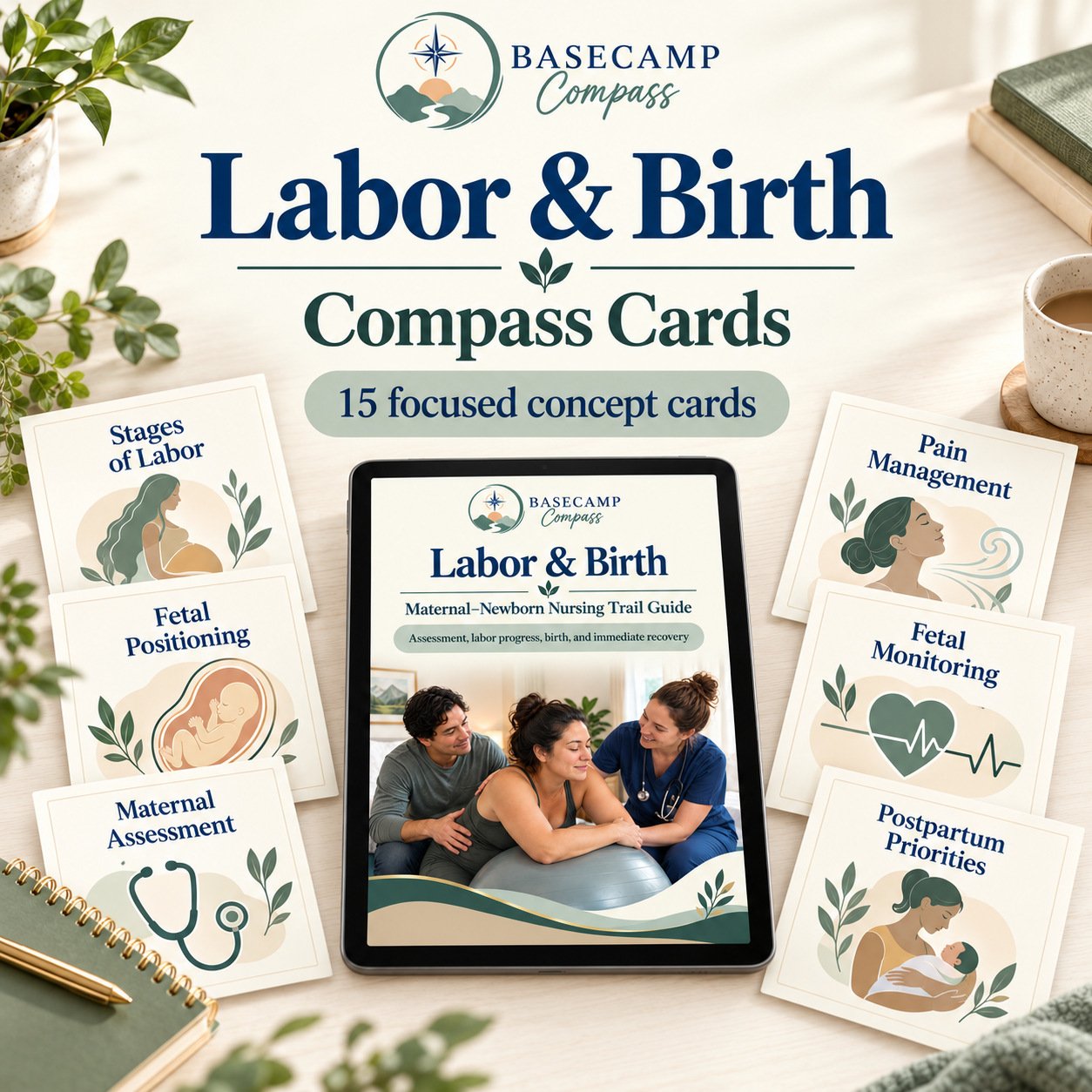
Bring concept learning, focused review, active recall, and clinical reasoning together in the Labor & Birth Trail Kit: 30-page guide, 15 compass cards, retrieval maps, campfire challenges, and audio.

Original price was: $15.00.Current price is: $9.99.

DIGITAL · INSTANT ACCESS

What You'll Learn

Explain the Five Ps, cervical change, fetal orientation, and labor progress.
Assess contraction frequency, duration, intensity, and relaxation.
Recognize the four labor stages and the current active-phase threshold.
Connect membrane rupture with fetal assessment, fluid findings, and escalation cues.
Support coping, comfort, patient preferences, and continuous reassessment.
Prioritize safe birth, immediate maternal recovery, and newborn transition.

Table of contents

Trail Guide — 30 pages
Compass Cards — 15 concept pages
Retrieval Maps — 7 student/answer pairs
Campfire Challenges — 7 student/answer pairs

Bring concept learning, focused review, active recall, and clinical reasoning together in the Labor & Birth Trail Kit. This coordinated Maternal–Newborn Nursing collection includes a 30-page Trail Guide, 15 Compass Cards, 7 fillable Retrieval Maps, and 7 fillable Campfire Challenges. Read the guide to build the framework, use the cards for focused review, retrieve the connections in the maps, and apply them to the clinical scenarios. Student and answer pages alternate within both practice PDFs. Explain the Five Ps, cervical change, fetal orientation, and labor progress. Assess contraction frequency, duration, intensity, and relaxation. Recognize the four labor stages and the current active-phase threshold. Designed for nursing-school study, the material can be used independently or alongside your course and clinical learning.

What You Will Learn

  • Explain the Five Ps, cervical change, fetal orientation, and labor progress.
  • Assess contraction frequency, duration, intensity, and relaxation.
  • Recognize the four labor stages and the current active-phase threshold.
  • Connect membrane rupture with fetal assessment, fluid findings, and escalation cues.
  • Support coping, comfort, patient preferences, and continuous reassessment.
  • Prioritize safe birth, immediate maternal recovery, and newborn transition.

What Is Included

  • Trail Guide — 30 pages
  • Compass Cards — 15 concept pages
  • Retrieval Maps — 7 student/answer pairs
  • Campfire Challenges — 7 student/answer pairs

Reviews

There are no reviews yet.

Be the first to review “Maternal Newborn Labor & Birth Trail Kit”

Your email address will not be published. Required fields are marked *

How It Works: Your Learning Journey

LEARN

The Guide Teaches The Journey.

REMEMBER

Reinforce important concepts.

CHALLENGE

Test your knowledge and build confidence.

dashed arrow set vector doodle dot line thin pointer arrows | Basecamp Compass, LLC

Campfire Challenge Preview

Take a look inside

Sample 1 — Is This Established Labor?
A term patient reports contractions every 5–7 minutes that have become stronger over several hours. Walking and hydration have not stopped them. Cervical assessment shows change since the previous examination. Which findings support established labor? Why is cervical change important? What maternal and fetal assessments are priorities? What information should the nurse continue trending?
Sample 2 — Labor Has Slowed
A patient has made little cervical progress across several assessments. Contractions continue, but the patient has remained in bed and has not emptied the bladder recently. Which Five Ps should the nurse consider? How might position and bladder fullness affect labor? Which nonpharmacologic nursing actions may support progress? What findings should be reported?
Sample 3 — The First Hour After Birth
The placenta has delivered. The newborn is skin-to-skin and beginning to root. The birthing patient says, “I feel shaky,” and the support person asks whether that is normal. Which stage of labor is occurring? What maternal assessments are priorities? What newborn-care priorities should continue? Which findings require immediate escalation?
Scroll to Top