
Sale!

Maternal Newborn Pregnancy Complications Trail Kit

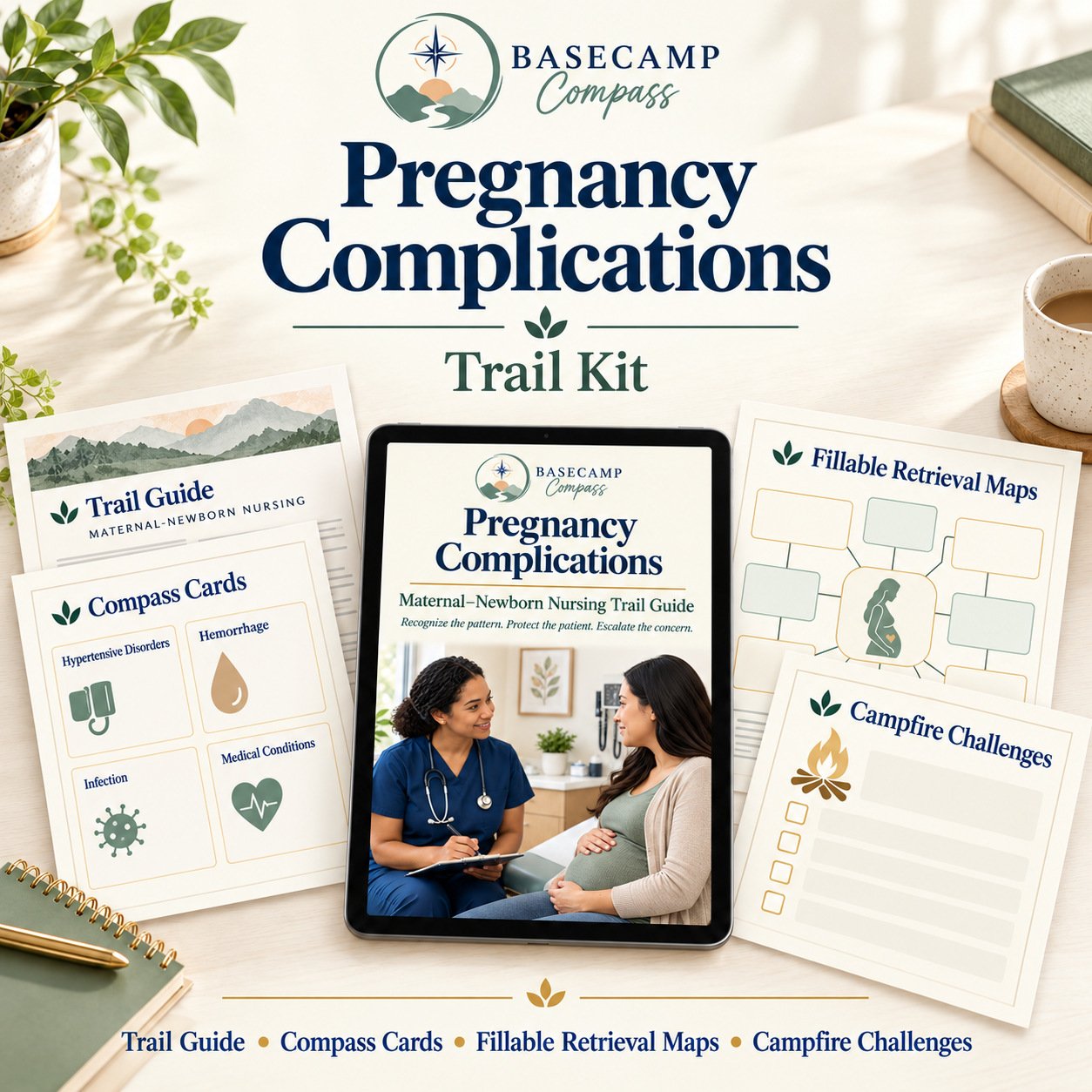
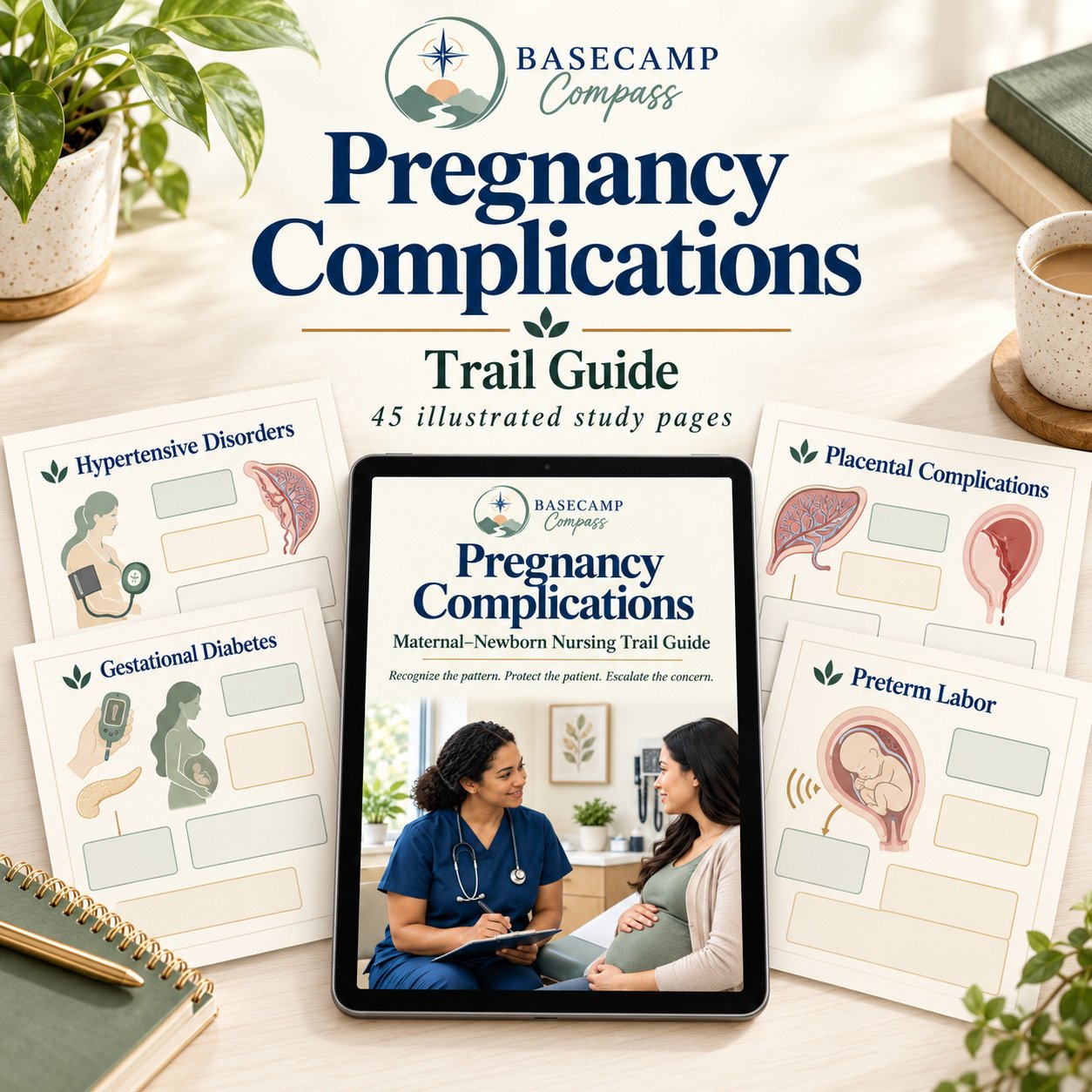
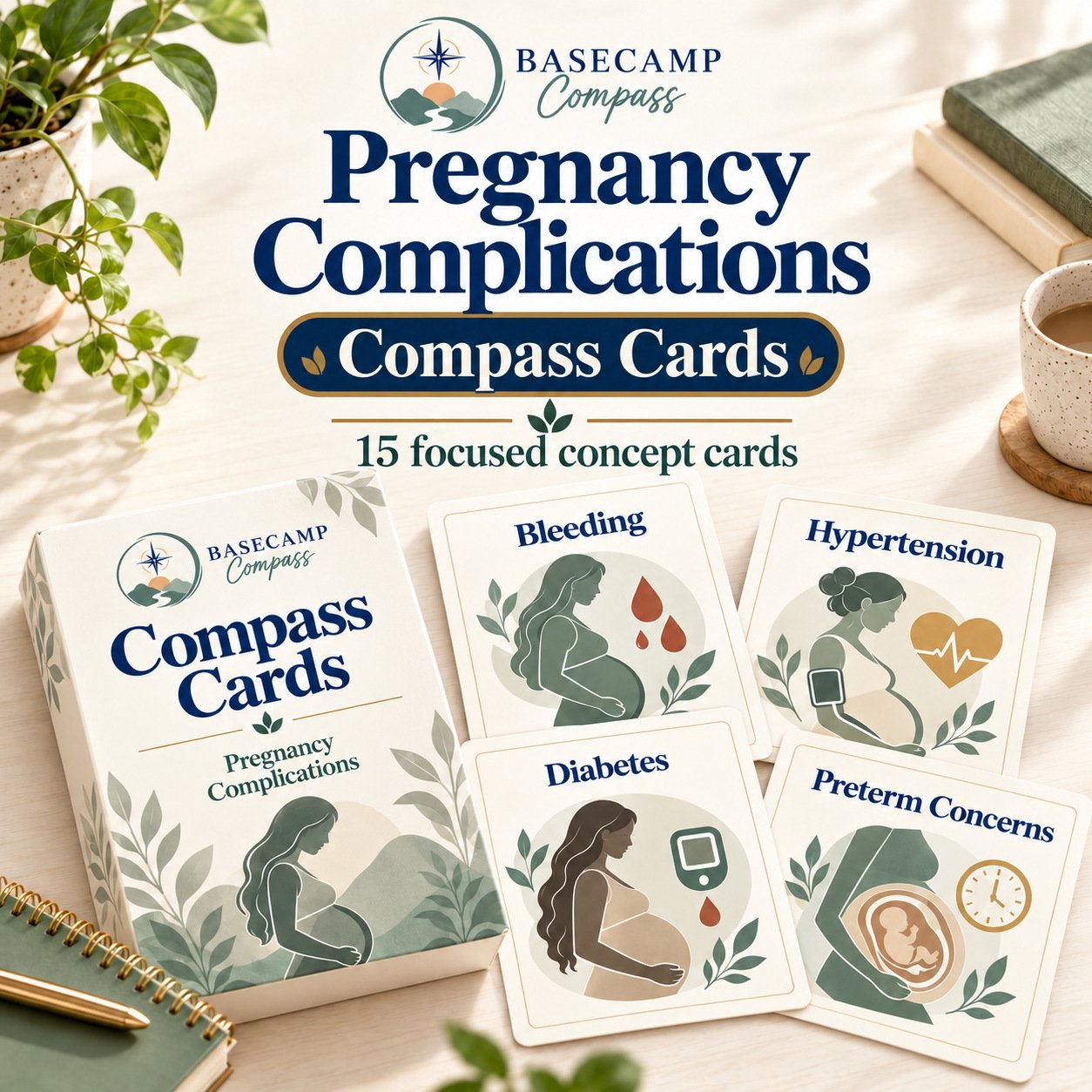
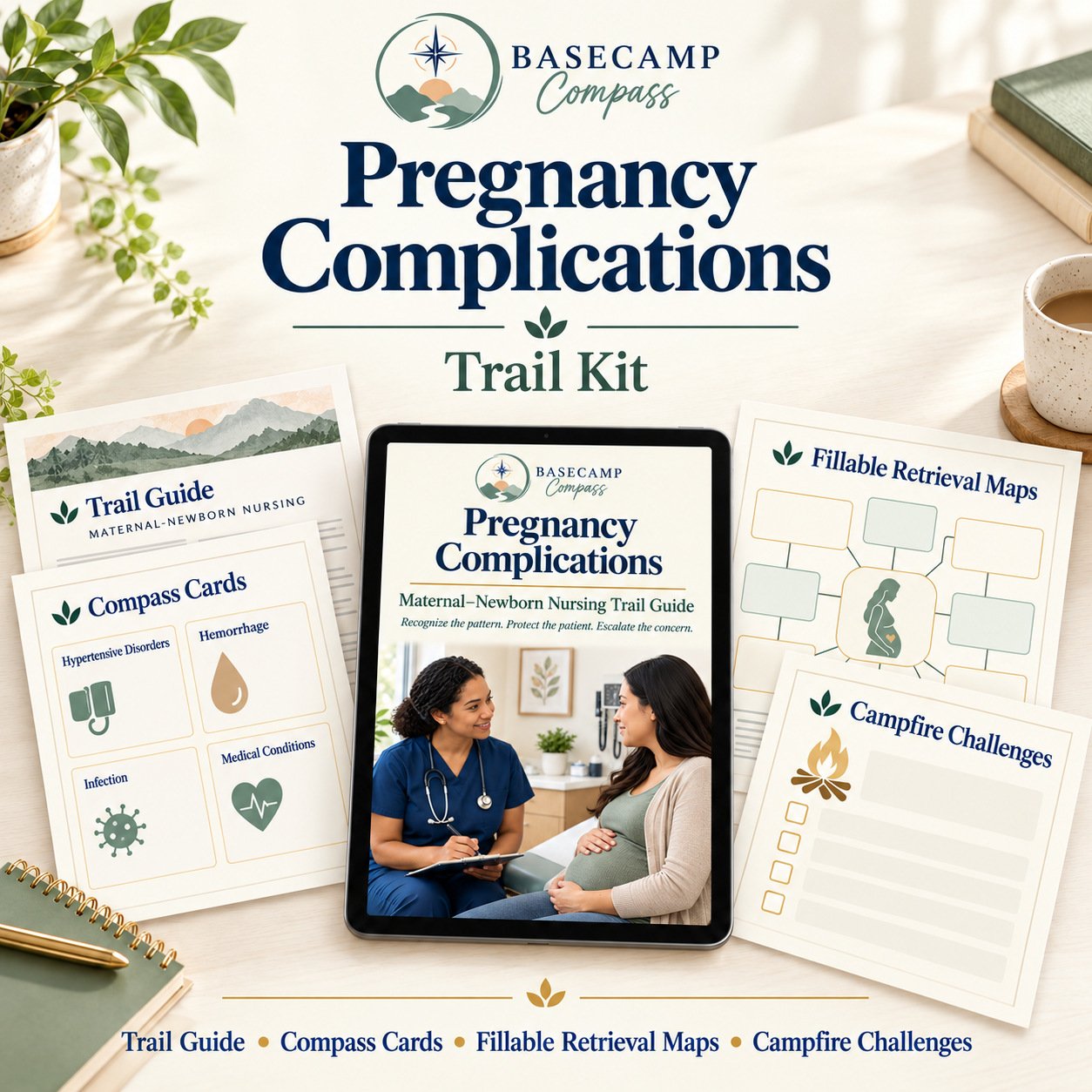
Bring concept learning, focused review, active recall, and clinical reasoning together in the Pregnancy Complications Trail Kit. This coordinated Maternal–Newborn Nursing collection includes a 45-page Trail Guide, 15 Compass Cards, 7 fillable Retrieval Maps, and 7 fillable Campfire Challenges. Read the guide to build the framework, use the cards for focused review, retrieve the connections in the maps, and apply them to the clinical scenarios. Student and answer pages alternate within both practice PDFs.

Original price was: $15.00.Current price is: $9.99.

DIGITAL · INSTANT ACCESS

What You'll Learn

Recognize pregnancy-complication patterns and distinguish symptoms from a confirmed diagnosis.
Assess bleeding, pain, hydration, maternal stability, and fetal well-being.
Differentiate hypertensive disorders and recognize severe features, eclampsia, and HELLP.
Connect gestational diabetes with screening, management, and postpartum follow-up.
Compare previa, abruption, preterm labor, PPROM, cervical insufficiency, and Rh sensitization.
Prioritize assessment, communication, escalation, and compassionate support.

Table of contents

Trail Guide — 45 pages
Compass Cards — 15 concept pages
Retrieval Maps — 7 student/answer pairs
Campfire Challenges — 7 student/answer pairs

Bring concept learning, focused review, active recall, and clinical reasoning together in the Pregnancy Complications Trail Kit. This coordinated Maternal–Newborn Nursing collection includes a 45-page Trail Guide, 15 Compass Cards, 7 fillable Retrieval Maps, and 7 fillable Campfire Challenges. Read the guide to build the framework, use the cards for focused review, retrieve the connections in the maps, and apply them to the clinical scenarios. Student and answer pages alternate within both practice PDFs. Recognize pregnancy-complication patterns and distinguish symptoms from a confirmed diagnosis. Assess bleeding, pain, hydration, maternal stability, and fetal well-being. Differentiate hypertensive disorders and recognize severe features, eclampsia, and HELLP. Designed for nursing-school study, the material can be used independently or alongside your course and clinical learning.

What You Will Learn

  • Recognize pregnancy-complication patterns and distinguish symptoms from a confirmed diagnosis.
  • Assess bleeding, pain, hydration, maternal stability, and fetal well-being.
  • Differentiate hypertensive disorders and recognize severe features, eclampsia, and HELLP.
  • Connect gestational diabetes with screening, management, and postpartum follow-up.
  • Compare previa, abruption, preterm labor, PPROM, cervical insufficiency, and Rh sensitization.
  • Prioritize assessment, communication, escalation, and compassionate support.

What Is Included

  • Trail Guide — 45 pages
  • Compass Cards — 15 concept pages
  • Retrieval Maps — 7 student/answer pairs
  • Campfire Challenges — 7 student/answer pairs

Reviews

There are no reviews yet.

Be the first to review “Maternal Newborn Pregnancy Complications Trail Kit”

Your email address will not be published. Required fields are marked *

How It Works: Your Learning Journey

LEARN

The Guide Teaches The Journey.

REMEMBER

Reinforce important concepts.

CHALLENGE

Test your knowledge and build confidence.

dashed arrow set vector doodle dot line thin pointer arrows | Basecamp Compass, LLC

Campfire Challenge Preview

Take a look inside

Sample 1 — Pain, Bleeding, and Dizziness
A patient in early pregnancy reports unilateral pelvic pain, vaginal bleeding, shoulder pain, and increasing dizziness. Which complication is most concerning? What is the immediate priority? Why is the shoulder pain important?
Sample 2 — HELLP Can Hide
A pregnant patient reports malaise, nausea, and severe epigastric or right-upper-quadrant pain. Laboratory findings show hemolysis, elevated liver enzymes, and low platelets. What does HELLP mean? Why is the condition urgent? What should the nurse monitor?
Sample 3 — A Gush Before Labor
A patient at 33 weeks reports a sudden gush followed by continued fluid leakage. The patient is not yet in established labor. Which condition is suspected? Which maternal and fetal risks matter? What examination practice should be limited?
Scroll to Top