
The MedSurg I Respiratory Trail Kit combines four complementary ways to learn: understand the content, retrieve the pattern, rebuild it from memory, and apply it to a patient situation. Students receive the 39-page visual Trail Guide, 24 Compass Cards, 10 fillable Retrieval Maps with immediate answer keys, and 20 Campfire Challenges with paired answers. Together, the resources cover respiratory anatomy and physiology, assessment, oxygen support, diagnostic testing, common disorders, pleural and vascular emergencies, chest tubes, ARDS, respiratory failure, ventilation, and nursing priorities. The system is designed for students who want more than passive rereading and need a practical path from foundational knowledge to clinical recognition. The Audio Companion is included.
Sale!


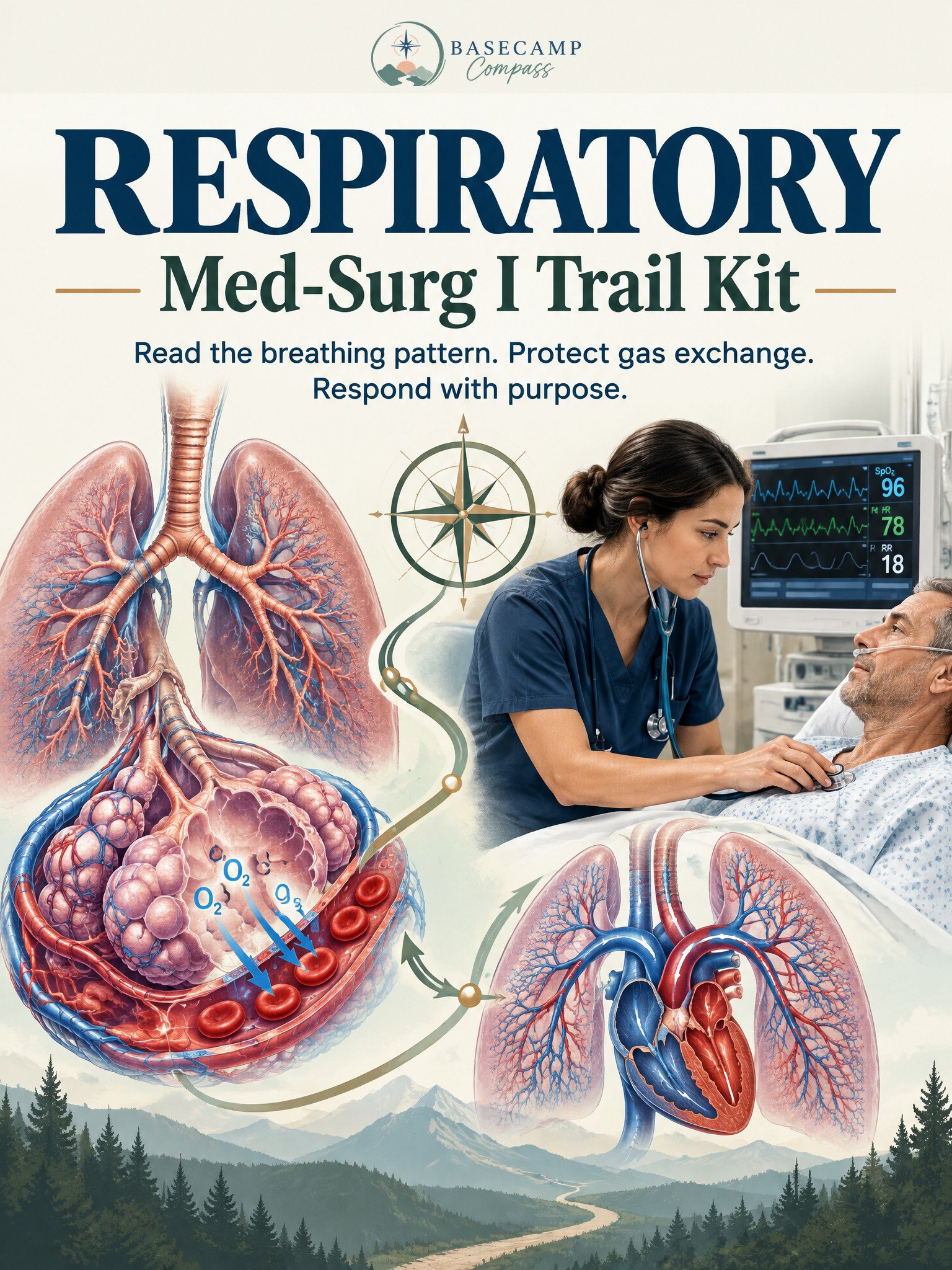
MedSurg I Respiratory Trail Kit
The MedSurg I Respiratory Trail Kit combines four complementary ways to learn: understand the content, retrieve the pattern, rebuild it from memory, and apply it to a patient situation. Students receive the 39-page visual Trail Guide, 24 Compass Cards, 10 fillable Retrieval Maps with immediate answe
- Estimated Reading Time: 60 minutes
- Pages: 79
- Skill Level: All Levels
- Format: Digital Download (PDF + Audio)
$15.00 Original price was: $15.00.$9.99Current price is: $9.99.
DIGITAL · INSTANT ACCESS
What You'll Learn
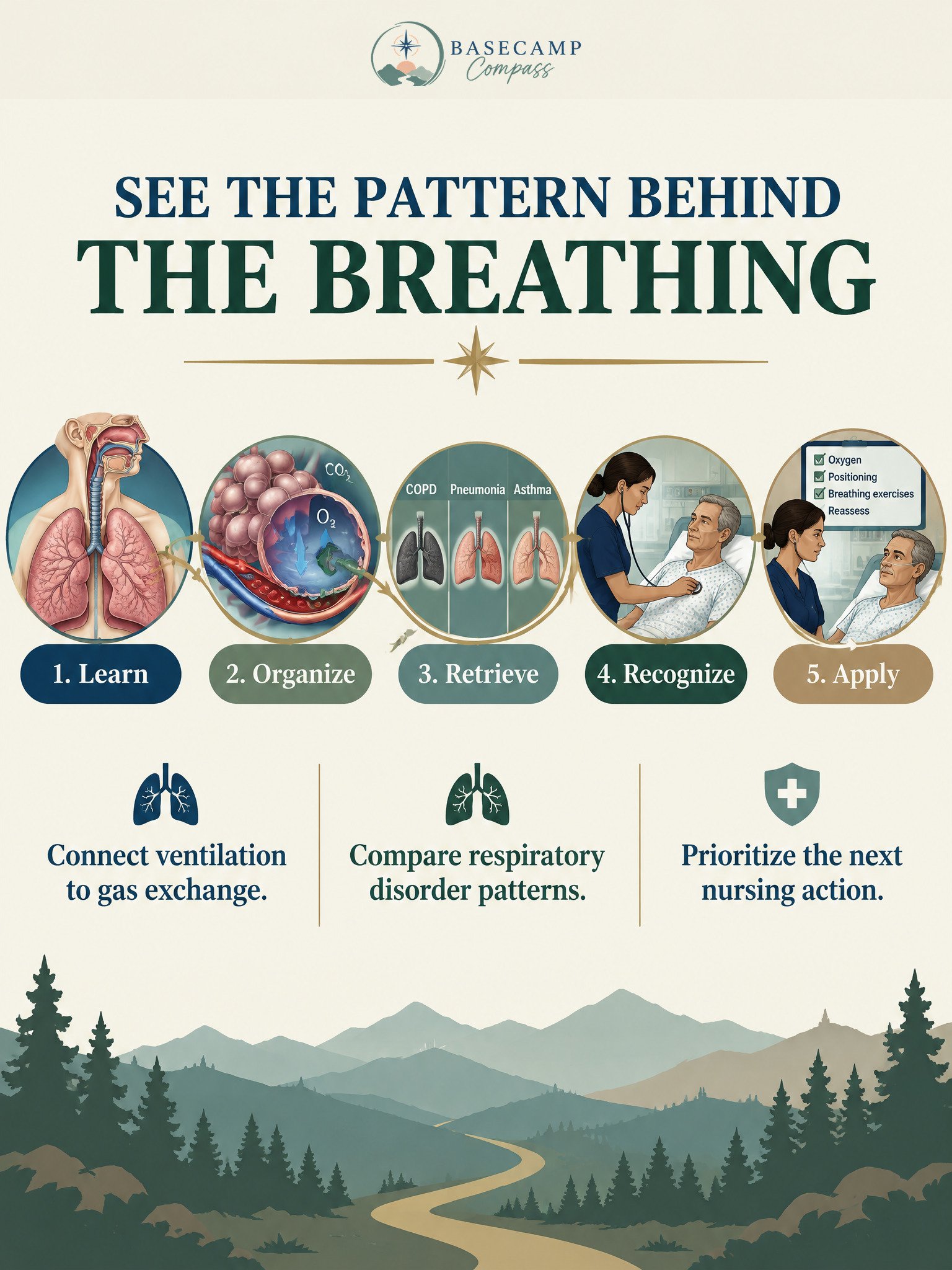
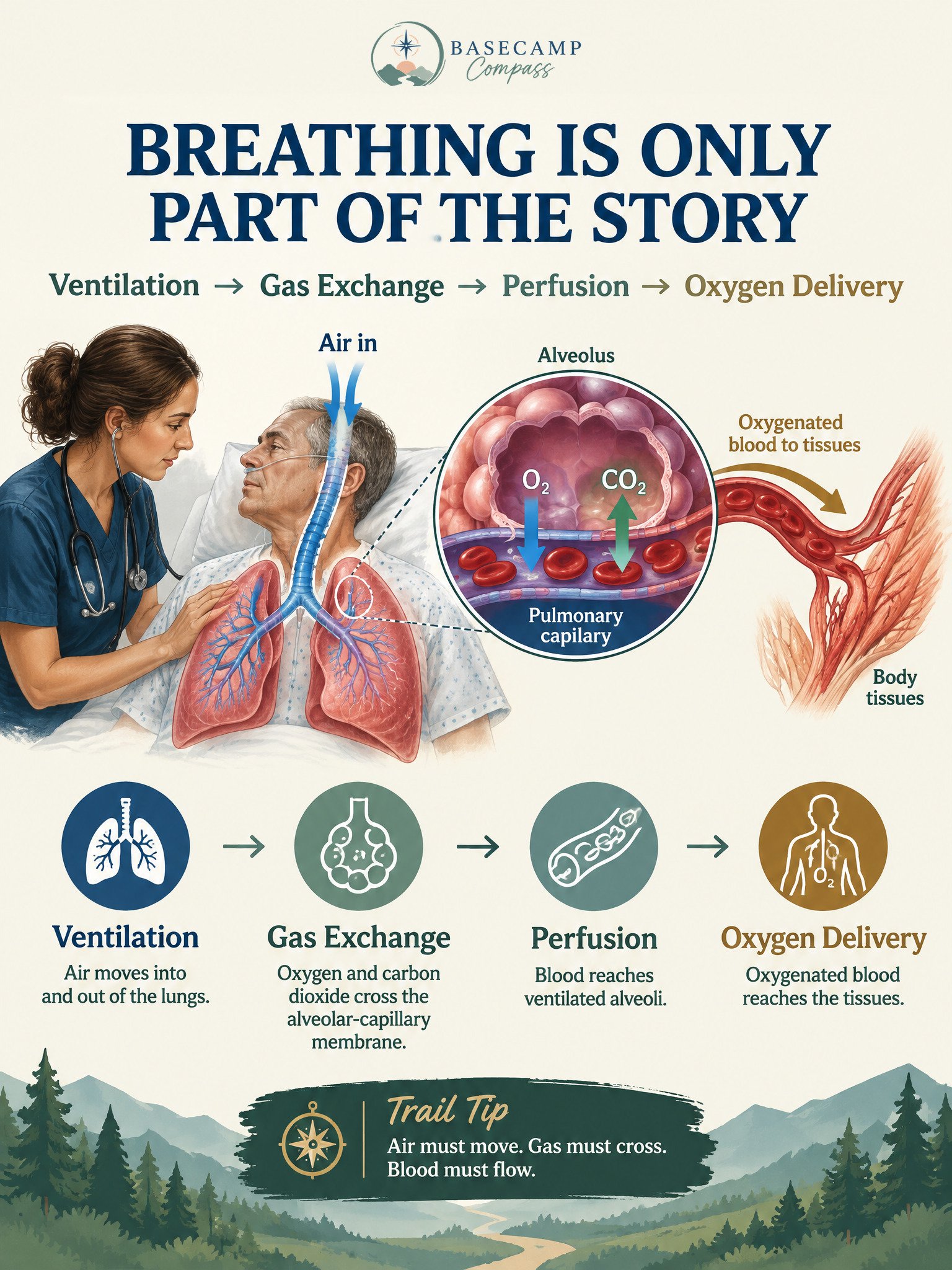
Learn how airway anatomy, ventilation, diffusion, perfusion, and oxygen delivery connect.
Organize respiratory disorders by mechanism, findings, tests, and nursing priorities.
Retrieve high-yield clues using visual Compass Cards and active-recall maps.
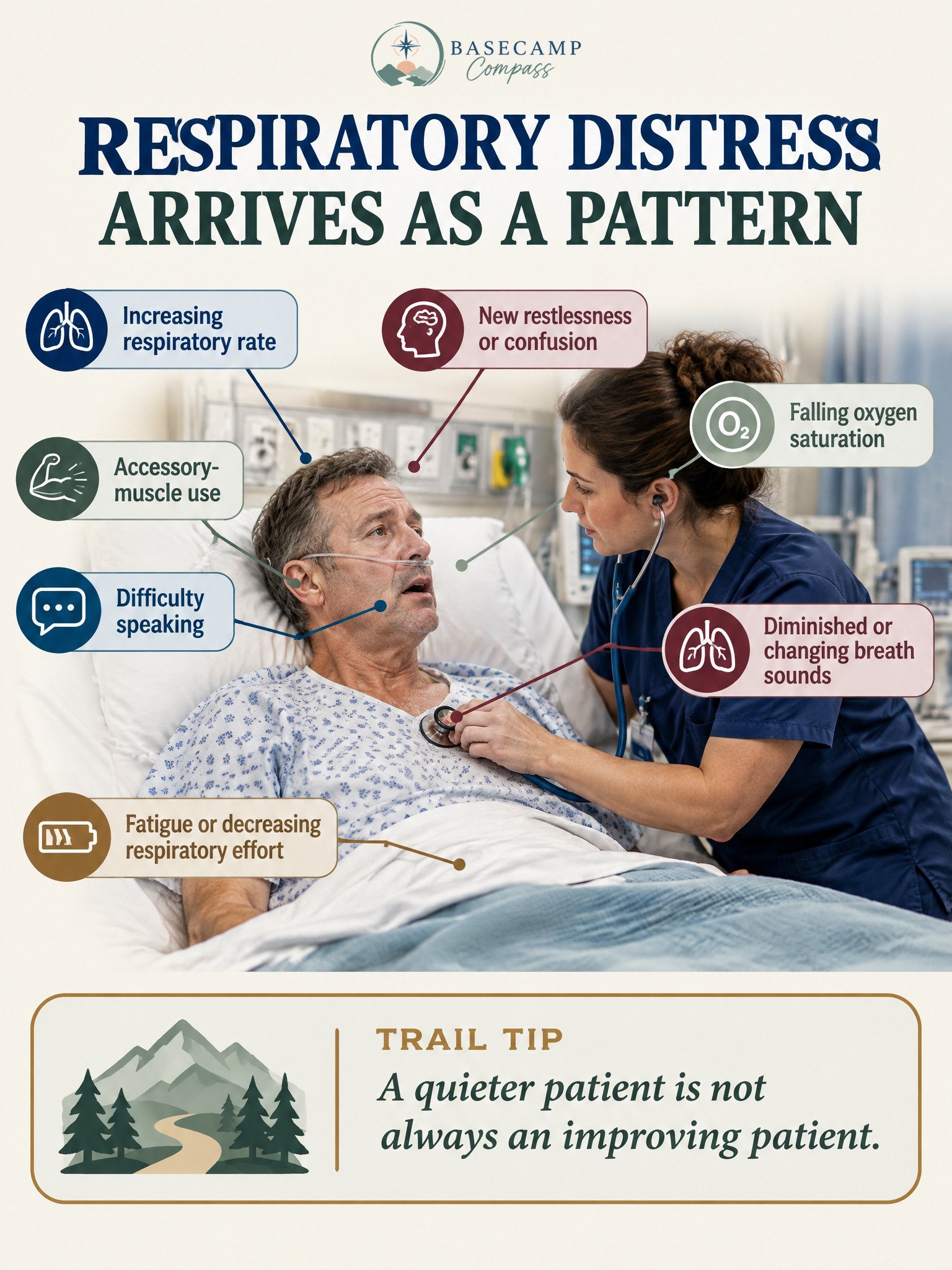
Recognize subtle and urgent deterioration in patient scenarios.
Apply the safest next nursing action while comparing findings with baseline and trend.
Table of contents
Respiratory Trail Guide - 39 pages
Respiratory Compass Cards - 24 cards plus cover
Respiratory Retrieval Maps - 10 fillable maps with answer keys
Respiratory Campfire Challenges - 20 scenarios with paired answers
Respiratory Audio Companion
How It Works: Your Learning Journey
LEARN
The Guide Teaches The Journey.
REMEMBER
Reinforce important concepts.
CHALLENGE
Test your knowledge and build confidence.

Campfire Challenge Preview
Take a look inside
Sample 1 — THE SOUND ABOVE THE LUNGS
THE SOUND ABOVE THE LUNGS — A postoperative patient develops harsh inspiratory stridor and increasing anxiety. What problem should the nurse suspect, and what is the immediate priority?
Sample 2 — SUDDEN DYSPNEA AFTER IMMOBILITY
SUDDEN DYSPNEA AFTER IMMOBILITY — A postoperative patient develops sudden shortness of breath, tachycardia, pleuritic pain, and anxiety. Which emergency pattern should the nurse recognize?
Sample 3 — WHO NEEDS HELP FIRST?
WHO NEEDS HELP FIRST? — Compare four patients: stable COPD at baseline; postoperative diminished bases ready to mobilize; functioning chest tube with expected drainage; and sudden unilateral absent breath sounds with hypotension. Which patient is first, and why?
Reviews
There are no reviews yet.