
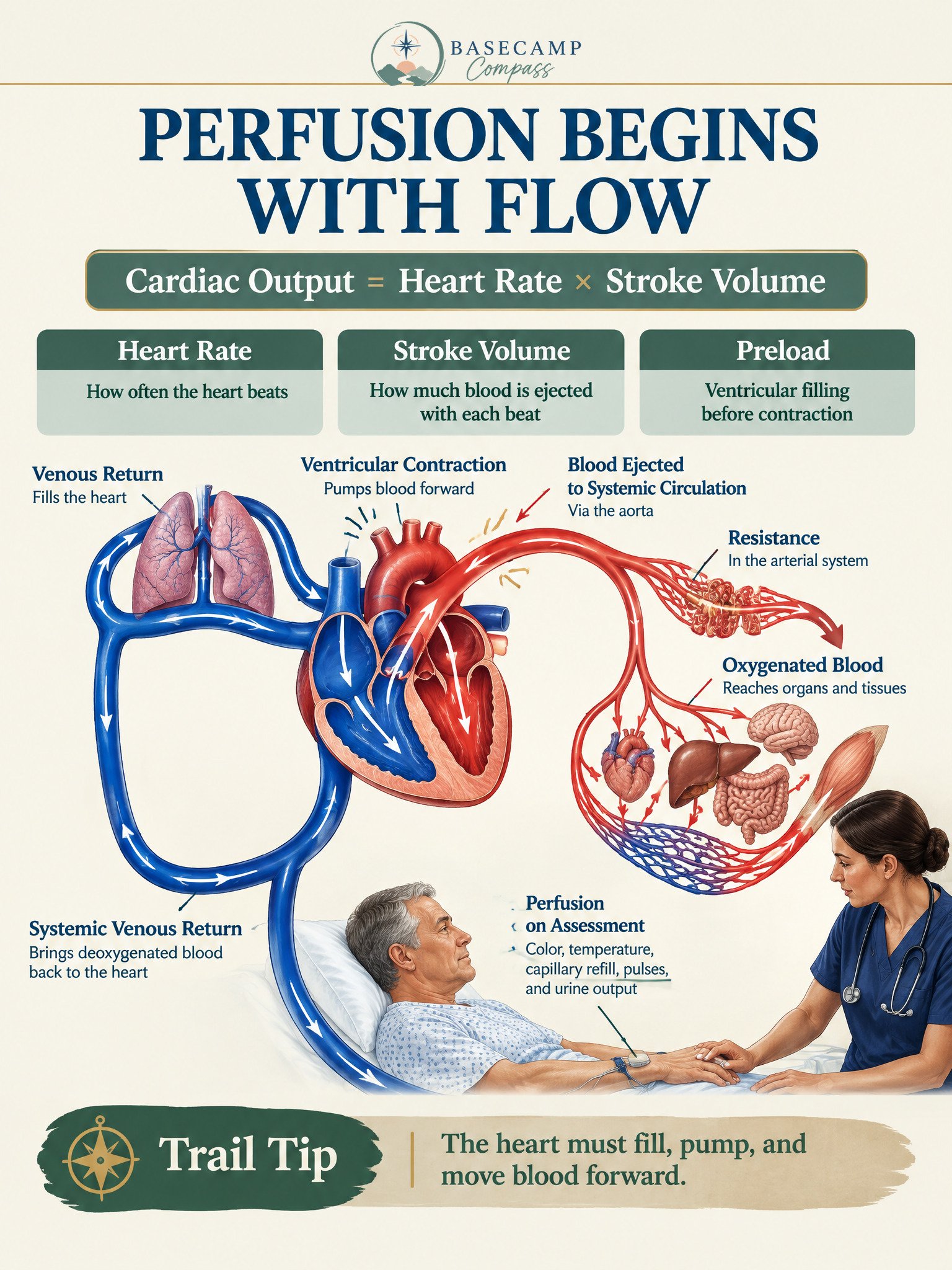
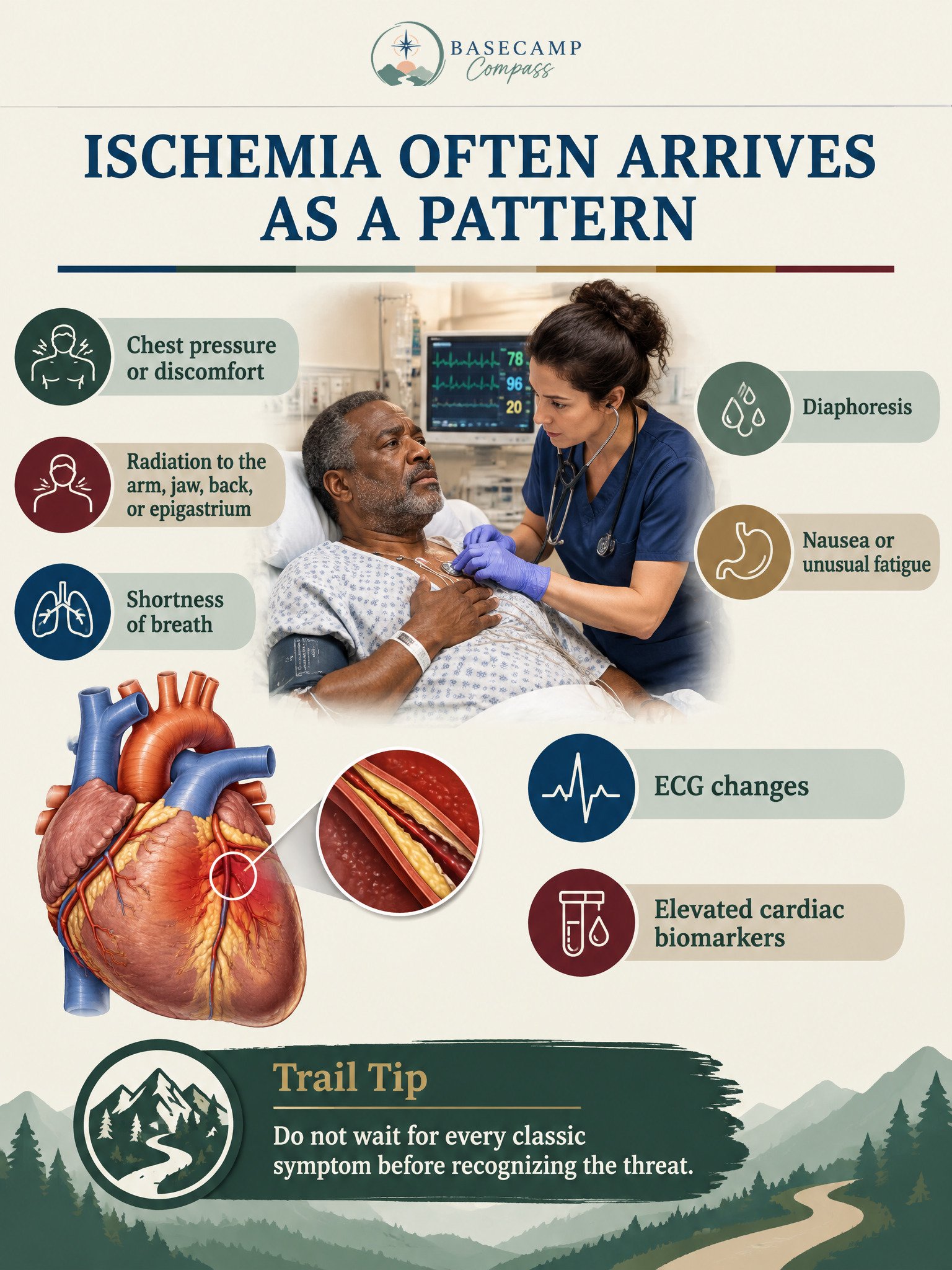
The Basecamp Compass Med-Surg I Cardiovascular Trail Kit is a multi-format study system built to help nursing students move from understanding cardiovascular physiology to recognizing patient patterns and applying safe priorities. Instead of repeating the same information in four formats, each component supports a different stage of learning. The 42-page Trail Guide explains the connected story of blood flow, perfusion, pressure, rhythm, coronary disease, heart failure, structural disorders, vascular conditions, and cardiovascular emergencies. The 39-topic Compass Card collection supports rapid comparison and repeated retrieval. Ten interactive Retrieval Maps ask students to rebuild major patterns from memory before checking matched answer pages. Twenty Campfire Challenges then move the learner into patient scenarios, prioritization, complication recognition, and clinical judgment. The completed Audio Companion will extend review beyond the screen for commutes, walks, chores, and pre-clinical preparation. This kit is a study companion for use alongside assigned nursing textbooks, faculty instruction, and current clinical guidance.
Sale!


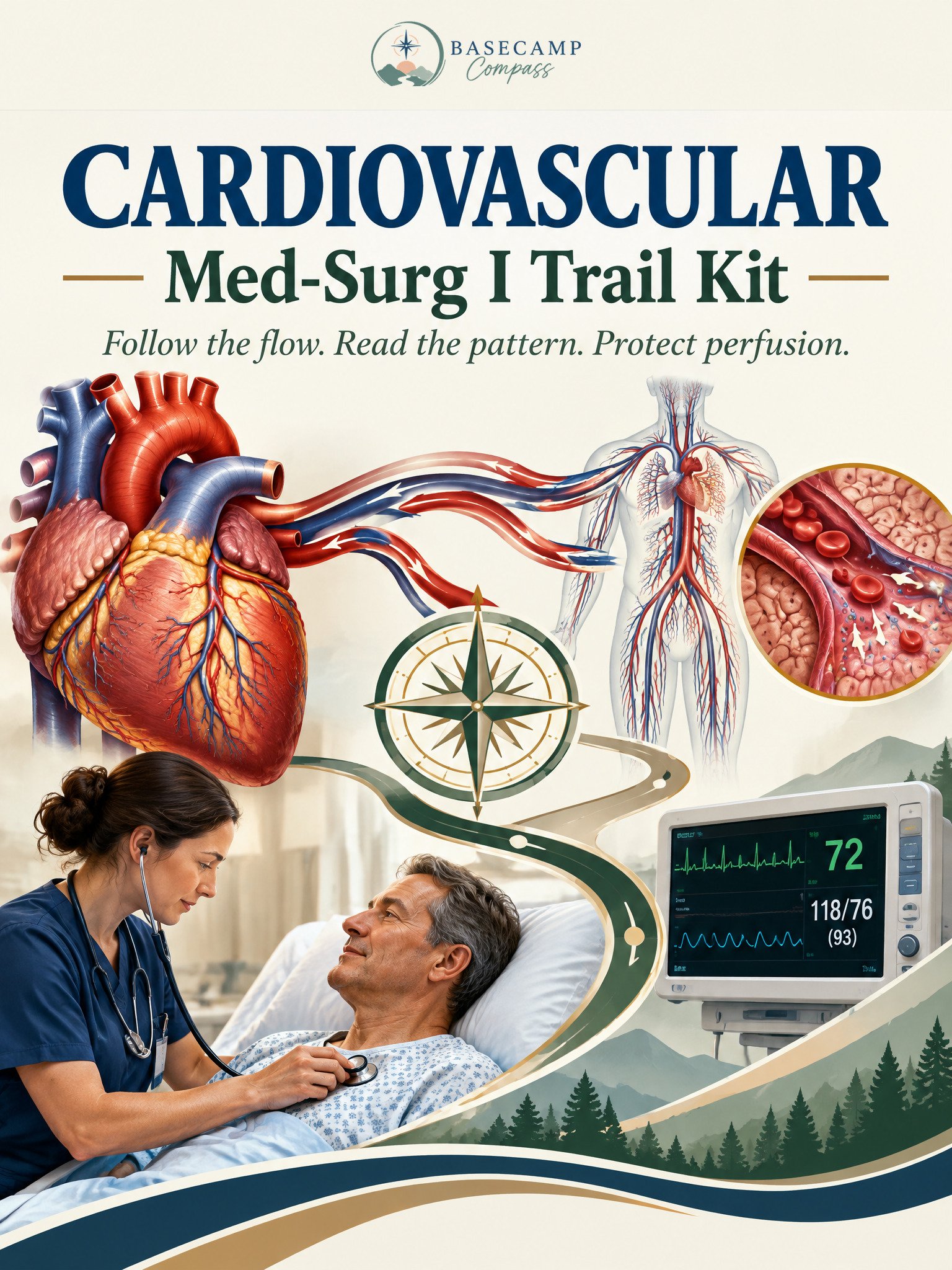
MedSurg I Cardiovascular Trail Kit
The Basecamp Compass Med-Surg I Cardiovascular Trail Kit is a multi-format study system built to help nursing students move from understanding cardiovascular physiology to recognizing patient patterns and applying safe priorities. Instead of repeating the same information in four formats, each compo
- Estimated Reading Time: 60 minutes
- Pages: 97
- Skill Level: All Levels
- Format: Digital Download (PDF + Audio)
$15.00 Original price was: $15.00.$9.99Current price is: $9.99.
DIGITAL · INSTANT ACCESS
What You'll Learn
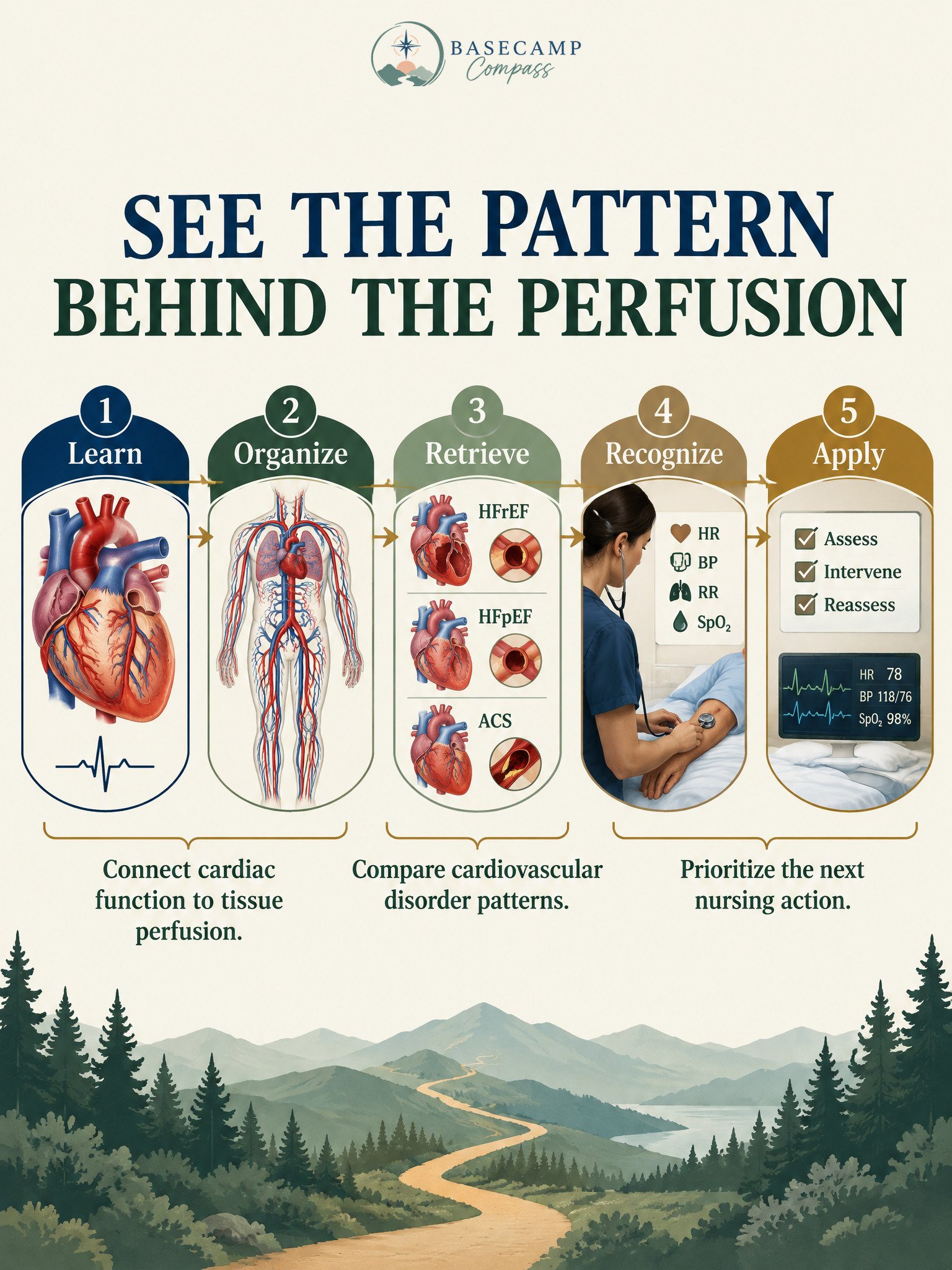
Learn the physiology behind circulation, perfusion, rhythm, and pump function.
Organize cardiovascular disorders by the patterns they create.
Retrieve assessment clues, comparisons, diagnostics, and nursing priorities.
Recognize deterioration in realistic cardiovascular patient scenarios.
Apply the safest next action using prioritization and clinical judgment.
Table of contents
Cardiovascular Trail Guide - 42 pages
Cardiovascular Compass Cards - 40 pages including the cover and 39 cards
Interactive Cardiovascular Retrieval Maps - 21 pages including 10 maps with answer keys
Cardiovascular Campfire Challenges - 31 pages including 20 scenarios and answers
Cardiovascular Audio Companion
How It Works: Your Learning Journey
LEARN
The Guide Teaches The Journey.
REMEMBER
Reinforce important concepts.
CHALLENGE
Test your knowledge and build confidence.

Campfire Challenge Preview
Take a look inside
Sample 1 — THE PAIN CHANGED
CAMPFIRE CHALLENGE 1 THE PAIN CHANGED — SCENARIO: A patient with a history of stable angina reports new substernal pressure while resting in bed. The discomfort has continued for 10 minutes and has not improved as expected with rest. QUESTION: What is the nurse’s priority response? Reassure the patient that stable angina commonly occurs at rest / Initiate the facility’s acute chest-pain response and obtain a 12-lead ECG promptly / Ask the patient to walk briefly to determine whether exertion changes the pain / Document the episode and reassess at the end of the shift
Sample 2 — TOO SLOW TO PERFUSE
CAMPFIRE CHALLENGE 11 TOO SLOW TO PERFUSE — SCENARIO: A patient’s heart rate is 34 beats per minute. The patient is pale and confused, with blood pressure of 76/40 mm Hg. QUESTION: What is the nurse’s priority?
Sample 3 — PRESSURE WITH ORGAN INJURY
CAMPFIRE CHALLENGE 20 PRESSURE WITH ORGAN INJURY — SCENARIO: A patient has severely elevated blood pressure accompanied by confusion, visual changes, and chest discomfort. QUESTION: What makes this situation an emergency? CHOICES: A Evidence of acute target-organ injury / The blood-pressure number alone without any symptoms B / A history of controlled hypertension / The patient’s age
Reviews
There are no reviews yet.