
Be the first to review “MedSurg II Neurologic Disorders Trail Guide” Cancel reply
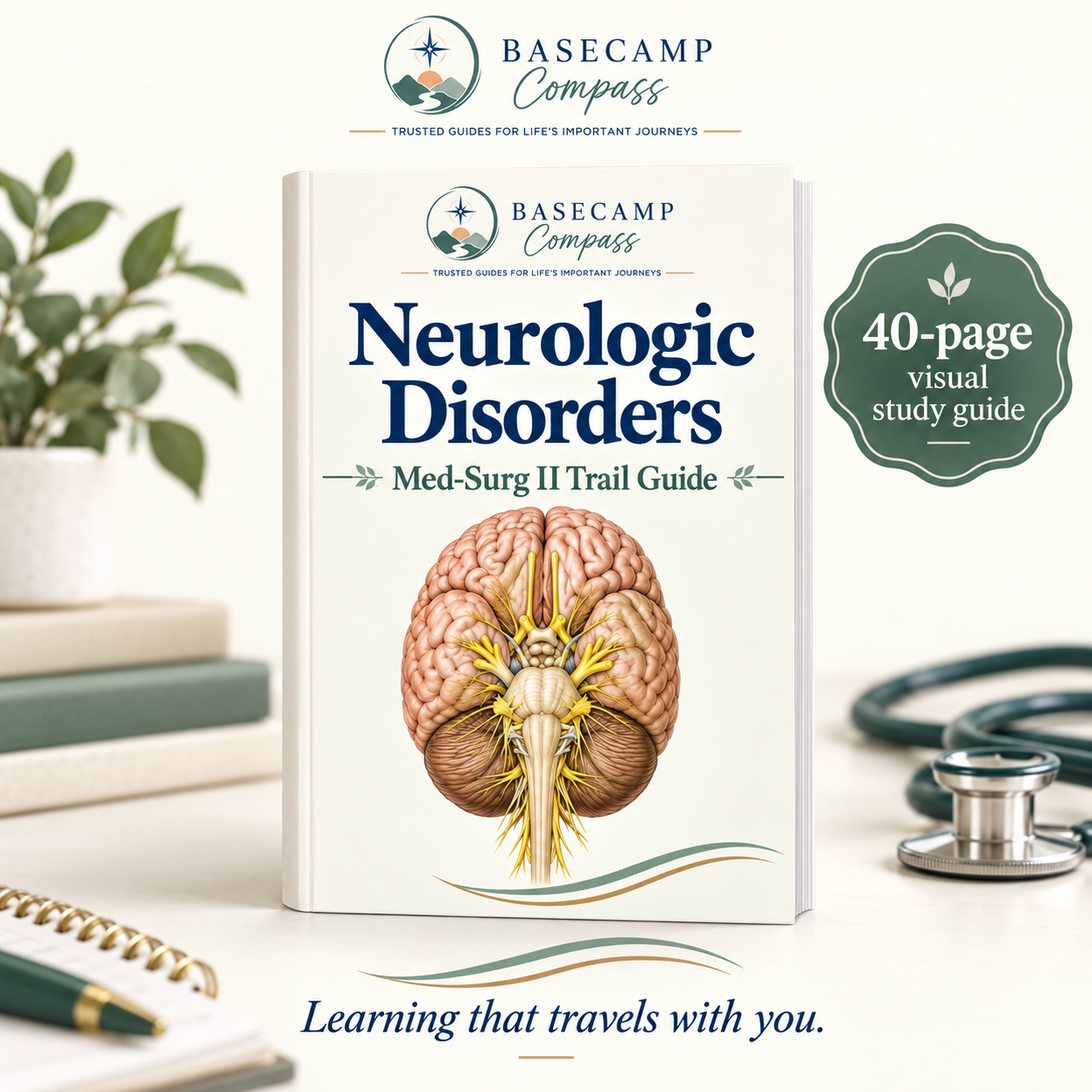
MedSurg II Neurologic Disorders Trail Guide
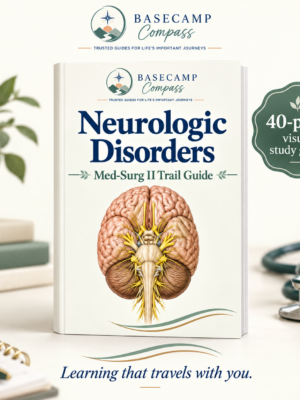
The MedSurg II Neurologic Disorders Trail Guide is a 40-page visual study companion connecting neurologic assessment findings with common disease patterns, nursing priorities, and changes that need prompt escalation.
- Estimated Reading Time: 30 minutes
- Pages: 40
- Skill Level: All Levels
- Format: Digital Download (PDF)
$9.99
PDF · Instant download
What You'll Learn
Establish a neurologic baseline and recognize changes in consciousness, speech, pupils, strength and sensation.
Document and interpret GCS components, including limitations when a response cannot be tested.
Compare headache and seizure patterns and identify urgent warning signs.
Distinguish common movement, demyelinating and neuromuscular conditions.
Connect dementia, delirium and peripheral disorders with assessment and safety needs.
Organize swallowing, respiratory, mobility, skin and communication priorities.
Recognize medication concerns and acute deterioration that requires escalation.
Table of contents
Orientation and neurologic trail map
Focused assessment, consciousness, GCS, pupils, motor and sensory findings and diagnostic safety
Headache overview, migraine, tension-type and cluster patterns
Seizure recognition and antiseizure medication safety
Multiple sclerosis and Parkinson disease
Myasthenia gravis, Guillain-Barre syndrome, ALS and Huntington disease
Dementia, delirium, Alzheimer care, peripheral neuropathy, Bell palsy and trigeminal neuralgia
Brain tumors and increased intracranial pressure recognition
Swallowing, mobility, skin, communication, bowel and bladder and medication connections
High-risk trends, comparison practice and final neurologic checklist
Companion Compass Card Sets
Recommended for this trail.


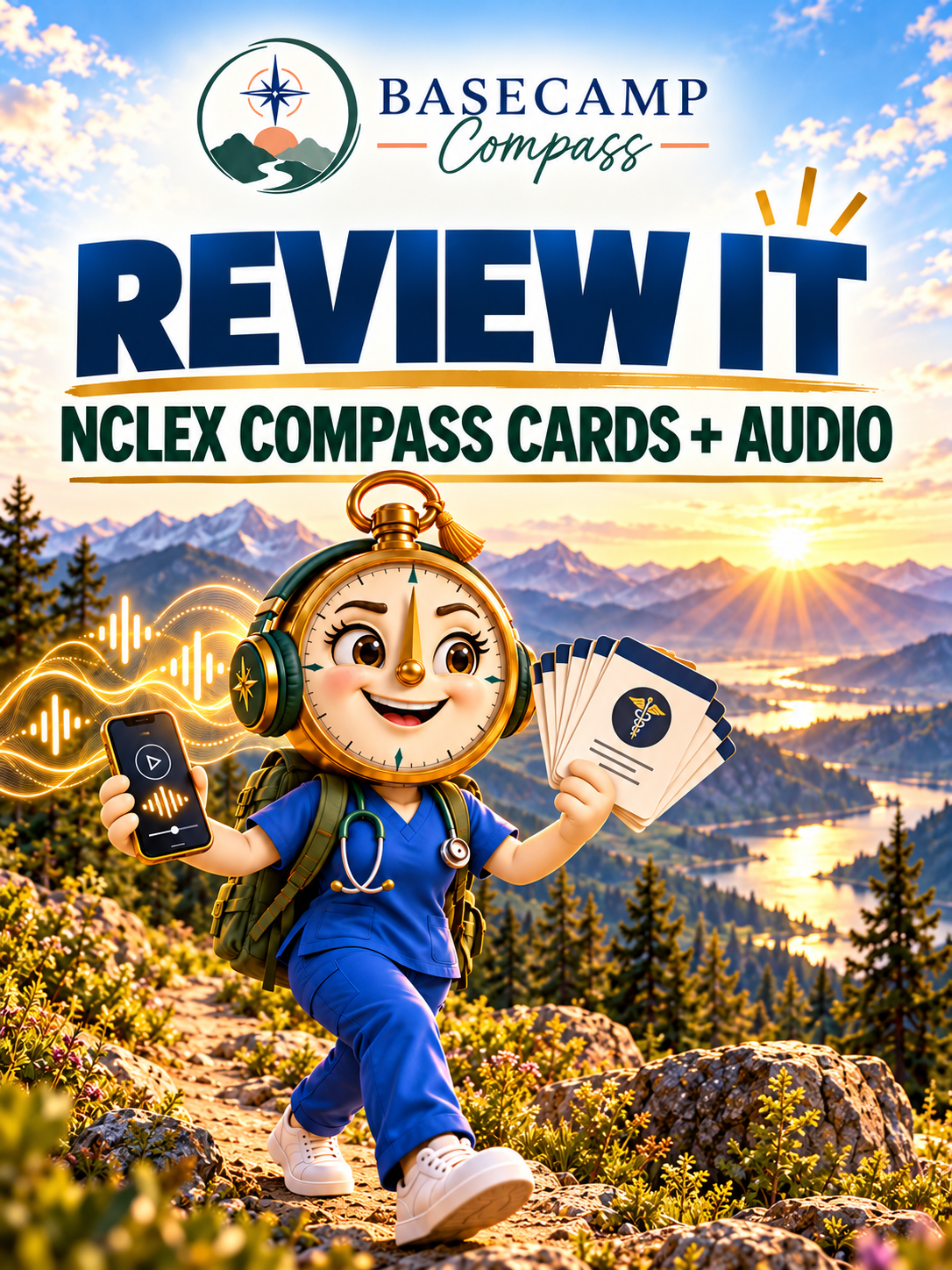
NCLEX Compass Cards plus Audio Companion
Build fast clinical recognition with 192 original NCLEX-style questions organized
$39.99
TRAIL KIT
Everything recommended
for this journey.
- First Week in the OR Trail Guide
- OR Fundamentals Compass Cards
- Patient Safety Compass Cards
- Documentation & Handoffs Cards

EXCLUSIVE CAMPFIRE
CHALLENGE CARDS
Only available inside Trail Kits,
Neurologic Disorders Trail Guide is a 40-page visual study companion for Med-Surg II nursing students. It connects neurologic assessment findings with common disease patterns, nursing priorities and changes that need prompt escalation. Use it alongside your course materials to organize a challenging subject into sections you can revisit.
The guide begins with baseline assessment, level of consciousness, Glasgow Coma Scale, pupils, cranial nerves, motor and sensory findings and diagnostic safety. Headache and seizure sections help you compare familiar patterns with warning signs that require urgent evaluation.
Condition sections cover multiple sclerosis, Parkinson disease, myasthenia gravis, Guillain-Barre syndrome, ALS, Huntington disease, dementia, delirium, peripheral neuropathy, Bell palsy and trigeminal neuralgia. Brain tumors and increased intracranial pressure are included at the level of recognition and nursing escalation.
Swallowing, mobility, skin protection, communication, bowel and bladder care and medication connections bring the conditions back to everyday nursing decisions. Comparison pages and a final checklist help you connect clues, protect function and recognize a change from baseline.
This standalone product includes the Trail Guide PDF. Compass Cards, Audio Companion, Retrieval Maps and Campfire Challenges are separate products or part of the Trail Kit. This is a digital study resource, not a replacement for course texts, clinical instruction or facility protocols.
WHAT YOU WILL LEARN
- Establish a neurologic baseline and recognize changes in consciousness, speech, pupils, strength and sensation.
- Document and interpret GCS components, including limitations when a response cannot be tested.
- Compare headache and seizure patterns and identify urgent warning signs.
- Distinguish common movement, demyelinating and neuromuscular conditions.
- Connect dementia, delirium and peripheral disorders with assessment and safety needs.
- Organize swallowing, respiratory, mobility, skin and communication priorities.
- Recognize medication concerns and acute deterioration that requires escalation.
TABLE OF CONTENTS
- Orientation and neurologic trail map
- Focused assessment, consciousness, GCS, pupils, motor and sensory findings and diagnostic safety
- Headache overview, migraine, tension-type and cluster patterns
- Seizure recognition and antiseizure medication safety
- Multiple sclerosis and Parkinson disease
- Myasthenia gravis, Guillain-Barre syndrome, ALS and Huntington disease
- Dementia, delirium, Alzheimer care, peripheral neuropathy, Bell palsy and trigeminal neuralgia
- Brain tumors and increased intracranial pressure recognition
- Swallowing, mobility, skin, communication, bowel and bladder and medication connections
- High-risk trends, comparison practice and final neurologic checklist
How It Works: Your Learning Journey
LEARN
The Guide Teaches The Journey.
REMEMBER
Reinforce important concepts.
CHALLENGE
Test your knowledge and build confidence.
Is this a printable file?
Yes. Your download is a print-ready, high-resolution PDF licensed for your personal professional use.
How quickly do I get it?
Instantly. The download link appears on the confirmation screen and in your email receipt.
Reviews
There are no reviews yet.